EO Mini Pro 3 vs Indra Smart LUX: Compact vs Ultra-Slim
The Compact Cube vs the Ultra-Slim Profile
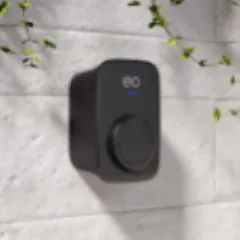
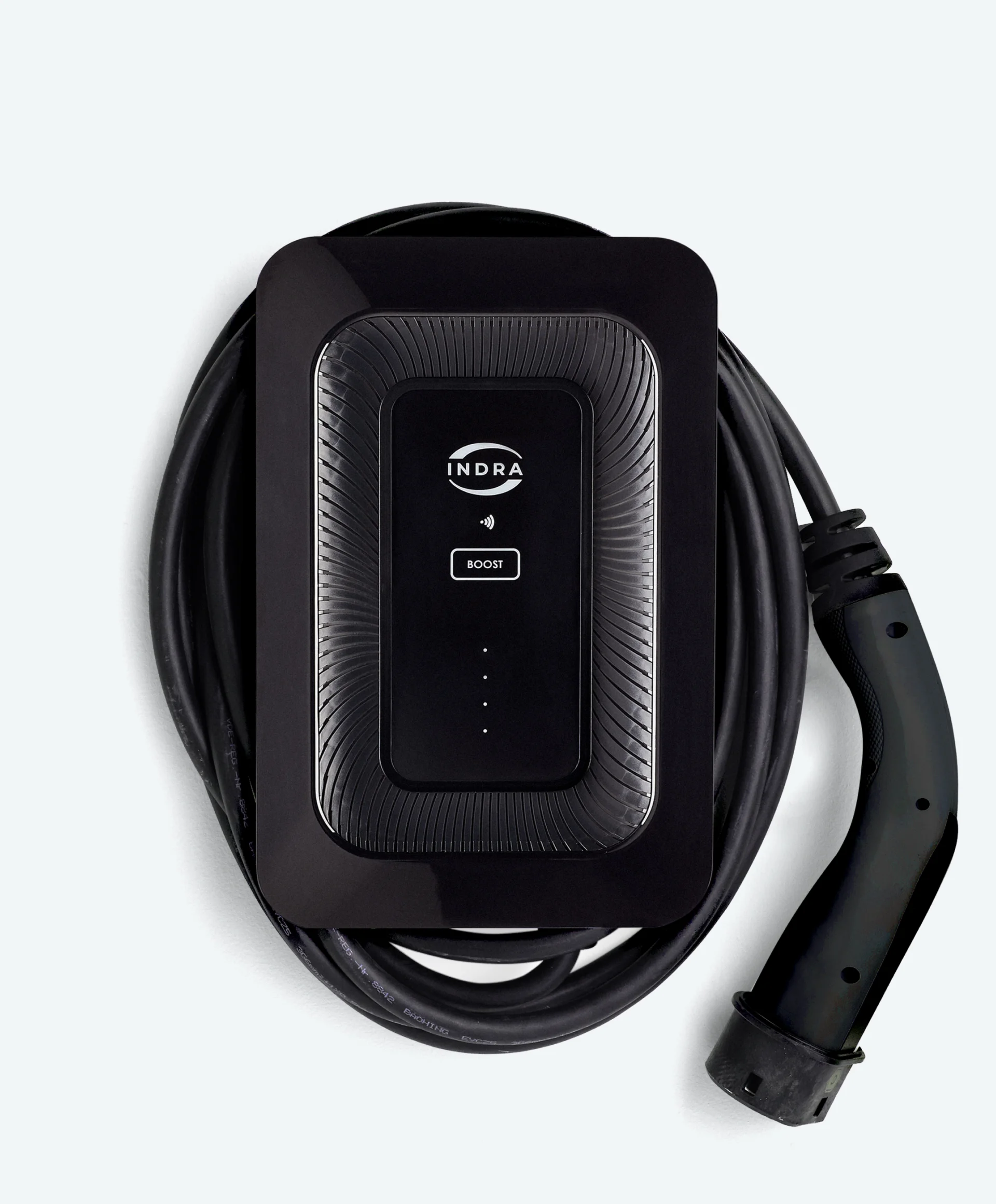
If you've been shopping for a home EV charger that won't dominate the side of your house, you've probably already narrowed your search down to these two. The EO Mini Pro 3 and the Indra Smart LUX are both marketed on their diminutive dimensions — but they take very different approaches to being small. The EO is a compact cube roughly the size of an A5 notepad, while the Indra is a taller, wider unit that achieves its slimness by being just 78mm deep, sitting almost flush against the wall.
Both are smart, both support solar diversion, and both integrate with popular UK energy tariffs. They're also priced within touching distance of each other once you factor in installation. So which one actually deserves a spot on your wall? Let's dig into the details.
In a nutshell:
- EO Mini Pro 3 (£550): The UK's smallest charger by volume, with Ethernet connectivity and British Gas/Hive ecosystem integration that can credit back 25% of your charging costs.
- Indra Smart LUX (£615): The UK's slimmest tethered smart charger at just 78mm deep, with class-leading IP67/IK10 protection and integration with over 1,000 energy tariffs.
Spec Comparison
| Feature | EO Mini Pro 3 | Indra Smart LUX |
|---|---|---|
| Price (unit) | £550 | From £615 (10m cable) |
| Max Power | 7.2kW | 7.4kW |
| Cable Length | 5 metres | 6 metres (10m available) |
| Smart Tariffs | Presets for Octopus Go, EDF Go Electric & others | 1,000+ tariffs including Octopus Agile |
| Solar Diversion | Yes (CT clamp included) | Yes (CT clamp included) |
| Connectivity | Wi-Fi, Bluetooth, Ethernet (4G optional) | Wi-Fi (Ethernet & 4G optional) |
| Warranty | 3 years | 3 years (5 years for +£100) |
| IP Rating | IP54 | IP67 + IK10 |
| Tethered/Untethered | Both options available | Tethered only |
| Dimensions | 215mm × 140mm × 100mm | 201mm × 306mm × 78mm |
| Weight | ~2.5 kg | 3.6 kg (6m cable) |
| OZEV Approved | Yes | Yes |
Smart Tariff Integration
This is where the Indra Smart LUX pulls ahead convincingly. Its integration with over 1,000 UK energy tariffs — including half-hourly variable pricing on Octopus Agile — means it can automatically schedule your charging sessions to hit the cheapest 30-minute slots overnight. If you're on Agile, this can mean paying as little as 5-6p/kWh on a good night, potentially saving you hundreds of pounds a year compared to daytime rates.
The EO Mini Pro 3 takes a simpler approach with smart tariff presets for popular tariffs like Octopus Go (7.5p/kWh between 00:30 and 04:30) and EDF Go Electric. These work perfectly well — you set your off-peak window and the charger handles the rest. But if you want the granularity of Agile pricing or you switch tariffs frequently, the Indra's broader compatibility is a genuine advantage.
Both chargers also offer scheduled charging through their respective apps, which is the minimum you'd expect at this price point. The EO benefits from its Hive/British Gas integration: the Power+ feature credits back 25% of your charging costs, which is a meaningful perk if you're already in that ecosystem (hivehome.com).
Solar Diversion
Both chargers come with CT clamps included as standard for solar PV surplus diversion — a welcome touch that saves you the £50-80 some competitors charge for this accessory. Plug in your EV during the day, and either charger will divert excess solar generation to your car rather than exporting it to the grid at a fraction of what you'd pay to import.
That said, neither charger offers the same level of solar sophistication as the myenergi Zappi, which remains the gold standard for solar diversion with its seamless boost modes and integration with the myenergi ecosystem. The EO's solar diversion is functional but basic, as noted in reviews (electrifying.com). The Indra's solar PV diversion works similarly — it'll get the job done, but if solar optimisation is your primary concern, you may want to look elsewhere.
For most homeowners with a 3-4kW solar array, either charger will do a perfectly adequate job of topping up your Tesla with free sunshine during summer months. On cloudy days, both will supplement with grid energy to ensure your car is ready when you need it.
Build Quality and Design
Here's where these two chargers diverge most dramatically. The Indra Smart LUX boasts an IP67 rating — meaning it's rated for temporary submersion in water — combined with IK10 impact resistance, the highest rating on the scale. This is genuinely class-leading protection for a home charger. If your charger is exposed to the elements, near a driveway where it might get clipped, or in a coastal location with salt spray, the Indra is built like a tank.
The EO Mini Pro 3 carries an IP54 rating, which means it's protected against splashing water from any direction — perfectly adequate for a sheltered wall mount, but noticeably less robust than the Indra's spec (electriccarguide.co.uk). For most suburban driveways, IP54 is absolutely fine. But if your charger will face harsh weather or potential knocks, the Indra's protection is worth paying attention to.
On dimensions, it depends what matters to you. The EO is smaller overall at 215mm × 140mm × 100mm and weighs just 2.5 kg — genuinely tiny. The Indra is taller and wider (201mm × 306mm) but protrudes only 78mm from the wall, giving it an almost flush-mounted appearance. Both look smart and unobtrusive in their own way.
One practical note: the EO is available in both tethered and untethered versions, while the Indra is tethered only. If you want a clean socket-based setup — perhaps because you own both a Type 1 and Type 2 vehicle — the EO gives you that flexibility.
App and Connectivity
The EO Mini Pro 3 has a clear connectivity advantage out of the box. It ships with Wi-Fi, Bluetooth, and Ethernet as standard — that Ethernet port is a genuine differentiator, offering rock-solid reliability that Wi-Fi simply can't match, especially if your charger is at the far end of the house from your router (eocharging.com).
The Indra Smart LUX relies on Wi-Fi as standard, with Ethernet and 4G as optional extras. The 4G add-on costs a steep £250, which is worth noting if your Wi-Fi doesn't reach your driveway. The EO also offers optional 4G, though pricing isn't specified in the same way.
Both apps allow remote start/stop, scheduling, energy monitoring, and charging history. The Indra adds RFID and QR code authorisation plus remote locking — handy if your charger is accessible to passersby. The Indra also supports OCPP 1.6, which future-proofs it for potential integration with third-party energy management platforms. The EO's OCPP compliance is confirmed for the commercial Genius 2 model, but the Mini Pro 3 also supports it according to electriccarguide.co.uk.
Price and Value
| Cost Element | EO Mini Pro 3 | Indra Smart LUX |
|---|---|---|
| Unit price | £550 | From £615 (10m) / £670 (6m) |
| Typical installation | £400–600 | £300–500 |
| Total installed estimate | £950–£1,150 | £915–£1,175 |
| After OZEV grant (if eligible) | £450–£650 | £415–£675 |
The Indra Smart LUX is the more affordable option, particularly at the supply-only price of £615 for the 10-metre cable version. Its lower installation estimate (£300-500) also reflects the built-in SPD and PEN fault detection, which can simplify the electrical work required. The EO's installed price through Hive starts from £1,209 with standard installation included (hivehome.com).
However, the EO claws back value if you're a British Gas customer — that 25% Power+ credit on charging costs could be worth £50-80 per year for an average UK driver doing 7,400 miles annually. Over three years, that narrows the gap considerably. Both chargers offer a 3-year warranty as standard, though the Indra lets you extend to 5 years for an additional £100.
Who Should Buy Which?
Buy the EO Mini Pro 3 if:
- You have very limited wall space and need the smallest possible charger unit
- You're already in the British Gas/Hive ecosystem and want the 25% Power+ cashback
- You want Ethernet connectivity as standard for maximum reliability
- You need an untethered (socket) option for multi-vehicle flexibility
- You value the lightest possible unit at just 2.5 kg
Buy the Indra Smart LUX if:
- You want the best weather and impact protection available (IP67 + IK10)
- You're on Octopus Agile or want integration with 1,000+ energy tariffs
- You prefer a slim, flush-to-wall profile rather than a protruding box
- You want a longer cable — 6m standard with a 10m option available
- You want the slightly faster 7.4kW charging speed and lower upfront cost
Our recommendation: For most UK homeowners, the Indra Smart LUX edges it. The combination of superior build quality (that IP67/IK10 rating is genuinely impressive), broader smart tariff integration, a longer cable, faster 7.4kW charging, and a lower price makes it the stronger all-round package. The EO Mini Pro 3 remains an excellent choice if you're tight on space, need an untethered option, or can take advantage of the Hive Power+ cashback — but pound for pound, the Indra offers more charger for your money.
For the full specs-level breakdown, see our EO Mini Pro 3 vs Indra Smart LUX comparison page.
Read our full EO Mini Pro 3 review or Indra Smart LUX review.
If you have solar panels, see our best EV charger for solar panels guide.
We’ll handle the installation
We’ll match you with vetted UK electricians — up to 3 free quotes, no obligation.