Easee One vs VCHRGD Seven Pro: Lightweight Simplicity or Feature-Packed Value?
Lightweight Simplicity vs Feature-Packed Value
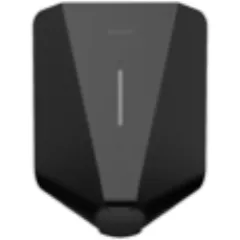
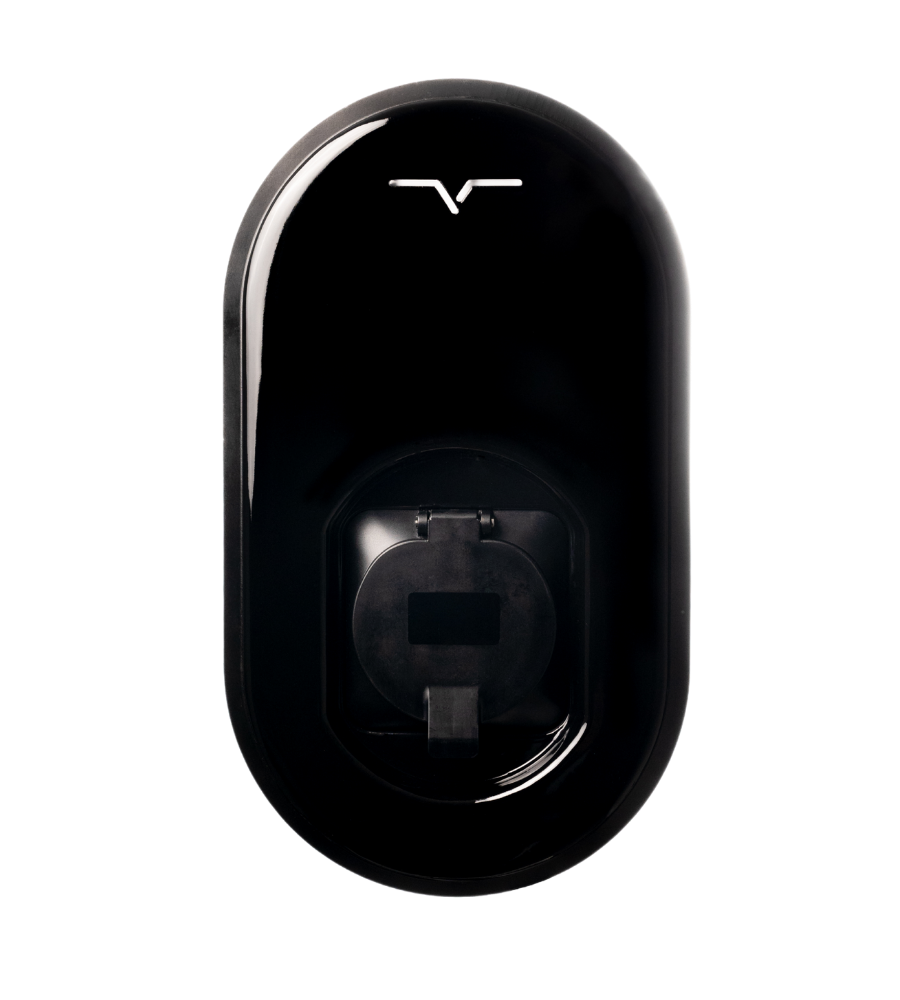
These two chargers sit in almost identical price territory, yet they could hardly be more different in philosophy. The Easee One is a Scandinavian exercise in minimalism — stripped back, feather-light, and built around lifetime 4G connectivity. The VCHRGD Seven Pro takes the opposite approach, cramming solar integration, RFID access, smart tariff support, and an AI-powered app into a unit that costs just £27 more. If you are shopping at the sub-£450 end of the market, these are arguably the two most compelling options available in the UK right now.
The question is straightforward: do you want the simplest, lightest charger with rock-solid connectivity, or do you want every smart feature going at a price that undercuts most of the competition?
In a nutshell:
- Easee One (£405): The lightest charger on the market at just 1.5 kg, with built-in lifetime 4G and effortless multi-charger expansion.
- VCHRGD Seven Pro (£432): More smart features per pound than almost any rival — solar charging, smart tariff integration, RFID, and OCPP support all included.
Spec Comparison
| Feature | Easee One | VCHRGD Seven Pro |
|---|---|---|
| Price | £405 | £432 (tethered 7.5m) / from £395 untethered |
| Power | 7.4kW (single-phase) | 7.4kW (single-phase) |
| Cable | Untethered (use own cable) | 7.5m tethered Type 2 |
| Smart tariff integration | No direct integration | Yes (Octopus Intelligent Go) |
| Solar charging | No | Yes (Solar Export + Solar Only modes) |
| Connectivity | Wi-Fi + 4G (built-in eSIM, lifetime) | Wi-Fi + Bluetooth (optional 4G) |
| RFID | No | Yes (2 cards included) |
| OCPP | No | Yes (1.6J) |
| Warranty | 3 years | 3 years |
| IP / IK Rating | IP54 | IP54 + IK10 |
| Weight | 1.5 kg | ~4 kg |
| Dimensions | 256 × 193 × 106 mm | 300 × 180 × 90 mm |
| Type | Untethered (Type 2 socket) | Tethered or untethered |
Smart Tariff Integration
This is where the VCHRGD Seven Pro opens up a meaningful gap. It integrates directly with Octopus Intelligent Go — one of the UK's most popular EV tariffs, offering electricity at around 7p/kWh during off-peak hours. That means the charger can automatically schedule your sessions to hit the cheapest slots without you lifting a finger. For a typical Tesla Model 3 driver covering the UK average of 7,400 miles a year, charging at 7p/kWh instead of a standard 24p/kWh rate could save roughly £300-£350 annually.
The Easee One, by contrast, has no direct smart tariff integration. You can still schedule charging through the Easee app — setting a timer to start at midnight, for example — but it will not dynamically respond to tariff windows the way the VCHRGD does with Intelligent Go. If you are on a simple off-peak tariff like Octopus Go (fixed cheap window of 00:30–04:30), manual scheduling works fine. But if you want hands-off optimisation, the VCHRGD has a clear advantage here.
Solar Diversion
If you have solar panels — or plan to install them — this comparison is essentially decided for you. The VCHRGD Seven Pro offers two dedicated solar charging modes: Solar Export, which diverts surplus generation to your car rather than exporting it to the grid, and Solar Only, which charges exclusively from solar power. The CT clamp needed for dynamic load balancing and solar monitoring is included in the box, which is a genuine cost saving over chargers that charge extra for this accessory.
The Easee One does not support solar integration at all, as confirmed in multiple reviews including topcharger.co.uk. If you are generating 3-4kW from a typical UK rooftop array, the ability to divert that energy into your EV rather than selling it back at 4-5p/kWh on the Smart Export Guarantee is worth hundreds of pounds a year. For solar households, the VCHRGD Seven Pro is the only sensible choice between these two.
App and Connectivity
The Easee One's standout feature is its built-in eSIM with a lifetime 4G subscription at no additional cost. This means the charger stays connected even if your home Wi-Fi drops or if the charger is mounted in a garage or outbuilding beyond router range. As mcnallyev.uk notes, the Easee app focuses on simplicity — remote control, consumption tracking, and access sharing without unnecessary complexity. Over-the-air firmware updates arrive automatically over 4G, so you never need to worry about connectivity for software improvements.
The VCHRGD Seven Pro connects via Wi-Fi and Bluetooth, with 4G available only as an optional extra. Its Powerverse app is more feature-rich, including a Raya AI assistant and detailed solar monitoring, but it is worth noting that the app is a third-party platform rather than a VCHRGD-developed product. Long-term continuity depends on that partnership. The VCHRGD also supports OCPP 1.6J, an open protocol that lets you connect to third-party energy management platforms — a genuinely useful feature for tech-savvy owners or anyone who might want to switch platforms in future.
Build Quality and Installation
The Easee One weighs just 1.5 kg — less than a bag of sugar — making it comfortably the lightest home charger on the UK market. For installers, this means faster, easier mounting, particularly on rendered walls or timber frames where weight matters. Its compact dimensions (256 × 193 × 106 mm) and integrated RCD Type-B and open PEN protection mean fewer additional components in your consumer unit, which can reduce installation costs.
The VCHRGD Seven Pro is heavier at around 4 kg but still compact at 300 × 180 × 90 mm. It adds an IK10 impact resistance rating on top of the standard IP54 weatherproofing — meaning it can withstand significant knocks, which is useful if the charger is mounted near a driveway where car doors or shopping trolleys might make contact. The 7.5-metre tethered cable is generous and will suit most driveways without needing to reposition the car.
One practical note: the Easee One is untethered, so you will need to carry your own Type 2 cable. All Teslas ship with a Type 2 cable as standard, so this is not an issue for Tesla owners. However, if household members drive different EVs, check that a suitable cable is available. The Easee One also supports expansion to up to three chargers on a single 32A supply via dynamic load balancing — ideal for multi-EV households, though additional Easee hardware is required.
Price and Value
| Easee One | VCHRGD Seven Pro | |
|---|---|---|
| Unit price | £405 | £432 (tethered) / £395 (untethered) |
| Typical installation | £400–£600 | £400–£600 |
| Total installed cost | £805–£1,005 | £832–£1,032 |
| After OZEV grant (if eligible) | £305–£505 | £332–£532 |
At just £27 apart for the tethered VCHRGD versus the Easee One, the price difference is negligible. The real value question is whether you need the VCHRGD's additional features. If you have solar panels, the solar integration alone justifies the difference many times over. If you want smart tariff optimisation with Octopus Intelligent Go, the VCHRGD delivers that out of the box. On the other hand, if you prioritise bulletproof connectivity and the simplest possible installation, the Easee One's lifetime 4G and 1.5 kg weight are genuinely hard to match at any price, let alone £405.
Who Should Buy Which?
Buy the Easee One if:
- You want the simplest, lightest installation possible — at 1.5 kg, nothing else comes close
- You need guaranteed connectivity via built-in lifetime 4G with no ongoing costs
- You plan to expand to multiple chargers in future (up to 3 on one supply)
- You prefer an untethered socket for a clean wall-mounted look
- You do not have solar panels and are happy with manual charge scheduling
Buy the VCHRGD Seven Pro if:
- You have solar panels and want to maximise self-consumption with dedicated solar modes
- You want automatic smart tariff optimisation with Octopus Intelligent Go
- You need RFID access control for a shared driveway or workplace setting
- You want OCPP 1.6J compatibility for future-proof energy management
- You prefer a tethered charger with a generous 7.5-metre cable for convenience
Our recommendation: For most UK buyers, the VCHRGD Seven Pro offers better overall value. The combination of solar integration, smart tariff support, RFID, and OCPP at £432 is genuinely remarkable — you would typically pay £800+ for this feature set from established brands. The main caveat is brand maturity: VCHRGD is relatively new, and the Powerverse app dependency introduces a small element of risk. If you prioritise proven connectivity and ultra-simple installation — particularly in a location with poor Wi-Fi — the Easee One's lifetime 4G and featherweight design make it a compelling alternative. But feature-for-feature at virtually the same price, the VCHRGD Seven Pro is exceptionally hard to beat.
For the full specs-level breakdown, see our Easee One vs VCHRGD Seven Pro comparison page.
Read our full Easee One review or VCHRGD Seven Pro review.
For total installed cost rankings, see our cheapest EV charger guide.
We’ll handle the installation
We’ll match you with vetted UK electricians — up to 3 free quotes, no obligation.