Easee One vs Sync Energy Wall Charger 2: Budget Brilliance Battle
Two Budget Chargers, Two Very Different Approaches
If you're shopping for a home EV charger in 2025 and your budget is firmly under £500 for the unit alone, you've almost certainly stumbled across these two. The Easee One and the Sync Energy Wall Charger 2 are among the most affordable smart chargers available in the UK, both OZEV-approved, both single-phase 7.4kW, and both packed with features that would have been premium-only a couple of years ago.
Yet they take distinctly different paths to get there. The Easee One is a Scandinavian-designed featherweight with lifetime 4G built in, while the Sync Energy Wall Charger 2 is a UK-designed workhorse backed by listed company Luceco PLC, offering solar diversion and smart tariff scheduling out of the box. Choosing between them comes down to what matters most to you: rock-solid connectivity and ultra-simple installation, or solar integration and maximum flexibility at an even lower price.
In a nutshell:
- Easee One (£405): The lightest charger on the market with lifetime 4G connectivity and zero ongoing subscription costs.
- Sync Energy Wall Charger 2 (£362): A feature-rich UK-designed charger with integrated solar diversion and smart tariff scheduling at a bargain price.
Spec Comparison
| Feature | Easee One | Sync Energy Wall Charger 2 |
|---|---|---|
| Price | £405 | £362 (socketed); from £302 (tethered) |
| Power | 7.4kW (single-phase) | 7.4kW (single-phase) |
| Cable | Untethered (use own cable) | Untethered or tethered (7.5m cable) |
| Smart tariff scheduling | Via Easee app (manual scheduling) | TariffSense scheduling |
| Solar diversion | No | Yes (SolarCharge with CT clamp) |
| Connectivity | Wi-Fi + 4G (built-in eSIM, lifetime) | Wi-Fi + Ethernet + Bluetooth |
| OCPP support | Not specified | OCPP 1.6J |
| Warranty | 3 years | 3 years |
| IP rating | IP54 | IP65 + IK10 |
| Weight | 1.5 kg | ~4–5 kg |
| Type | Untethered (Type 2 socket) | Untethered or tethered (Type 2) |
Smart Tariff Integration and Energy Scheduling
This is where the Sync Energy Wall Charger 2 pulls ahead in a meaningful way. Its TariffSense feature is designed to schedule charging around your energy tariff's cheapest periods — handy if you're on something like Octopus Go (7.5p/kWh between 00:30 and 04:30) or Octopus Intelligent Go (~7p/kWh off-peak). For a typical Tesla Model 3 owner covering 7,400 miles a year, charging at off-peak rates rather than standard ~24p/kWh electricity could save you roughly £350 annually, so a charger that makes this effortless is genuinely valuable.
The Easee One offers scheduled charging through the Easee app, so you can absolutely set it to charge overnight during cheap hours. However, it lacks the dedicated smart tariff integration that the Sync Energy provides through TariffSense. You'll need to manually set your charging windows rather than having the charger automatically align with your tariff's off-peak slots. For most people this is perfectly workable — you set it once and forget it — but it's a step behind the Sync Energy's more automated approach.
Worth noting: neither charger matches the deep tariff integration of an Ohme, which communicates directly with Octopus's API. But for sub-£410 chargers, both offer enough scheduling smarts to keep your electricity bills firmly in check.
Solar Diversion: A Clear Winner
If you have solar panels — or plan to install them — this comparison becomes straightforward. The Sync Energy Wall Charger 2 includes SolarCharge, a solar diversion feature that uses a CT clamp to monitor your solar generation and divert surplus energy into your EV. This is a feature you'd normally associate with the Myenergi Zappi, which costs significantly more. Getting it at this price point is genuinely impressive.
The Easee One, by contrast, does not support solar integration. If you're generating 3-4kW from a typical UK rooftop array on a sunny day, the Sync Energy can put that free electricity straight into your car rather than exporting it to the grid at the SEG rate (typically 4-15p/kWh). Over a year, that could easily be worth £100-200 depending on your generation and driving habits. The Easee simply can't do this — topcharger.co.uk confirms in their review that the Easee One does not support solar integration.
App and Connectivity
Here's where the Easee One fights back hard. Its built-in eSIM with a lifetime 4G subscription is a genuinely standout feature at this price. If your charger is mounted on a garage wall 15 metres from your router, Wi-Fi can be patchy at best. The Easee One simply doesn't care — it falls back to 4G automatically, with no monthly fees, ever. That's peace of mind you can't put a price on.
The Sync Energy Wall Charger 2 relies on Wi-Fi, Ethernet, and Bluetooth for connectivity. The Ethernet option is excellent if you can run a cable to it, but some user reviews have flagged Wi-Fi reliability issues at range. The base model doesn't include 4G — you'd need the GG variant for cellular connectivity, which adds cost. If your charger location has poor Wi-Fi coverage and running an Ethernet cable isn't practical, this is a real consideration.
The Easee app is praised for its simplicity and user-friendliness, focusing on remote control, consumption tracking, and access sharing (mcnallyev.uk). The Sync Energy app has had a rockier journey — early users experienced confusion during a platform transition from Monta — though the current app offers energy monitoring and OTA updates.
Build Quality, Design, and Installation
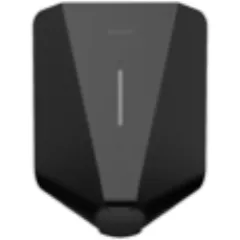
At just 1.5 kg, the Easee One is astonishingly light. Your installer will thank you — it's the easiest charger to mount on the market, and its compact dimensions (256mm × 193mm × 106mm) mean it barely takes up wall space. The Scandinavian design is clean and minimal. Both chargers include integrated PEN fault protection, which means no earth rod is required — saving £100-200 on installation.
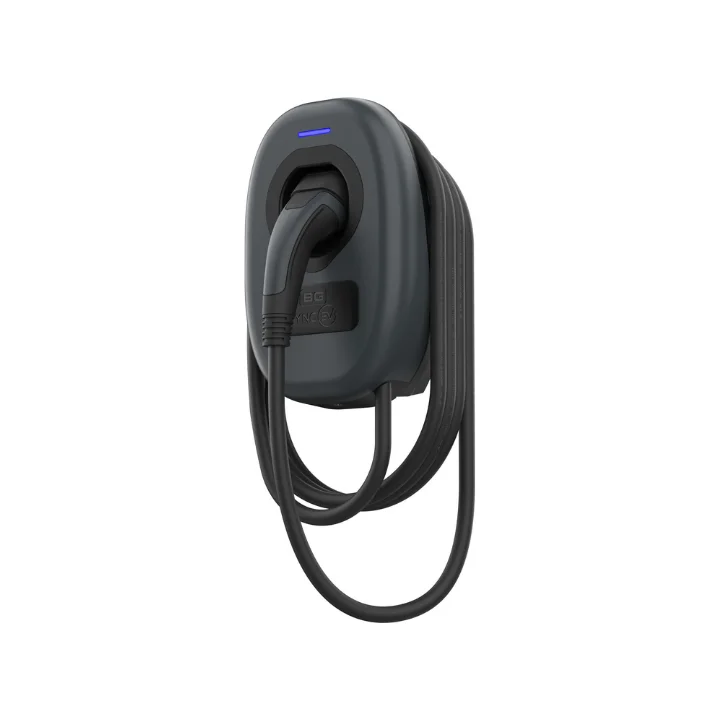
The Sync Energy is heavier at 4-5 kg and slightly larger (305mm × 201mm × 115mm), but it counters with a superior IP65 rating plus IK10 impact resistance, compared to the Easee's IP54. If your charger is exposed to the elements or at risk of being knocked by car doors or wheelie bins, the Sync Energy is the tougher unit. It also offers nine interchangeable colour fascia plates, so you can match it to your property — a nice touch that the Easee doesn't offer.
The Sync Energy's availability in both tethered and untethered variants is a genuine advantage. A tethered 7.5m cable means you simply grab and plug in — no rummaging in the boot. The Easee One is untethered only, so you'll need your own Type 2 cable (most Teslas include one).
Price and Value
| Cost | Easee One | Sync Energy Wall Charger 2 |
|---|---|---|
| Unit price | £405 | £362 (socketed) / £302 (tethered) |
| Typical installation | £400–600 | £300–600 |
| Total installed cost | £805–1,005 | £602–962 |
| After OZEV grant (£500) | £305–505 | £102–462 |
The Sync Energy is the cheaper charger by a comfortable margin, especially in its tethered configuration at just £302. After the OZEV grant (available to eligible renters and flat owners), you could have a fully installed smart charger with solar diversion for as little as £250-odd — that's extraordinary value. The Easee One is still competitively priced at £405, but the Sync Energy undercuts it while offering more features on paper.
Both chargers include built-in PEN fault protection, which keeps installation costs down by eliminating the need for an earth rod. Both carry a 3-year warranty.
Who Should Buy Which?
Buy the Easee One if:
- You want guaranteed connectivity via built-in lifetime 4G — no Wi-Fi worries
- You prefer the lightest, most compact charger for a clean wall-mounted look
- You have multiple EVs and want to expand to up to 3 chargers on one fuse
- You value a proven, established brand with over one million chargers sold globally
- Your charger location has poor Wi-Fi and running Ethernet isn't feasible
Buy the Sync Energy Wall Charger 2 if:
- You have solar panels and want integrated solar diversion without paying Zappi prices
- You want the lowest possible total cost — the tethered model starts at just £302
- You prefer a tethered cable for grab-and-go convenience
- You want OCPP 1.6J compliance for future-proofing with third-party energy platforms
- You need a tougher unit (IP65 + IK10) for an exposed or high-traffic location
Our recommendation: For the average UK homeowner without solar panels, the Easee One edges it. The lifetime 4G connectivity is a killer feature that eliminates the most common frustration with smart chargers — unreliable Wi-Fi. At £405 it's still a bargain, the 1.5 kg weight makes installation a breeze, and the Easee app is proven and reliable. However, if you have solar panels, the Sync Energy Wall Charger 2 becomes the obvious choice — getting solar diversion at this price is remarkable value, and the tethered option at £302 makes it the cheapest genuinely smart charger we've seen. Just make sure your Wi-Fi reaches the charger location, or budget for the 4G-equipped GG variant.
For the full specs-level breakdown, see our Easee One vs Sync Energy Wall Charger 2 comparison page.
Read our full Easee One review or Sync Energy Wall Charger 2 review.
For total installed cost rankings, see our cheapest EV charger guide.
We’ll handle the installation
We’ll match you with vetted UK electricians — up to 3 free quotes, no obligation.