Easee One vs Ohme ePod: Two Tiny Chargers, One Big Decision
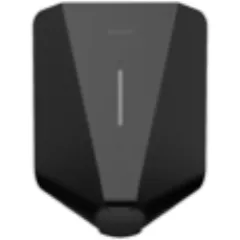
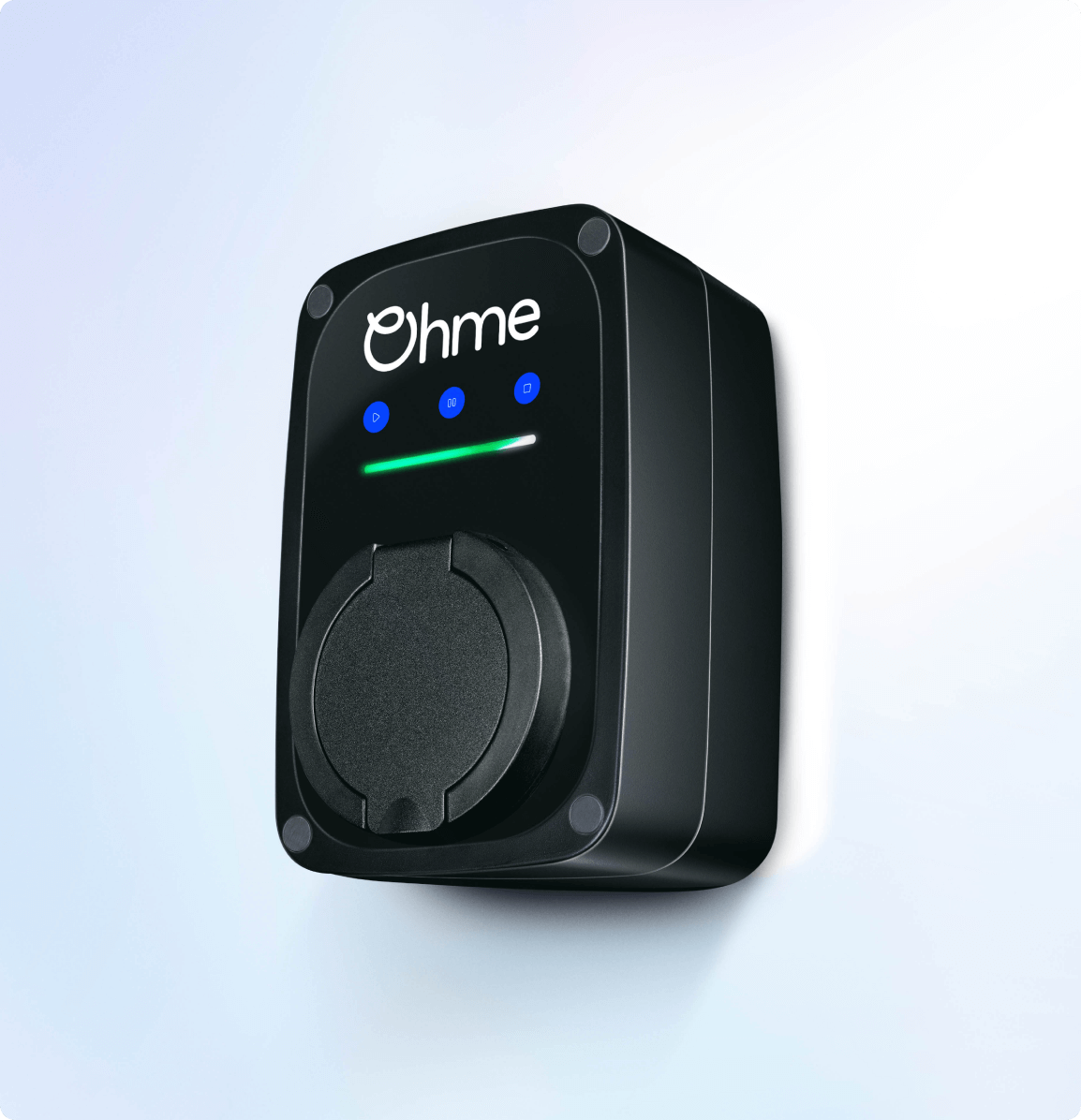
The Featherweights Go Head-to-Head
If you're shopping for a compact, untethered EV charger in the UK and you've got a budget of around £400, you've almost certainly landed on two names: the Easee One and the Ohme ePod. These two are strikingly similar on paper — both weigh under 1.5 kg, both deliver 7.4kW on a standard single-phase supply, both feature built-in cellular connectivity, and both cost within a few quid of each other. So what actually separates them?
The answer lies beneath the surface: in how they talk to your energy tariff, whether they play nicely with solar panels, and how they stay connected to the internet. These differences might sound minor, but over the course of a year's charging they can translate into hundreds of pounds saved — or wasted. Let's break it all down.
In a nutshell:
- Easee One (£405): The lightest, simplest smart charger on the market with lifetime 4G connectivity and brilliant multi-charger expandability.
- Ohme ePod (£409): The smartest untethered charger you can buy, with direct tariff integration that can slash your charging costs by up to 70%.
Spec Comparison
| Feature | Easee One | Ohme ePod |
|---|---|---|
| Price | £405 | £409 |
| Power | 7.4kW (single-phase) | 7.4kW (single-phase) |
| Cable | Untethered (use own cable) | Untethered (cable not included) |
| Smart tariffs | No direct integration | Intelligent Octopus Go, Agile, OVO, British Gas |
| Solar | No | Solar Boost / Solar Only modes |
| Connectivity | Wi-Fi + 4G (lifetime eSIM) | 3G/4G (built-in SIM, no Wi-Fi) |
| Warranty | 3 years | 3 years |
| IP Rating | IP54 | IP54 |
| Type | Untethered (Type 2) | Untethered (Type 2) |
| Weight | 1.5 kg | 1.48 kg |
| Dimensions | 256 × 193 × 106 mm | 230 × 140 × 100 mm |
Smart Tariff Integration
This is where the Ohme ePod pulls decisively ahead. Ohme has built its entire reputation on smart tariff integration, and the ePod delivers the full suite. It connects directly to tariffs like Octopus Intelligent Go (around 7p/kWh off-peak), Octopus Agile, OVO Smart Charge, and British Gas Electric Driver. You set a "Ready By" time — say, 7 a.m. — and the ePod automatically hunts for the cheapest half-hour slots overnight, filling your battery at rock-bottom rates without you lifting a finger. You can even set a price cap, telling the charger never to draw power above a certain pence-per-kWh threshold.
According to warmzilla.co.uk, the Ohme platform is widely regarded as the market leader for smart tariff scheduling in the UK. Ohme claims savings of up to 70% compared to charging on a flat-rate tariff, and based on typical Intelligent Octopus Go rates versus the current price cap, that figure is credible for high-mileage drivers.
The Easee One, by contrast, offers scheduled charging through its app — you can tell it when to start and stop — but it lacks direct tariff integration. It won't automatically chase the cheapest Agile slots or communicate with your energy supplier the way the Ohme does. If you're on a simple off-peak tariff like Octopus Go (7.5p/kWh between 00:30 and 04:30), you can set a timer and achieve similar savings manually. But if you want the charger to do the thinking for you, especially on variable tariffs like Agile, the Ohme ePod is in a different league.
Solar Compatibility
Another clear win for the Ohme ePod. It supports Solar Boost and Solar Only modes via a CT clamp, meaning it can detect when your solar panels are generating surplus energy and divert it into your car. In Solar Only mode, it will charge exclusively from solar generation — genuinely free miles if the sun cooperates. Solar Boost blends grid and solar power to speed things up when generation alone isn't enough.
The Easee One doesn't offer solar diversion features. If you've got panels on your roof (or plan to install them), the ePod is the obvious choice between these two. For dedicated solar users, the MyEnergi Zappi remains the gold standard, as noted by warmzilla.co.uk, but the ePod gets you solar compatibility without the Zappi's higher price tag.
App and Connectivity
Both chargers feature built-in cellular connectivity, which is a genuine advantage over chargers that rely solely on your home Wi-Fi — especially if your charger is mounted in a garage or at the far end of a driveway where signal drops off. However, the two take slightly different approaches.
The Easee One includes a built-in eSIM with a lifetime 4G subscription and no ongoing costs, plus Wi-Fi as a backup. That dual connectivity is reassuring — if one connection drops, the other picks up. The Easee app is clean and user-friendly, offering remote control, consumption tracking, and access sharing, as highlighted by mcnallyev.uk.
The Ohme ePod relies entirely on its built-in 3G/4G SIM with no Wi-Fi fallback. In most UK locations, cellular coverage is perfectly adequate, but if you live in a rural mobile blackspot, this could be a concern. On the software side, the Ohme app is arguably the more powerful of the two, thanks to its tariff integration, price cap controls, and solar management — it simply does more.
Neither charger has a built-in display screen; both are controlled entirely through their respective apps.
Installation Considerations
These are two of the easiest chargers to install in the UK. At 1.5 kg and 1.48 kg respectively, your electrician could practically hold either one up with a single hand while drilling with the other. Both include integrated safety features — the Easee One has built-in RCD Type-B and open PEN protection, while the Ohme ePod includes PEN fault protection — which can reduce the need for additional components in your consumer unit, potentially saving £50–100 on installation.
Both are untethered, meaning a clean, cable-free wall mount. The trade-off is that you'll need to supply your own Type 2 cable. Most Teslas come with one, but if yours didn't — or you drive a non-Tesla EV — budget an extra £100–200 for a decent cable. The Easee One is expandable up to three chargers on one fuse using dynamic load balancing, making it a strong choice for households with multiple EVs, though additional Easee hardware is required.
Price and Value
| Easee One | Ohme ePod | |
|---|---|---|
| Unit price | £405 | £409 |
| Installation | £400–600 | £300–600 |
| Total installed | £805–1,005 | £709–1,009 |
| After OZEV grant | £305–505 | £209–509 |
*Note: The OZEV grant of up to £500 is available to eligible renters and flat owners only.*
At just £4 apart on hardware, price is essentially a non-factor. The Ohme ePod quotes a slightly lower installation starting point (£300 vs £400), and Ohme offers a bundled installation package from £949, which could simplify the buying process. In practice, your actual installation cost will depend on cable run length and any consumer unit upgrades needed, so expect real-world quotes to vary.
Where the value equation really shifts is in running costs. If the Ohme ePod's smart tariff integration saves you even 3p/kWh on average, a driver covering the UK average of 7,400 miles per year in a Tesla Model 3 (roughly 2,114 kWh annually) would save around £63 per year — paying back the charger's cost difference many times over across its lifetime.
Who Should Buy Which?
Buy the Easee One if:
- You want the simplest, most reliable connectivity with both 4G and Wi-Fi backup
- You have (or plan to have) multiple EVs and want expandable load balancing for up to three chargers
- You're on a simple fixed off-peak tariff where manual scheduling does the job
- You prefer Easee's Scandinavian design aesthetic and modular hardware approach
- You don't have solar panels and don't plan to install them
Buy the Ohme ePod if:
- You're on Octopus Intelligent Go, Agile, OVO, or British Gas and want automatic cost-optimised charging
- You have solar panels and want Solar Boost or Solar Only charging modes
- You want a "set it and forget it" charger that genuinely minimises your electricity bills
- You want the absolute smallest footprint on your wall (230 × 140 mm)
- You're comfortable relying on cellular connectivity without Wi-Fi backup
Our recommendation: For most UK EV owners, the Ohme ePod gets our nod. At virtually the same price as the Easee One, it offers meaningfully smarter charging that will save you real money month after month — especially if you're on one of the popular smart tariffs that a growing number of EV drivers are switching to. The solar compatibility is a genuine bonus that the Easee simply can't match. That said, if you've got two or three EVs in the household, or you live somewhere with patchy mobile signal and need that Wi-Fi fallback, the Easee One remains an excellent choice and outstanding value at £405.
For the full specs-level breakdown, see our Easee One vs Ohme ePod comparison page.
Read our full Easee One review or Ohme ePod review.
For smart tariff integration rankings, see our best smart EV charger guide.
For total installed cost rankings, see our cheapest EV charger guide.
We’ll handle the installation
We’ll match you with vetted UK electricians — up to 3 free quotes, no obligation.