Easee One vs EcoFlow PowerPulse 2: Budget Hero vs Solar Ecosystem
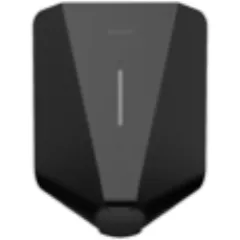
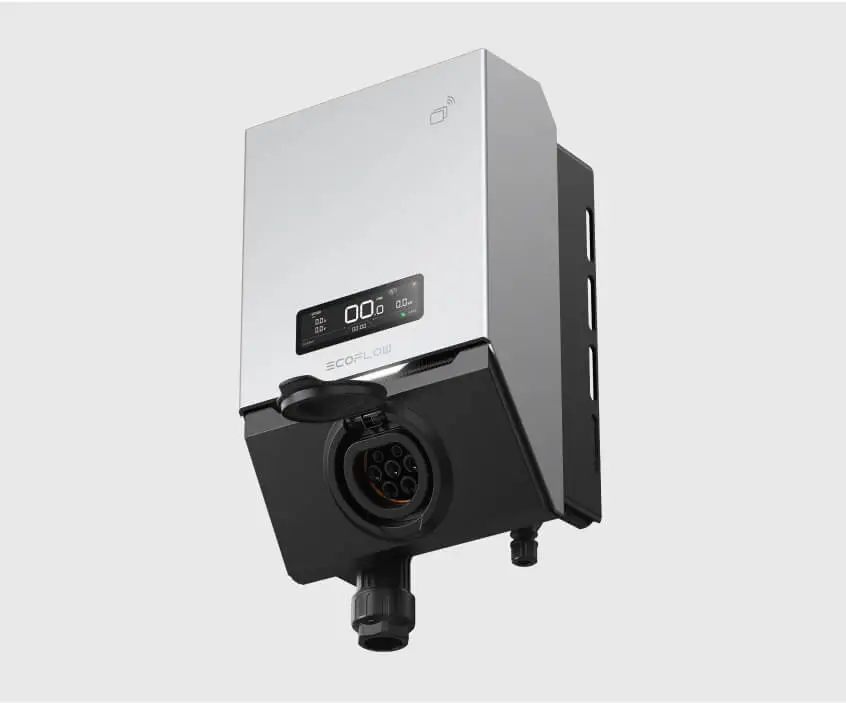
The Proven Lightweight vs the Solar Ecosystem Newcomer
These two chargers sit at very different points on the UK EV charging landscape, yet they end up on the same shortlist more often than you might expect. Both are untethered Type 2 units, both charge at 7kW on a standard single-phase supply, and both land well under £600 for the charger alone. The question is whether you want the simplest, cheapest path to reliable home charging — or a charger that slots into a broader solar and battery ecosystem.
The Easee One has been a fixture on UK driveways since 2020, earning a reputation for its absurdly compact design and rock-bottom price point. It is, as heatable.co.uk notes, one of the smallest chargers you can buy — and at just 1.5 kg, arguably the easiest to install. The EcoFlow PowerPulse 2, meanwhile, is a newcomer from a brand better known for portable power stations and home batteries. It brings three-phase capability, a dedicated Solar Mode, and deep integration with EcoFlow's PowerOcean battery system — features that make it genuinely interesting for homeowners who already generate their own electricity.
In a nutshell:
- Easee One (£405): The cheapest smart charger on the UK market with lifetime 4G connectivity and a featherweight 1.5 kg install.
- EcoFlow PowerPulse 2 (£545): A solar-and-battery ecosystem charger with three-phase support and built-in tariff optimisation for energy-savvy households.
Spec Comparison
| Feature | Easee One | EcoFlow PowerPulse 2 |
|---|---|---|
| Price (unit only) | £405 | £545 |
| Max Power | 7.4kW (single-phase only) | 7kW single-phase / 22kW three-phase |
| Cable | Untethered (Type 2 socket) | Untethered (tethered 5m also available) |
| Smart Tariff Support | Scheduled charging via app | Smart Mode (dynamic tariff optimisation) |
| Solar Features | None built-in | Solar Mode (prioritises surplus solar) |
| Connectivity | Wi-Fi + 4G (built-in eSIM, lifetime) | Wi-Fi + RFID |
| Display | LED status indicator | Built-in LCD display |
| Warranty | 3 years | 3 years |
| IP Rating | IP54 | IP55 (IP54 when cable not connected) |
| Weight | 1.5 kg | ~3.5 kg |
| Dimensions | 256 × 193 × 106 mm | 333 × 226 × 145 mm |
| Certification | OZEV approved | OCPP 1.6-J (OZEV status unconfirmed) |
Power and Charging Speed
On a typical UK single-phase supply, these two chargers deliver near-identical real-world performance. The Easee One tops out at 7.4kW; the PowerPulse 2 at 7kW on single-phase. That difference — roughly 0.4kW — translates to perhaps 15 minutes over a full 0–100% charge on a 60kWh Tesla Model 3. In practice, you will never notice it.
Where the EcoFlow pulls ahead is three-phase support. If you are one of the small minority of UK homes with a three-phase supply (typically larger properties, farms, or commercial premises), the PowerPulse 2 can deliver up to 22kW — cutting a full charge from around 8.5 hours to roughly 2.7 hours. The Easee One simply cannot do this; it is single-phase only. For the vast majority of UK homeowners on single-phase, this advantage is irrelevant, but if you know you have three-phase power, it is a significant differentiator.
Solar Diversion and Energy Ecosystem
This is the section where the EcoFlow PowerPulse 2 genuinely separates itself. It includes a dedicated Solar Mode that prioritises surplus solar generation, directing free electricity to your car before exporting to the grid. If you already own — or plan to buy — EcoFlow's PowerOcean home battery, you can manage solar panels, battery storage, home consumption, and EV charging from a single app. That level of integration is rare and genuinely useful for households aiming to maximise self-consumption.
The Easee One has no built-in solar diversion. As electriccarguide.co.uk notes, solar charging is listed as a feature but requires the separate Easee Equalizer accessory — an additional cost and an extra box on the wall. If solar optimisation is central to your charging strategy, the PowerPulse 2 offers it out of the box while the Easee One needs bolt-on hardware.
That said, if you do not have solar panels and have no plans to install them, this entire category is moot — and the Easee One's lower price becomes even more attractive.
App, Connectivity, and Smart Tariffs
The Easee One's standout connectivity feature is its built-in eSIM with a lifetime 4G subscription at no ongoing cost. In a country where many garages and driveways sit beyond reliable Wi-Fi range, this is a genuinely practical advantage. As renewablesexcellence.co.uk highlights, connectivity reliability is one of the most underrated factors in charger satisfaction. The Easee app handles scheduled charging and energy monitoring, and dynamic load balancing lets you run up to three Easee chargers from a single fuse — ideal for multi-car households, though additional Easee hardware is required.
The EcoFlow PowerPulse 2 relies on Wi-Fi only, with no cellular backup. However, it compensates with a built-in LCD display that shows charging status without needing to open an app — handy for a quick glance as you walk past. It also includes RFID authentication (useful if your charger is accessible to others) and OCPP 1.6-J compliance, which future-proofs it for integration with third-party energy management platforms.
On smart tariffs, the PowerPulse 2 edges ahead with its Smart Mode, which offers dynamic tariff optimisation — automatically shifting charging to the cheapest half-hour slots on tariffs like Octopus Agile. The Easee One supports scheduled charging, so you can manually set it to charge during Octopus Go's 00:30–04:30 off-peak window at 7.5p/kWh, but it lacks the direct API integration that chargers like the Ohme Home Pro offer. Neither charger is the market leader for tariff integration, but the PowerPulse 2's automated approach is more sophisticated. As evenergyhub.com points out, matching your charger to your energy tariff is one of the biggest long-term savings decisions you will make.
Installation Considerations
At 1.5 kg, the Easee One is comically light — less than a bag of sugar and a half. This makes it one of the simplest chargers for installers to mount, and its integrated RCD Type-B and open PEN protection mean fewer additional components in your consumer unit. As topcharger.co.uk notes, the compact dimensions (roughly the size of an A4 sheet) make it one of the most discreet options on the market. Crucially, it is OZEV approved, so eligible renters and flat owners can claim up to £500 off installation.
The PowerPulse 2 is larger (333 × 226 × 145 mm) and more than twice as heavy at 3.5 kg — still perfectly manageable, but noticeably chunkier on the wall. Its IP55 rating is marginally better than the Easee's IP54, offering slightly more protection against water jets. The important caveat: EcoFlow's OZEV approval status is not yet confirmed. If you are a renter or flat owner relying on the £500 grant, verify this before purchasing.
Price and Value
| Cost | Easee One | EcoFlow PowerPulse 2 |
|---|---|---|
| Unit price | £405 | £545 |
| Typical installation | £400–£600 | £400–£600 |
| Total installed cost | £805–£1,005 | £945–£1,145 |
| After OZEV grant (if eligible) | £305–£505 | Unconfirmed eligibility |
The Easee One is £140 cheaper at the unit level, and that gap holds through to total installed cost. For a straightforward single-car, single-phase setup with no solar panels, it is very hard to argue against the Easee's value proposition. You get lifetime 4G connectivity, integrated safety protection, and a proven track record — all for what could be under £500 after the OZEV grant.
The PowerPulse 2 justifies its premium if you are buying into the EcoFlow ecosystem. The combination of Solar Mode, Smart Mode, and PowerOcean battery integration could save you hundreds of pounds annually if you are generating your own solar electricity and optimising around a variable tariff. But if you are not in that ecosystem, the extra £140 buys you features you may never fully exploit.
Who Should Buy Which?
Buy the Easee One if:
- You want the lowest possible total installed cost for a reliable smart charger
- Your home is single-phase (as most UK homes are) and you charge one or two cars
- You value rock-solid 4G connectivity without relying on Wi-Fi reaching your driveway
- You prefer a compact, discreet unit that barely registers on your wall
- You want OZEV grant eligibility confirmed and ready to go
Buy the EcoFlow PowerPulse 2 if:
- You already own or plan to buy EcoFlow solar panels or a PowerOcean home battery
- You have a three-phase supply and want the option of 22kW charging speeds
- You want built-in solar diversion without buying additional hardware
- Dynamic tariff optimisation (e.g., Octopus Agile) is important to your energy strategy
- You value a built-in LCD display and RFID authentication
Our recommendation: For most UK homeowners on a single-phase supply without solar panels, the Easee One is the smarter buy. At £405 with lifetime 4G and OZEV approval, it delivers everything you need and nothing you do not — and it has years of proven reliability behind it. But if you are building an EcoFlow energy ecosystem with solar and battery storage, the PowerPulse 2 is the more future-proof choice. Its Solar Mode and tariff optimisation features could pay back that £140 premium within a year or two of smart charging. Just confirm OZEV eligibility before you commit.
Read our full Easee One review or EcoFlow PowerPulse 2 review.
We’ll handle the installation
We’ll match you with vetted UK electricians — up to 3 free quotes, no obligation.