Andersen A3 vs NexBlue Point 2: Design Icon vs Future-Proof Tech

The Design Icon vs the Tech Upstart
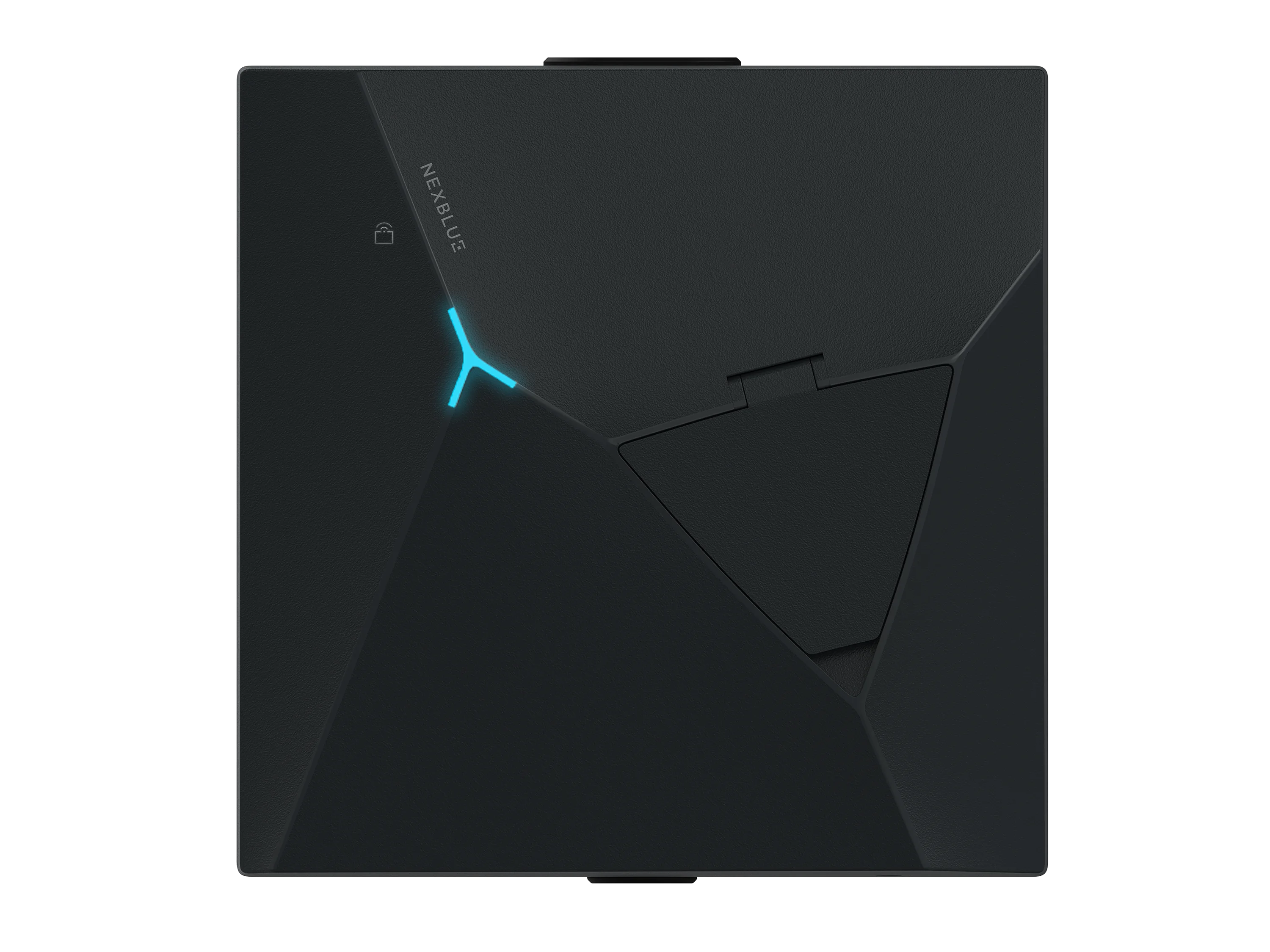
These two chargers could hardly be more different in philosophy — and yet they'll both charge your Tesla (or any other EV) at exactly the same 7.4kW rate. The Andersen A3 is a British-designed, beautifully finished piece of wall-mounted art that happens to charge your car. The NexBlue Point 2 is a compact, feature-stuffed smart charger from a newer brand that's betting big on future-proofing. One costs nearly twice the other.
So why might you be choosing between them? If you're the kind of homeowner who cares deeply about kerb appeal — perhaps your charger sits on a front-facing wall in full view of the street — the Andersen A3 is probably already on your shortlist. But if a nagging voice in your head is saying "should I really spend £995 when something half the price does more?", the NexBlue Point 2 is exactly the kind of charger that makes you pause. Let's work out which one actually deserves your money.
In a nutshell:
- Andersen A3 (£995): The best-looking home charger in the UK, with 247 finish options, a unique hidden cable system, and a 7-year warranty.
- NexBlue Point 2 (£530): A remarkably feature-rich smart charger with V2G readiness, built-in 4G, and dynamic load balancing — at almost half the price.
Spec Comparison
| Feature | Andersen A3 | NexBlue Point 2 |
|---|---|---|
| Price | £995 | £530–600 |
| Power | 7.4kW (single-phase) | 7.4kW (single-phase) |
| Cable | 5.5m tethered (hidden inside unit) | Untethered (bring your own cable) |
| Smart tariffs | Octopus Intelligent Go, OVO Charge Anytime | EcoPilot tariff integration |
| Solar | Yes, via app | Yes (requires NexBlue Zen accessory) |
| Connectivity | Wi-Fi | Wi-Fi, Bluetooth, 4G eSIM (lifetime free) |
| Warranty | 7 years | 5 years |
| IP Rating | IP54 | IP54 + IK10 |
| Type | Tethered (Type 2) | Untethered (Type 2 socket) |
| Weight | ~7.5 kg | 2.1 kg |
| V2G / ISO 15118 | No | Yes (ready) |
| OCPP | No | 1.6-J and 2.0.1 |
Smart Tariff Integration and Connectivity
Both chargers support smart tariff scheduling, which is where the real savings happen for UK EV owners. On a tariff like Octopus Intelligent Go at roughly 7p/kWh off-peak, charging a 60kWh Tesla Model 3 costs around £4.20 instead of £15+ at standard rates. Over a year of typical UK driving (~7,400 miles), that difference adds up to hundreds of pounds.
The Andersen A3 supports Octopus Intelligent Go and OVO Charge Anytime through its Konnect+ app, giving you scheduled charging at the cheapest rates. It works, but as heatable.co.uk notes in their review of the Andersen range, the smart features are "good basics… but not best-in-class" — you're buying the Andersen primarily for its design, not its software.
The NexBlue Point 2 takes a more aggressive approach with its EcoPilot system, which automatically identifies and charges at the cheapest rate windows. It also ships with triple connectivity — Wi-Fi, Bluetooth, and a built-in 4G eSIM with a lifetime free data subscription. That 4G backup is genuinely useful: if your home Wi-Fi drops out overnight (as routers occasionally do), the charger stays connected and your scheduled charge still runs. The Andersen A3, with Wi-Fi only, doesn't have that safety net. The NexBlue also supports OCPP 1.6-J and 2.0.1, meaning it could theoretically work with third-party energy management platforms down the line — a level of openness the Andersen simply doesn't offer.
Build Quality and Design
This is where the Andersen A3 earns every penny of its premium. With 247 colour and finish combinations — including anodised metals, Accoya wood fascias, and custom colours — it's less a charger and more an architectural detail. As electrifying.com puts it, the hidden cable system is "a unique and clever feature" where a brush around the edge of the unit cleans the cable as it's reeled up. No more handling a wet, muddy Type 2 lead in your work clothes. The anodised aluminium construction feels genuinely premium, and at 388mm × 183mm it's compact enough to look elegant rather than industrial.
The NexBlue Point 2 takes the opposite approach: pure function. At just 2.1 kg and 235mm × 230mm, it's one of the smallest and lightest chargers on the UK market — roughly a quarter of the Andersen's weight. It's a clean, minimal white box that won't offend anyone but won't turn heads either. It does boast an IK10 impact resistance rating (the highest available), which means it can withstand serious knocks — useful if it's mounted near a driveway where car doors or shopping bags might catch it. Being untethered, there's no cable hanging on the wall at all, which some homeowners actually prefer for a cleaner look — though you will need to store your Type 2 cable somewhere and handle plugging in each time.
Solar Charging
Both chargers offer solar integration, but the implementations differ. The Andersen A3 handles solar surplus charging through its app, which electriccarguide.co.uk notes works with a solar basic pack. It allows you to divert excess solar generation to your car rather than exporting it to the grid — a smart move if you're generating more than you're using during the day.
The NexBlue Point 2 also supports solar surplus charging, though it requires the separate NexBlue Zen accessory. A CT clamp for dynamic load balancing comes included in the box, which is a nice touch — many competitors charge extra for this. However, it's worth noting that neither charger matches the myenergi Zappi's Eco+ mode for pure solar diversion sophistication. If solar optimisation is your absolute priority, the Zappi remains the specialist tool. For most homeowners with panels who simply want to use surplus energy when it's available, both the Andersen and NexBlue will do the job.
Future-Proofing
This is where the NexBlue Point 2 has a genuine, tangible advantage. It's ISO 15118 and V2G (vehicle-to-grid) ready, meaning when bi-directional charging becomes widely available in the UK, you won't need to replace your hardware. It also supports Plug & Charge, where your car and charger authenticate automatically without app interaction. Combined with OTA (over-the-air) firmware updates via that built-in 4G connection, the NexBlue is clearly built with the next five years in mind. The Andersen A3 offers none of these forward-looking features.
Price and Value
| Cost | Andersen A3 | NexBlue Point 2 |
|---|---|---|
| Unit price | £995 | £530–600 |
| Typical installation | £400–600 | £400–600 |
| Total installed cost | £1,395–1,595 | £930–1,200 |
| After OZEV grant (if eligible) | £895–1,095 | £430–700 |
The price gap is stark. Even at the top end of NexBlue's retail range (£600), you're saving nearly £400 on the unit alone — money that comfortably covers a Type 2 charging cable (£100–150) with change left over. As tinyeco.com notes, home charger prices range from £500 for entry-level to £1,000+ for premium models, and the Andersen A3 sits firmly at the top of that bracket.
The Andersen's 7-year warranty does partially offset the premium — it's two years longer than the NexBlue's 5-year cover, and among the longest in the UK market. But you'd need to genuinely value the design and finish options to justify nearly double the outlay for identical charging performance.
Who Should Buy Which?
Buy the Andersen A3 if:
- Your charger is prominently visible on a front wall and aesthetics genuinely matter to you
- You want the hidden cable system — nothing else on the market matches it for tidiness
- You prefer a tethered charger with no cable faff (just grab and plug in)
- A 7-year warranty gives you peace of mind over a newer brand
- You're willing to pay a premium for British design and craftsmanship
Buy the NexBlue Point 2 if:
- You want maximum smart features for minimum spend
- Future-proofing matters — V2G readiness and ISO 15118 could save you replacing hardware later
- You want built-in 4G as a connectivity backup for reliable overnight charging
- You prefer an untethered socket for a clean wall-mounted look or multi-vehicle flexibility
- You're comfortable with a newer brand in exchange for a genuinely impressive feature set
Our recommendation: For most UK Tesla owners, the NexBlue Point 2 represents significantly better value. It charges at the same speed, offers smarter tariff integration, includes dynamic load balancing in the box, and is genuinely future-proofed with V2G readiness — all for roughly half the price. The Andersen A3 is a beautiful object and the hidden cable system is brilliant, but you're paying a £400+ premium that's almost entirely for aesthetics. If your charger is tucked away in a garage or on a side wall, that premium is hard to justify. If it's the centrepiece of your front drive and you want something that looks like it was designed by an architect rather than an engineer, the Andersen remains in a class of its own.
For the full specs-level breakdown, see our Andersen A3 vs NexBlue Point 2 comparison page.
Read our full Andersen A3 review or NexBlue Point 2 review.
We’ll handle the installation
We’ll match you with vetted UK electricians — up to 3 free quotes, no obligation.