Andersen A3 vs EcoFlow PowerPulse 2: Design Icon vs Solar Powerhouse
The Style Statement vs the Solar Specialist
These two chargers could hardly be more different in philosophy. The Andersen A3 is a British-designed piece of driveway jewellery — a charger you buy because you care deeply about how your home looks. The EcoFlow PowerPulse 2 is an energy ecosystem play — a charger you buy because you want every kilowatt-hour of solar, battery, and off-peak electricity working as hard as possible.
So why would anyone be torn between them? Because both sit in the premium-smart tier of UK home chargers, both offer solar integration, and both promise to do more than just push electrons into your Tesla. The difference is where the money goes. With the Andersen, you are paying £450 more — almost double — and the premium buys you extraordinary build quality, a hidden cable system, and up to 247 finish combinations. With the EcoFlow, you get three-phase capability, deeper solar and battery integration, and a fistful of smart features at a price that leaves enough in the budget for a weekend away.
In a nutshell:
- Andersen A3 (£995): The best-looking home EV charger in the UK, with a unique hidden cable system and 7-year warranty — but you pay handsomely for the aesthetics.
- EcoFlow PowerPulse 2 (£545): A feature-rich newcomer with solar mode, dynamic tariff optimisation, and three-phase support, built for homes already invested in the EcoFlow energy ecosystem.
Spec Comparison
| Feature | Andersen A3 | EcoFlow PowerPulse 2 |
|---|---|---|
| Price (unit only) | £995 | £545 |
| Max Power | 7.4kW (single-phase only) | 7kW single-phase / 22kW three-phase |
| Cable | 5.5m tethered (hidden) | Untethered (tethered 5m also available) |
| Smart Tariffs | Octopus Intelligent Go, OVO Charge Anytime | Smart Mode with dynamic tariff optimisation |
| Solar | Yes, via app | Yes, Solar Mode prioritises surplus solar |
| Connectivity | Wi-Fi | Wi-Fi, RFID |
| Display | LED status indicator | Built-in LCD display |
| OCPP Support | Not specified | OCPP 1.6-J |
| Warranty | 7 years | 3 years |
| IP Rating | IP54 | IP55 (IP54 untethered) |
| Weight | ~7.5 kg | ~3.5 kg |
| Type | Tethered (Type 2) | Untethered (Type 2) |
Build Quality and Design
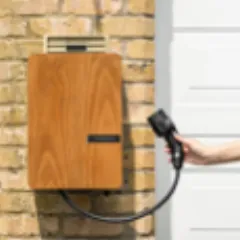
Let us be blunt: no other home EV charger on the UK market looks like the Andersen A3. The anodised aluminium construction comes in over 247 colour and finish combinations — metals, Accoya wood panels, custom colours — and the whole unit measures a compact 388mm × 183mm × 122mm. As heatable.co.uk notes in their review of the Andersen range, the hidden cable system is genuinely unique: the 5.5m Type 2 lead tucks completely inside the unit when not in use, keeping your wall clean and your hands dry. A brush seal cleans the cable as you reel it back in. If your charger sits on the front of your house in full view of the street, this matters.
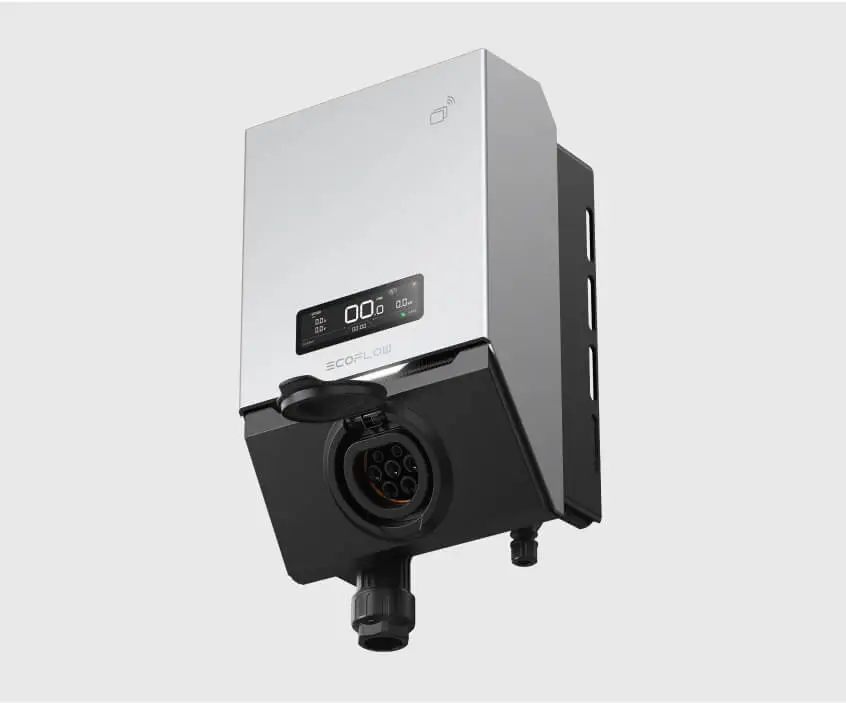
The EcoFlow PowerPulse 2 takes a different approach entirely. At just 3.5 kg — less than half the Andersen's weight — it is a compact, utilitarian box with a built-in LCD display that shows charging status without needing your phone. It is perfectly presentable, but nobody is going to mistake it for a design object. The IP55 rating edges ahead of the Andersen's IP54, offering marginally better dust and water ingress protection, though both are more than adequate for UK weather.
The Andersen's 7-year warranty is a standout, one of the longest in the UK market. As electriccarguide.co.uk highlights, this matches the larger Andersen A2 and signals genuine confidence in longevity. The EcoFlow's 3-year warranty is noticeably shorter — and given the brand is relatively new to the EV charging space, that gap may give cautious buyers pause.
Smart Tariff Integration and Solar
Both chargers support scheduled charging and smart tariff integration, but the depth differs. The Andersen A3 works with Octopus Intelligent Go and OVO Charge Anytime — two of the most popular UK smart EV tariffs. On Octopus Intelligent Go, you could charge at roughly 7p/kWh during off-peak hours, saving around £700–800 per year compared to a standard variable rate for a typical 7,400-mile annual mileage. The A3's scheduling via the Andersen app is straightforward and reliable.
The EcoFlow PowerPulse 2 goes further with its Smart Mode, which offers dynamic tariff optimisation — automatically shifting charging to the cheapest half-hour slots. This is particularly powerful on variable tariffs like Octopus Agile, where prices change every 30 minutes. OCPP 1.6-J compliance also means the PowerPulse 2 can theoretically work with third-party energy management platforms, giving it more flexibility down the line thanks to OTA (over-the-air) updates.
On the solar front, both chargers support solar integration, but the EcoFlow has a clear edge if you are already in its ecosystem. The PowerPulse 2's Solar Mode actively prioritises surplus solar generation, and if you own an EcoFlow PowerOcean home battery, you can manage solar panels, battery storage, home consumption, and EV charging from a single app. The Andersen A3 offers solar integration via its app, but it is a more basic implementation. As electrifying.com noted in their review of the Andersen range, solar integration is available but the smart features are not class-leading — you are paying for design, not software.
Power and Charging Speed
For the vast majority of UK homes on single-phase power, both chargers deliver a very similar experience. The Andersen A3 charges at 7.4kW, the EcoFlow at 7kW on single-phase — a difference of roughly 15 minutes over a full 60kWh charge (about 8.1 hours vs 8.6 hours). In practice, you will never notice this when plugging in overnight.
Where the EcoFlow pulls ahead is three-phase support. If you are one of the small percentage of UK homes with a three-phase supply — or you are planning a new-build or renovation — the PowerPulse 2 can deliver up to 22kW. That slashes a full charge to around 2.7 hours, which is transformative for households with multiple EVs or drivers who need rapid turnarounds. The Andersen A3 is single-phase only, with no upgrade path. If three-phase matters to you, the A3 simply is not an option.
App and Connectivity
The Andersen A3 connects via Wi-Fi and is controlled through the Andersen Konnect+ app, offering scheduling, cost tracking, and charge locking. It does the job without fuss, but there is no 4G fallback if your Wi-Fi signal is weak at the charger location — worth checking before installation.
The EcoFlow app adds RFID authentication (useful if your charger is accessible to others), the built-in LCD display for at-a-glance status, and OCPP 1.6-J support for future-proofing. Real-time load balancing is also included, which is a genuine advantage for multi-EV households. The EcoFlow's connectivity package is objectively more feature-rich.
Price and Value
| Cost | Andersen A3 | EcoFlow PowerPulse 2 |
|---|---|---|
| Unit price | £995 | £545 |
| Typical installation | £400–£600 | £400–£600 |
| Total installed cost | £1,395–£1,595 | £945–£1,145 |
| After OZEV grant (if eligible) | £895–£1,095 | £445–£645 |
The price gap is stark. At £450 less for the unit alone, the EcoFlow PowerPulse 2 delivers more features per pound by any objective measure — three-phase support, OCPP compliance, RFID, an LCD display, and deeper solar integration. You could buy the EcoFlow and still have enough left over for a year of Octopus Intelligent Go savings.
But value is not purely about features-per-pound. The Andersen A3's 7-year warranty alone is worth something — potentially saving you a replacement unit cost over the EcoFlow's 3-year cover. And if your charger is prominently mounted on the front of a period property, the Andersen's design premium may genuinely add to your home's kerb appeal. Note that the EcoFlow's OZEV approval status is not yet confirmed, so check eligibility before purchasing if the £500 grant matters to your budget.
Who Should Buy Which?
Buy the Andersen A3 if:
- Your charger will be prominently visible and aesthetics genuinely matter to you
- You want the hidden cable system — no other charger offers anything like it
- A 7-year warranty gives you peace of mind over the long term
- You are happy with single-phase 7.4kW charging and do not need three-phase
- You value British design and premium materials over feature count
Buy the EcoFlow PowerPulse 2 if:
- You already own EcoFlow solar panels or a PowerOcean battery and want unified control
- You want three-phase capability now or in the future
- Dynamic tariff optimisation and OCPP compliance matter to your energy strategy
- You prefer to spend less on the charger and more on cheap electricity
- You want RFID access control or real-time load balancing for multiple EVs
Our recommendation: For most UK Tesla owners on single-phase power, the EcoFlow PowerPulse 2 offers significantly better value and a more capable feature set at almost half the price. Its solar mode, smart tariff optimisation, and ecosystem integration make it the smarter energy investment. However, if your charger sits front-and-centre on your home and you want something that looks like it was designed by an architect rather than an engineer, the Andersen A3 remains in a class of one. Just go in with your eyes open — you are paying a £450 premium for design excellence and warranty length, not for superior charging technology.
Read our full Andersen A3 review or EcoFlow PowerPulse 2 review.
We’ll handle the installation
We’ll match you with vetted UK electricians — up to 3 free quotes, no obligation.