Zaptec Go 2 vs VCHRGD Seven Pro: Future-Proofing vs Feature-Packed Value
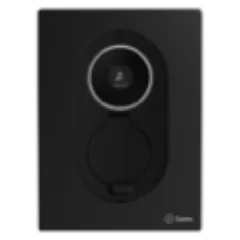
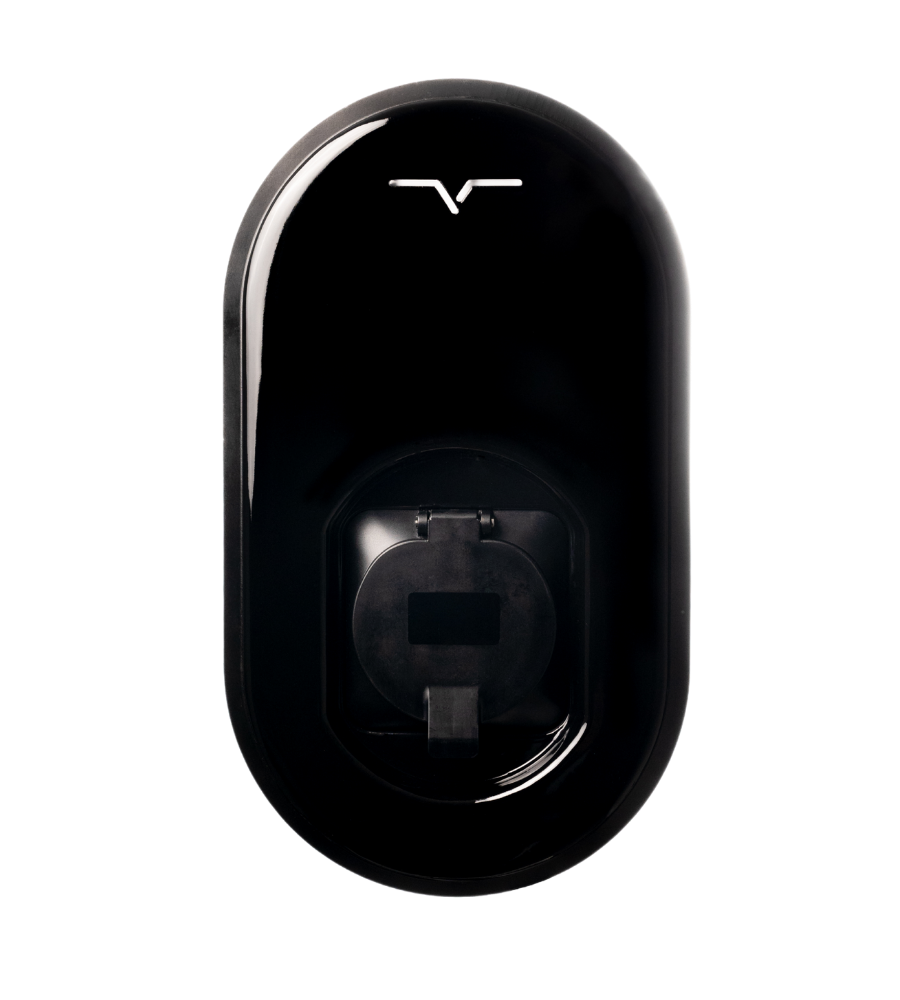
Future-Proofing vs Feature-Packed Value: Two Very Different Approaches
These two chargers represent fundamentally different philosophies about what makes a great home EV charger. The Zaptec Go 2 is a forward-looking, Scandinavian-designed unit that bets big on V2G (vehicle-to-grid) technology — the idea that your EV will one day feed power back to the grid and earn you money. The VCHRGD Seven Pro, meanwhile, couldn't care less about tomorrow's promises. It's laser-focused on cramming every useful smart feature available today into a box that costs under £450.
You might be comparing these two if you've got a limited budget but still want a genuinely smart charger, or if you're torn between paying more for cutting-edge future tech versus getting maximum value right now. The £275 price gap between them is significant — that's roughly half the cost of a standard installation. So the question becomes: is V2G readiness and a MID-approved meter worth that premium, or does the VCHRGD's solar integration, dynamic load balancing, and RFID access offer more practical, everyday value?
In a nutshell:
- Zaptec Go 2 (£707): The UK's first V2G-ready AC home charger with subscription-free 4G and a MID-approved energy meter — built for where the market is heading.
- VCHRGD Seven Pro (£432): Arguably the most feature-rich charger per pound on the UK market, with solar modes, load balancing, RFID, and Octopus Intelligent Go integration included as standard.
Spec Comparison
| Feature | Zaptec Go 2 | VCHRGD Seven Pro |
|---|---|---|
| Price | £707 | £432 (tethered 7.5m) / from £395 (untethered) |
| Power | 7.4kW (1-phase) / 22kW (3-phase) | 7.4kW (single-phase only) |
| Cable | Untethered (use own cable) | 7.5m tethered (untethered available) |
| Smart tariffs | Scheduled charging | Octopus Intelligent Go integration |
| Solar | Auto-switches between 1 and 3-phase for solar | Solar Export + Solar Only modes, CT clamp included |
| Connectivity | Wi-Fi, 4G (subscription-free), Bluetooth | Wi-Fi, Bluetooth (optional 4G) |
| Warranty | 5 years | 3 years |
| IP Rating | IP54 | IP54 + IK10 (impact-resistant) |
| Type | Untethered only | Tethered or untethered |
| OCPP | 1.6J compliant | 1.6J compliant |
| Weight | ~3.2 kg | ~4 kg (tethered) |
| Rating | 4.3/5 | 4.8/5 |
Smart Tariff Integration
This is where the VCHRGD Seven Pro pulls ahead for most UK drivers. It integrates directly with Octopus Intelligent Go — one of the UK's most popular EV tariffs, offering electricity at around 7p/kWh during off-peak hours. That kind of deep tariff integration means the charger and your energy supplier communicate directly, optimising when your car charges to take advantage of the cheapest slots. For a typical Tesla Model 3 owner covering the UK average of 7,400 miles per year, charging at 7p/kWh versus the standard variable rate of around 24.5p/kWh could save you roughly £370 annually.
The Zaptec Go 2 offers scheduled charging through the Zaptec app, which means you can manually set charging windows to coincide with off-peak hours on tariffs like Octopus Go (7.5p/kWh between 00:30 and 04:30). That works perfectly well, but it lacks the automated, API-level smart tariff integration that the VCHRGD provides. You're doing the thinking rather than letting the charger do it for you.
Both chargers are OCPP 1.6J compliant, which means they can connect to third-party energy management platforms — a useful fallback as the smart charging ecosystem evolves. But right now, today, the VCHRGD gives you more out of the box.
Solar Integration
If you've got solar panels — or you're planning to install them — this comparison gets interesting. The VCHRGD Seven Pro offers two dedicated solar modes: Solar Export, which diverts excess generation to your car, and Solar Only, which charges exclusively from your panels. Crucially, it includes the CT clamp as standard, so there's no extra cost for the hardware needed to monitor your home's energy consumption and solar generation. Dynamic load balancing is also baked in, preventing your circuit breaker from tripping when the household demand spikes.
The Zaptec Go 2 takes a different approach. It can auto-switch between single-phase and three-phase charging to optimise solar integration — a clever trick if you're on a three-phase supply, though fewer than 5% of UK homes have one. For the vast majority of single-phase households, this advantage is largely theoretical. The Zaptec Go 2 doesn't include a CT clamp, and its solar capabilities are less explicitly detailed than the VCHRGD's dual-mode system.
For solar panel owners on a standard single-phase supply, the VCHRGD Seven Pro is the more practical and cost-effective choice. The included CT clamp alone saves you £50-100 compared to chargers that charge extra for it.
App, Connectivity, and Access Control
The Zaptec Go 2's standout connectivity feature is its subscription-free 4G. No Wi-Fi signal reaching your driveway? No problem. The charger stays online via 4G LTE with no monthly fees, ensuring you always receive over-the-air updates and can monitor charging remotely. As topcharger.co.uk noted in their review of the original Zaptec Go, the charger being "always online with WiFi or 4G LTE-M" is a genuine advantage for reliability. The Zaptec app is functional for monitoring sessions, speed, and history, though it's been described as relatively basic compared to some rivals.
The VCHRGD Seven Pro uses the Powerverse app, which features an AI assistant called Raya. It offers Wi-Fi and Bluetooth connectivity, with 4G available as an optional extra rather than included. The app handles scheduling, solar mode selection, and session monitoring. One thing worth flagging: the app depends on the third-party Powerverse platform, so its long-term continuity relies on that partnership remaining intact.
The VCHRGD also includes two RFID cards for access control — genuinely useful if you share a driveway or want to prevent unauthorised use. The Zaptec Go 2 doesn't include RFID in the data provided for this model, though the original Zaptec Go did feature it according to zaptec.com.
Build Quality and Design
Both chargers are impressively compact. The Zaptec Go 2 measures just 240mm × 180mm × 106mm and weighs only 3.2 kg — continuing the original Go's reputation as being roughly 80% smaller than typical chargers. It's a beautifully discreet unit with that signature Scandinavian minimalism, backed by a market-leading 5-year warranty. Zaptec manufactures in Norway and designs for harsh Nordic conditions, which bodes well for British weather zaptec.com.
The VCHRGD Seven Pro is slightly larger at 300mm × 180mm × 90mm and 4 kg, but it adds IK10 impact resistance on top of its IP54 weatherproofing — meaning it can withstand significant knocks, a practical advantage if your charger is near a driveway where car doors or shopping trolleys might make contact. The trade-off is a shorter 3-year warranty and availability only in black. VCHRGD is also a relatively new brand, so long-term reliability data is limited compared to the more established Zaptec localev.uk.
Price and Value
| Cost | Zaptec Go 2 | VCHRGD Seven Pro |
|---|---|---|
| Unit price | £707 | £432 (tethered) / from £395 (untethered) |
| Installation | £400–600 | £400–600 |
| Total installed | £1,107–1,307 | £832–1,032 |
| After OZEV grant | £607–807 | £332–532 |
The price gap is stark. Even at the top end of installation costs, the VCHRGD Seven Pro comes in at less than the Zaptec Go 2's best-case scenario. That £275 unit price difference buys you a lot — and the VCHRGD arguably gives you more day-to-day features for less money. The Zaptec's premium is essentially a bet on V2G technology and the convenience of built-in 4G. Whether that bet pays off depends entirely on how quickly V2G becomes a reality in the UK — and right now, it's still in trial phases.
That said, the Zaptec's 5-year warranty versus the VCHRGD's 3-year cover does narrow the value gap somewhat. Over a decade of ownership, that extra warranty peace of mind has tangible worth.
Who Should Buy Which?
Buy the Zaptec Go 2 if:
- You want a charger that's ready for V2G when the technology matures in the UK
- Your Wi-Fi doesn't reach your charging point and you need reliable 4G connectivity at no ongoing cost
- You have or plan to get a three-phase supply and want 22kW charging capability
- You value a longer 5-year warranty and an established manufacturer
- You need a MID-approved energy meter for accurate billing or workplace recharging claims
Buy the VCHRGD Seven Pro if:
- You want the most features for the least money — solar modes, load balancing, RFID, and smart tariff integration all included
- You have solar panels and want dedicated Solar Export and Solar Only modes with the CT clamp included
- You're on Octopus Intelligent Go and want deep, automated tariff integration
- You prefer a tethered charger with a generous 7.5m cable
- Budget is a priority and you'd rather spend the £275 saving on electricity or other upgrades
Our recommendation: For most UK homeowners right now, the VCHRGD Seven Pro is the smarter buy. It delivers more practical, usable features at a significantly lower price, and its Octopus Intelligent Go integration and solar modes will save you real money from day one. The Zaptec Go 2 is genuinely impressive technology, and if V2G fulfils its promise, early adopters will be glad they invested. But paying a £275 premium for a feature that may take years to become mainstream is a tough ask when the alternative gives you everything you need today. If reliable connectivity without Wi-Fi is essential, or you're on three-phase power, the Zaptec earns its premium — otherwise, the VCHRGD is exceptionally hard to beat on value.
For the full specs-level breakdown, see our Zaptec Go 2 vs VCHRGD Seven Pro comparison page.
Read our full Zaptec Go 2 review or VCHRGD Seven Pro review.
For total installed cost rankings, see our cheapest EV charger guide.
We’ll handle the installation
We’ll match you with vetted UK electricians — up to 3 free quotes, no obligation.