Zaptec Go 2 vs Rolec EVO: Future-Proofing vs Value for Money
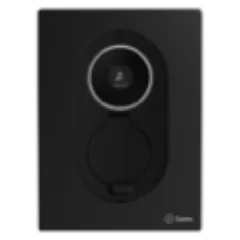
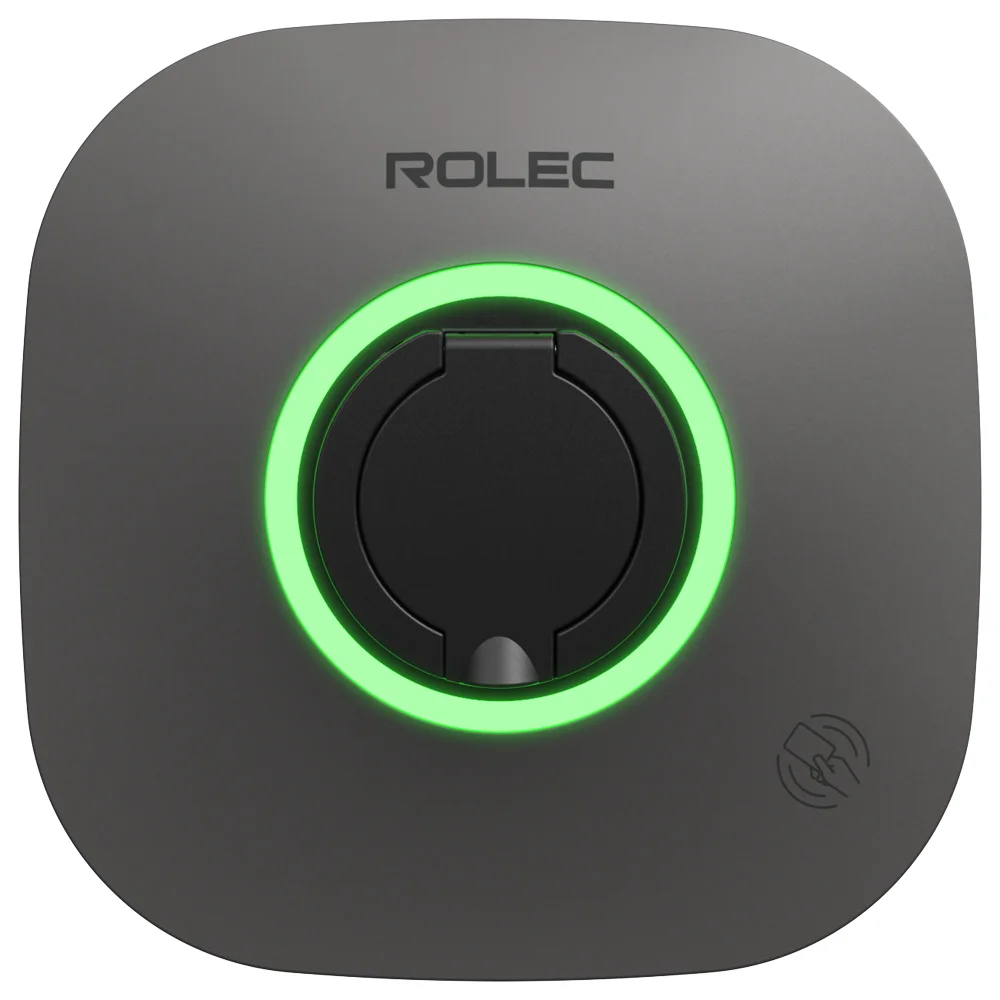
Future-Proofing vs Best Value: Two Very Different Approaches to Smart Charging
These two chargers sit at opposite ends of a fascinating debate in the UK EV market right now: do you invest in tomorrow's technology today, or do you get the most feature-packed charger possible for the least money?
The Zaptec Go 2 is the UK's first V2G-ready AC home charger — a bold claim that positions it squarely as a future-proofing play. It comes from a well-regarded Norwegian manufacturer with a reputation for compact, beautifully engineered hardware, and it adds subscription-free 4G connectivity and a MID-approved energy meter to sweeten the deal. But at £707, it's asking you to pay a premium for a feature — vehicle-to-grid — that may take years to become mainstream in the UK.
The Rolec EVO, meanwhile, is a UK-designed and manufactured charger from an established company based in Boston, Lincolnshire. At £449, it undercuts the Zaptec by a significant £258 while packing in solar integration, dynamic load balancing, built-in PME fault detection, and RFID access — features you would normally expect to pay £600 or more for. It won a Red Dot Award in 2024, and it comes with the same five-year warranty as the Zaptec.
So which approach is right for you? Let's dig in.
In a nutshell:
- Zaptec Go 2 (£707): The UK's first V2G-ready AC home charger with free 4G and a MID-approved meter — built for the long game.
- Rolec EVO (£449): Outstanding value with solar modes, dynamic load balancing, and built-in PME detection from a trusted UK manufacturer.
Spec Comparison
| Feature | Zaptec Go 2 | Rolec EVO |
|---|---|---|
| Price | £707 | £449 |
| Max Power | 7.4kW (1-phase) / 22kW (3-phase) | 7.4kW (single-phase only) |
| Type | Untethered (Type 2 socket) | Untethered (Type 2 socket) |
| Smart Tariff Support | Scheduled charging | Charge scheduling |
| Solar Integration | Auto-switches between 1 and 3-phase | Eco + Eco+ modes (CT clamp included) |
| Connectivity | Wi-Fi, 4G (free), Bluetooth | Wi-Fi 6, Bluetooth 5.0, Ethernet |
| Load Balancing | Not specified | Dynamic (CT clamp included) |
| RFID | Not specified | Yes (2 cards included) |
| PME/PEN Detection | Not specified | Built-in |
| Warranty | 5 years | 5 years |
| IP Rating | IP54 | IP54 + IK10 |
| Weight | ~3.2 kg | 3 kg |
| Certification | OZEV approved | OZEV approved, Red Dot Award 2024 |
Power and Charging Speed
On a standard UK single-phase supply — which covers the vast majority of homes — both chargers deliver 7.4kW. That means identical real-world charging times: roughly 8.5 hours to fill a typical 60kWh EV battery from empty, or around 30 miles of range per hour of charging. For overnight charging on a smart tariff like Octopus Go (7.5p/kWh between 00:30 and 04:30), both will comfortably add 100+ miles in that four-hour window.
Where the Zaptec Go 2 pulls ahead is its three-phase capability. If you have (or plan to install) a three-phase supply, it can deliver up to 22kW — roughly three times faster, charging that same 60kWh battery in around 2.7 hours. The Rolec EVO is single-phase only. In practice, fewer than 5% of UK homes have three-phase power, so this is a niche advantage. But if you're building a new property or have a commercial setting, it's worth noting.
The Zaptec Go 2 also auto-switches between single and three-phase charging, which Zaptec highlights as beneficial for solar integration — allowing the charger to optimise how it uses available solar generation across phases.
Solar Integration
Both chargers offer solar compatibility, but they take different approaches. The Rolec EVO includes dedicated Eco and Eco+ modes with a CT clamp included in the box. This means it can monitor your home's total energy consumption and divert surplus solar generation to your car. Having the CT clamp included as standard is a genuine cost saving — some competitors charge £50–100 extra for this accessory.
The Zaptec Go 2's solar story is tied to its ability to auto-switch between single and three-phase charging for optimal solar use, and it's OCPP 1.6J compliant, meaning it can work with third-party energy management systems. However, the Rolec EVO is also OCPP 1.6J compliant, so both can integrate with external platforms.
For most UK homeowners with solar panels who want a plug-and-play solar charging experience, the Rolec EVO's built-in Eco modes and included CT clamp make it the more straightforward choice — especially at £258 less.
App and Connectivity
Connectivity is one area where these chargers diverge significantly. The Zaptec Go 2 features subscription-free 4G as standard alongside Wi-Fi and Bluetooth. This is a genuinely useful feature if your charger is mounted far from your router or if your home Wi-Fi is unreliable — a common complaint among UK EV owners, as noted by evenergyhub.com. You never need to worry about the charger dropping offline, and there are no ongoing costs for the cellular connection.
The Rolec EVO counters with Wi-Fi 6, Bluetooth 5.0, and an Ethernet port. Wi-Fi 6 offers better range and reliability than older Wi-Fi standards, and the Ethernet option is a smart inclusion — if you can run a cable to the charger, you get rock-solid connectivity without any wireless concerns. However, there is no 4G fallback if your local network goes down.
On the app side, both are honest about their limitations. The Zaptec app is described as functional but relatively basic, while the Rolec EVO app is still being refined as a newer product. Neither charger is going to rival the deep smart tariff API integration you get from an Ohme, for instance. Both support charge scheduling, which is the minimum you need to take advantage of off-peak tariffs like Octopus Go or Intelligent Go.
Build Quality and Installation
Both chargers are impressively compact and lightweight — the Zaptec Go 2 at 3.2 kg and the Rolec EVO at 3 kg. The Zaptec's Scandinavian design heritage shows in its dimensions (240mm × 180mm × 106mm), making it roughly the size of an iPad, as zaptec.com highlights. The Rolec EVO is slightly larger at 260mm × 260mm × 112mm but adds IK10 impact resistance — the highest rating available — on top of its IP54 weatherproofing. If your charger is in a location where it might take a knock from a car door or wayward wheelie bin, that IK10 rating is reassuring.
A significant practical advantage for the Rolec EVO is its built-in PME/PEN fault detection and integrated Type A RCD with 6mA DC protection. This can save £100–200 on installation costs by eliminating the need for a separate PEN fault device or earth rod — extras that many other chargers require. Both chargers are OZEV approved and carry a five-year warranty, which is well above the industry average of one to three years, as topcharger.co.uk notes about the Zaptec range.
Price and Value
| Cost | Zaptec Go 2 | Rolec EVO |
|---|---|---|
| Unit price | £707 | £449 |
| Typical installation | £400–600 | £400–600 |
| Total installed cost | £1,107–1,307 | £849–1,049 |
| After OZEV grant (if eligible) | £607–807 | £349–549 |
The price gap here is substantial. The Rolec EVO's total installed cost could be as much as £258 less before you even factor in the potential installation savings from its built-in PME detection. In a best-case scenario, you could be looking at a £350–450 difference in total outlay.
The Zaptec Go 2's premium buys you V2G readiness, subscription-free 4G, a MID-approved energy meter, and three-phase capability. Whether those features justify the extra spend depends entirely on your circumstances. V2G is genuinely exciting technology — the idea of selling stored energy from your car back to the grid during peak hours — but it remains in trial phases across the UK, and you will need a V2G-compatible vehicle to use it.
Who Should Buy Which?
Buy the Zaptec Go 2 if:
- You want to future-proof for vehicle-to-grid technology and are willing to pay a premium now
- Your Wi-Fi doesn't reach your charger location and you need reliable 4G connectivity
- You have or plan to install a three-phase power supply
- You need a MID-approved energy meter for accurate billing or expense tracking
- You value OCPP compliance for integration with third-party energy management platforms
Buy the Rolec EVO if:
- You want the best feature-to-price ratio on the UK market right now
- You have solar panels and want built-in Eco/Eco+ modes with a CT clamp included
- You want to minimise installation costs with built-in PME fault detection and RCD protection
- You prefer buying from a UK manufacturer with local support
- You want RFID access control included as standard
Our recommendation: For the majority of UK homeowners, the Rolec EVO is the smarter purchase today. It delivers a genuinely impressive feature set — solar integration, dynamic load balancing, RFID, built-in safety protections — at a price that makes most competitors look overpriced. The five-year warranty from an established UK manufacturer adds confidence. The Zaptec Go 2 is the more interesting charger technologically, and if V2G delivers on its promise, early adopters will feel vindicated. But at £258 more for a feature that may take years to become practical, the Rolec EVO's combination of value, capability, and build quality makes it the stronger recommendation for most buyers right now.
For the full specs-level breakdown, see our Zaptec Go 2 vs Rolec EVO comparison page.
Read our full Zaptec Go 2 review or Rolec EVO review.
We’ll handle the installation
We’ll match you with vetted UK electricians — up to 3 free quotes, no obligation.