Zaptec Go 2 vs Cord Zero: Future-Proofed Tech vs Everyday Value
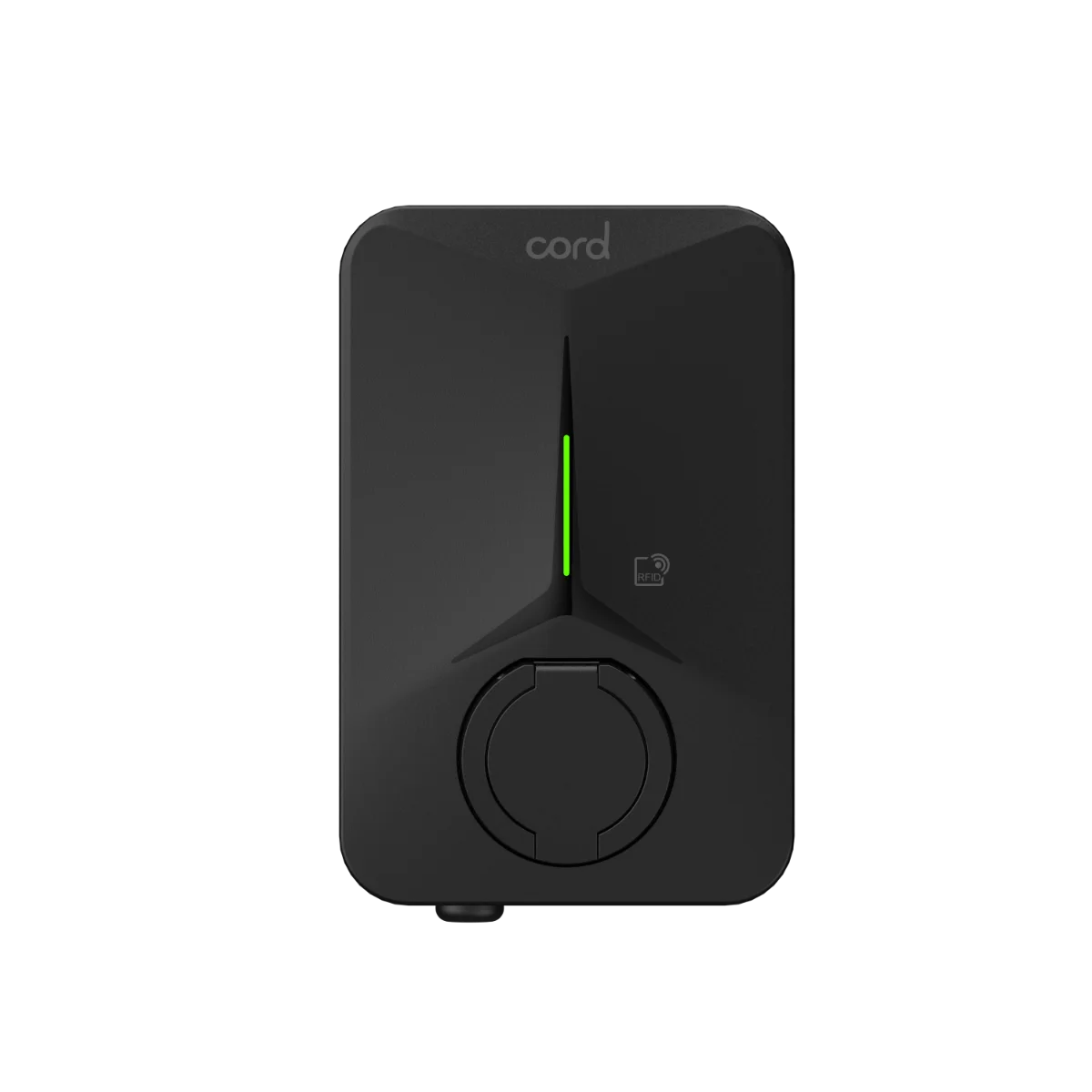
Future-Proofed Innovation vs No-Nonsense Value
These two chargers represent genuinely different philosophies. The Zaptec Go 2 is a forward-looking charger built around a feature — V2G readiness — that most UK drivers won't use for years yet. The Cord Zero, by contrast, is laser-focused on doing the basics brilliantly right now: reliable connectivity, broad smart tariff support, and a price that's hard to argue with.
If you're choosing between them, chances are you want a smart charger that goes beyond the bare minimum but you're not ready to pay flagship prices. Both deliver on that brief, but they get there in very different ways. The Zaptec bets on tomorrow; the Cord delivers for today.
In a nutshell:
- Zaptec Go 2 (£707): The UK's first V2G-ready AC home charger, with a MID-approved energy meter and subscription-free 4G — built for people who think long-term.
- Cord Zero (£555): A reliably connected, feature-rich smart charger with dual Wi-Fi + 4G failover, comprehensive built-in safety, and broad EV tariff integration at a very competitive price.
Spec Comparison
| Feature | Zaptec Go 2 | Cord Zero |
|---|---|---|
| Price (unit) | £707 | £555 (5m tethered) / £475 (untethered) |
| Max Power | 7.4kW (single-phase) / 22kW (three-phase) | 7.4kW (single-phase only) |
| Cable | Untethered (Type 2 socket) | Tethered 5m (8m for £625) |
| Smart Tariff Support | Scheduled charging | Octopus Go, OVO, British Gas, EDF and more |
| Solar | Auto-switches between 1 and 3-phase for solar integration | Solar compatible |
| Connectivity | Wi-Fi, 4G (subscription-free), Bluetooth | Wi-Fi 2.4GHz + 4G with automatic failover |
| Warranty | 5 years | 3 years (currently free upgrade to 5 years) |
| IP Rating | IP54 | IP54 + IK08 |
| Type | Untethered only | Tethered (untethered also available) |
| Weight | ~3.2 kg | ~5 kg (8m tethered) |
| OCPP | 1.6J compliant | 1.6J compliant |
Smart Tariff Integration
This is where the Cord Zero pulls ahead for most UK households. It offers explicit integration with a broad range of EV tariffs including Octopus Go (7.5p/kWh off-peak between 00:30 and 04:30), OVO Smart Charge, British Gas Electric Driver, and EDF. For a typical Tesla Model 3 owner covering the UK average of 7,400 miles per year, charging on Octopus Go rather than a standard variable tariff could save you well over £300 annually. Having that tariff integration baked in makes it genuinely effortless.
The Zaptec Go 2 offers scheduled charging through the Zaptec app, which means you can absolutely set it to charge during off-peak hours. However, the data doesn't indicate the same level of direct tariff integration that the Cord Zero provides. If you're on a dynamic tariff like Octopus Agile — where prices shift every 30 minutes — a charger with deeper tariff compatibility will serve you far better than basic scheduling alone.
Both chargers are OCPP 1.6J compliant, which means they can work with third-party energy management systems. This is a useful bit of future-proofing from both manufacturers, but for day-to-day smart tariff savings, the Cord Zero is the more plug-and-play solution.
Power, Charging Speed and V2G
On a standard UK single-phase supply, both chargers deliver 7.4kW — enough to fully charge a 60kWh EV battery in roughly 8 hours, comfortably overnight. For the vast majority of UK homes, there's no difference in real-world charging speed.
Where the Zaptec Go 2 distinguishes itself is three-phase support, pushing up to 22kW. If you're among the small minority of UK homes with a three-phase supply (fewer than 5% according to most estimates), you could charge that same 60kWh battery in under 3 hours. The Cord Zero is single-phase only, so this is a non-starter.
The headline feature, though, is V2G readiness. The Zaptec Go 2 is the UK's first V2G-ready AC home charger, meaning it's designed to eventually allow your EV to feed energy back to the grid — or power your home during peak tariff hours. It's genuinely exciting technology. However, as topcharger.co.uk and others have noted, V2G is still emerging in the UK. You'll also need a V2G-compatible vehicle, and most current EVs don't support AC V2G. You're paying a premium today for a feature that may not become mainstream for several years.
App and Connectivity
Connectivity is one area where both chargers genuinely shine — and for the same reason. Both offer 4G alongside Wi-Fi, which is increasingly recognised as essential. Wi-Fi signals from your router can be unreliable in a garage or on a driveway 15 metres from the house. Having 4G as a backup (or primary connection) means your charger stays online, your scheduled charging actually fires when it should, and you can monitor sessions remotely without dropouts.
The Zaptec Go 2 provides subscription-free 4G plus Wi-Fi and Bluetooth, which is excellent. No ongoing costs, no worrying about a SIM contract expiring. The Cord Zero goes one step further with automatic failover between Wi-Fi and 4G — if one drops, it seamlessly switches to the other. Both approaches are far superior to chargers that rely on Wi-Fi alone, which as localev.uk highlights, is one of the most common sources of frustration with home chargers.
On the app side, neither charger is going to win design awards. The Zaptec app is described as functional but relatively basic, and the Cord AI app draws similar criticism — functional but less polished than the likes of Ohme or Tesla. Both let you schedule charging, monitor sessions, and view energy usage. The Cord Zero adds RFID access control, which is a handy security feature if your charger is accessible to passers-by.
Build Quality and Design
The Zaptec Go 2 continues the Scandinavian design language that earned the original Zaptec Go praise for being 80% smaller than comparable chargers. At 240mm × 180mm × 106mm and just 3.2kg, it's remarkably compact and discreet — ideal if you don't want a chunky box dominating your wall. The original Zaptec Go also offered interchangeable fascias, though the Go 2 data doesn't confirm this carries over.
The Cord Zero is larger at 320mm × 210mm × 132mm and heavier at around 5kg, partly because it houses a tethered cable. It matches the Zaptec's IP54 weatherproofing but adds IK08 impact resistance — a useful extra if the charger is installed somewhere it might take a knock, like beside a tight driveway. One noted downside: the tethered cable can stiffen in cold weather, which is worth considering given a typical British winter.
Both chargers feature comprehensive built-in safety. The Cord Zero specifically includes RCD, PEN fault detection, surge protection, and overvoltage protection as standard, which can reduce installation costs by eliminating the need for additional protective devices in your consumer unit. The Zaptec Go 2 carries a MID-approved energy meter — a certified, tamper-proof meter that provides legally accurate energy readings, useful for expense claims or landlord billing.
Price and Value
| Cost | Zaptec Go 2 | Cord Zero (5m tethered) |
|---|---|---|
| Unit price | £707 | £555 |
| Installation estimate | £400–£600 | £400–£500 |
| Total installed | £1,107–£1,307 | £955–£1,055 |
| After OZEV grant (if eligible) | £607–£807 | £455–£555 |
The price gap is significant. Even at the top of the Cord Zero's installation range and the bottom of the Zaptec's, you're saving over £150 with the Cord. If you opt for the Cord Zero's untethered version at £475, the gap widens further. The Cord Zero's built-in safety suite may also trim installation costs, as your electrician may not need to add separate RCD protection.
The Zaptec Go 2's premium buys you V2G readiness, three-phase capability, and a MID-approved meter. Whether those features justify the extra spend depends entirely on your circumstances. For most single-phase UK homes without immediate V2G plans, the Cord Zero offers stronger pound-for-pound value.
Who Should Buy Which?
Buy the Zaptec Go 2 if:
- You want to be ready for V2G technology as it matures in the UK
- You have (or plan to install) a three-phase power supply and want 22kW charging
- You need a MID-approved energy meter for accurate billing or expense claims
- You prefer an untethered charger with a compact, minimal design
- You value a guaranteed 5-year warranty without relying on promotional extensions
Buy the Cord Zero if:
- You want broad, built-in smart tariff integration with Octopus Go, OVO, British Gas, and others
- You prefer a tethered charger for daily convenience (just grab and plug in)
- You want to minimise total installed cost — potentially under £700 after the OZEV grant
- You want comprehensive built-in safety features that may reduce installation complexity
- You value automatic Wi-Fi/4G failover for the most reliable possible connection
Our recommendation: For most UK homeowners on a single-phase supply, the Cord Zero is the smarter buy today. It's £150+ cheaper, offers broader smart tariff integration for immediate bill savings, and its dual-connectivity failover is arguably the most reliable on the market. The current free upgrade to a 5-year warranty closes the gap on the Zaptec's standard offering. However, if you're the kind of buyer who thinks in five-to-ten-year horizons — perhaps you're eyeing a three-phase upgrade, or you're genuinely excited about using your EV as a home battery — the Zaptec Go 2's V2G readiness and three-phase support make it a compelling long-term investment. Just be honest with yourself about whether you'll actually use those features.
For the full specs-level breakdown, see our Zaptec Go 2 vs Cord Zero comparison page.
Read our full Zaptec Go 2 review or Cord Zero review.
We’ll handle the installation
We’ll match you with vetted UK electricians — up to 3 free quotes, no obligation.