myenergi Zappi GLO vs NexBlue Point 2: Solar Veteran vs Future-Proofed Newcomer
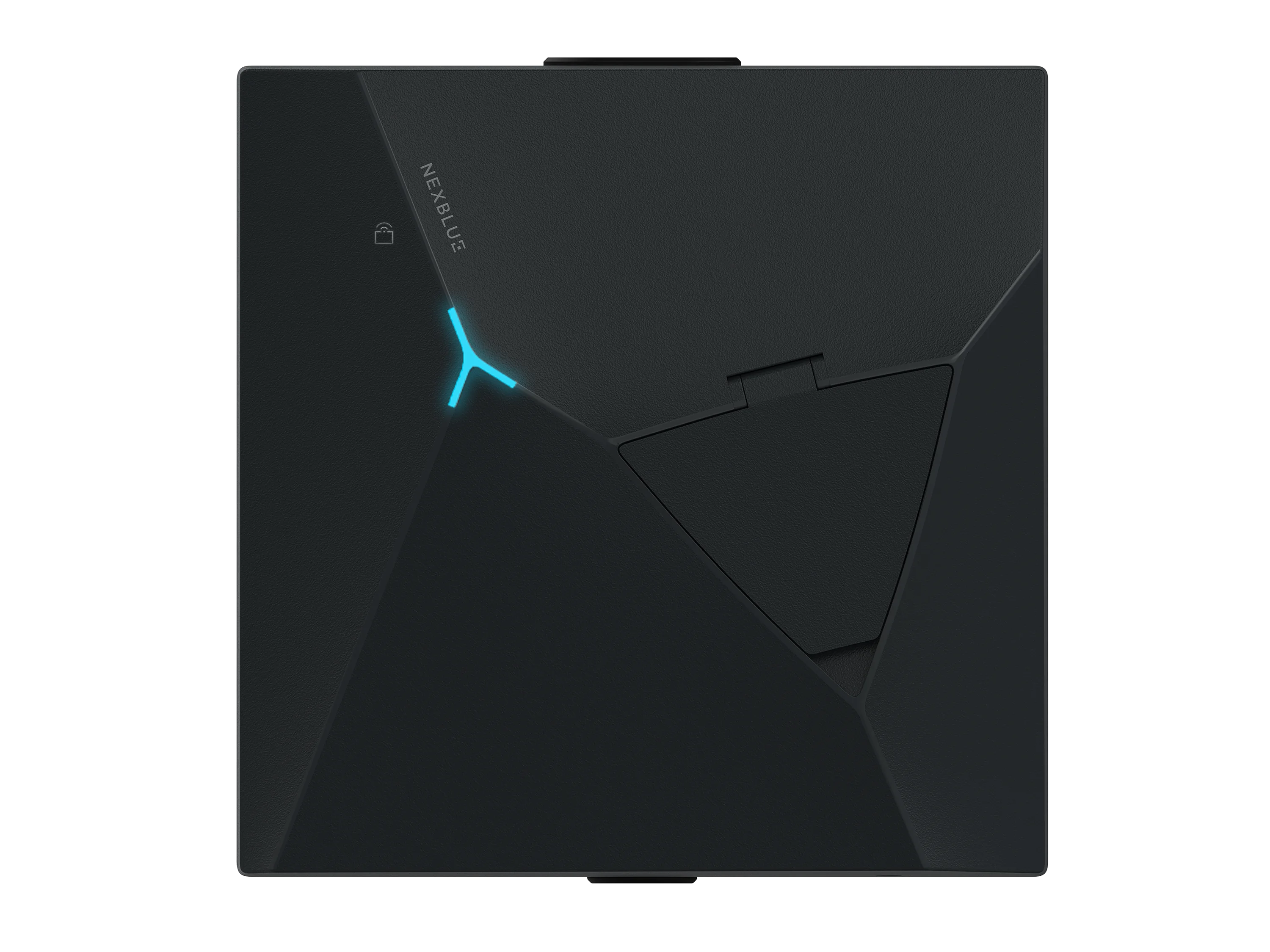
The Solar Veteran vs the Future-Proofed Newcomer
These two chargers represent very different philosophies. The myenergi Zappi GLO is the latest evolution of the UK's most popular solar-compatible EV charger — a proven product from an established British brand with a loyal following and a mature ecosystem. The NexBlue Point 2, meanwhile, is a feature-packed newcomer that bets heavily on tomorrow's technology: V2G readiness, ISO 15118, OCPP 2.0.1, and built-in 4G — all at a price that undercuts most of its competition.
If you have solar panels already installed, you've probably heard of the Zappi. If you're the type of driver who wants to future-proof your home charging setup for bi-directional energy flows and smart grid participation, the NexBlue Point 2 will have caught your eye. The question is whether proven solar excellence justifies a £249 premium, or whether the NexBlue's forward-looking spec sheet offers better long-term value. Let's dig in.
In a nutshell:
- myenergi Zappi GLO (£599): The undisputed king of solar diversion with three charging modes and a proven whole-home energy ecosystem.
- NexBlue Point 2 (£530): A remarkably feature-rich, V2G-ready charger with built-in 4G and smart tariff automation at a competitive price.
Spec Comparison
| Feature | myenergi Zappi GLO | NexBlue Point 2 |
|---|---|---|
| Price | £599 | £530–600 |
| Max Power | 7kW (single-phase) / 22kW (three-phase) | 7.4kW (single-phase) |
| Cable | 6.5m tethered Type 2 (untethered also available) | Untethered only (bring your own cable) |
| Smart Tariffs | Intelligent Octopus Go compatible | EcoPilot tariff integration |
| Solar Diversion | Eco / Eco+ modes (built-in) | Requires NexBlue Zen accessory |
| Connectivity | Wi-Fi, Bluetooth | Wi-Fi, Bluetooth, 4G eSIM (lifetime free) |
| V2G / ISO 15118 | No | Yes — V2G and Plug & Charge ready |
| OCPP | No | OCPP 1.6-J and 2.0.1 |
| Load Balancing | Dynamic (CT clamp included) | Dynamic (CT clamp included) |
| RFID | Yes (126 users) | Yes (RFID + NFC) |
| Warranty | 3 years | 5 years |
| IP Rating | IP65 | IP54 + IK10 |
| Weight | ~5.4 kg | 2.1 kg |
| Dimensions | 439 × 282 × 130mm | 235 × 230 × 107mm |
Solar Diversion: Where the Zappi GLO Truly Shines
This is the Zappi GLO's home turf, and no charger on the market can touch it here. The three charging modes — Fast, Eco, and Eco+ — give solar panel owners genuine flexibility. In Eco+ mode, the charger draws power exclusively from surplus solar generation, meaning you can charge your EV for literally nothing on a sunny day. Eco mode blends solar surplus with grid power to ensure your car gets enough charge while still maximising self-consumption. As electriccarguide.co.uk notes in their review, this solar integration is "at the forefront of environmentally friendly electric car charging."
The NexBlue Point 2 does offer solar surplus charging, but it requires an additional NexBlue Zen accessory — adding cost and complexity. It's a bolt-on feature rather than a core design principle. If you've invested £5,000–£10,000 in a solar PV system, the Zappi GLO's native solar intelligence is genuinely worth the premium. The myenergi ecosystem extends further too: pair it with an eddi hot water diverter or libbi home battery for whole-home energy management that no other charger brand can match.
Smart Tariff Integration and Future-Proofing
Both chargers support smart tariff scheduling, but they approach it differently. The Zappi GLO is compatible with Intelligent Octopus Go — one of the UK's best EV tariffs, offering electricity at around 7p/kWh during off-peak hours. You can schedule charging sessions via the myenergi app to take advantage of those cheap overnight rates. For a typical Tesla Model 3 driver covering 7,400 miles annually, charging at 7p/kWh instead of the standard ~24p/kWh variable rate saves roughly £350 per year.
The NexBlue Point 2 counters with its EcoPilot system, which automatically identifies the cheapest charging windows on your tariff. It also supports OCPP 1.6-J and 2.0.1 — open protocols that allow the charger to work with third-party energy management platforms. And here's the NexBlue's trump card: ISO 15118 and V2G readiness. When bi-directional charging becomes widely available in the UK (expected within the next few years), the Point 2 won't need replacing. You'll be able to sell stored energy from your EV battery back to the grid during peak pricing on tariffs like Octopus Agile. The Zappi GLO offers no V2G pathway at all. If future-proofing matters to you, the NexBlue has a significant edge.
Connectivity and App Experience
The NexBlue Point 2 wins on raw connectivity. Its triple-connection setup — Wi-Fi, Bluetooth, and a built-in 4G eSIM with a lifetime free data subscription — means it stays online even if your home Wi-Fi doesn't reach the driveway. This is a genuine practical advantage; plenty of UK homeowners struggle with Wi-Fi signal at their garage or parking spot. The Zappi GLO relies solely on Wi-Fi and Bluetooth, so if your router is at the back of the house and your charger is on the front wall, you may need a Wi-Fi extender.
On the app side, the myenergi app has improved considerably but still isn't as slick as some competitors. As noted in evergy.co.uk's 2025 roundup, the Zappi GLO is "fully managed via the myenergi app" with no on-device screen — a change from the older Zappi 2.1 that some users miss. The NexBlue's myNexBlue app is functional but, as a newer product, has fewer user reviews and less community feedback to draw on. Both chargers support OTA firmware updates, which is reassuring for long-term ownership.
Build Quality and Installation
The Zappi GLO is IP65 rated — fully protected against water jets from any direction — making it a solid choice for exposed UK driveways. It's a reasonably compact unit at 439 × 282 × 130mm, though at 5.4 kg it's more than double the weight of the NexBlue. The NexBlue Point 2 is remarkably small and light at just 2.1 kg and 235 × 230 × 107mm, making it one of the most discreet chargers you can buy. Its IK10 impact resistance rating (the highest available) means it can withstand serious knocks — useful if it's mounted near a tight parking space. However, its IP54 rating is a step below the Zappi's IP65, offering protection against splashing water but not high-pressure jets.
Both chargers include a CT clamp for dynamic load balancing, and both fall within the standard £400–600 installation range. The Zappi GLO has built-in RCD protection and 6mA DC leakage detection, which can simplify installation by removing the need for an additional Type A RCD at the consumer unit — potentially saving your installer time and you money.
Price and Value
| Cost Element | myenergi Zappi GLO | NexBlue Point 2 |
|---|---|---|
| Unit price | £599 | £530–600 |
| Typical installation | £400–600 | £400–600 |
| Total installed cost | £999–1,199 | £930–1,200 |
| After OZEV grant (if eligible) | £349–549 | £430–700 |
The price gap is significant — up to £249 on the unit alone. The NexBlue Point 2 also comes with a longer 5-year warranty versus the Zappi's 3 years, which adds further value. However, the NexBlue is untethered only, so you'll need to budget £50–100 for a decent Type 2 charging cable if you don't already have one, narrowing the gap slightly.
For grid-only charging (no solar panels), the NexBlue Point 2 offers substantially more features per pound: V2G readiness, built-in 4G, OCPP support, and smart tariff automation for around £200 less. But if you have solar panels, the Zappi GLO's native Eco/Eco+ modes and broader myenergi ecosystem make that premium worthwhile — the free solar charging alone could pay back the difference within a year or two depending on your generation capacity.
Who Should Buy Which?
Buy the myenergi Zappi GLO if:
- You have solar panels and want the best solar diversion available — Eco+ mode is unmatched
- You want to build a whole-home energy ecosystem with eddi and libbi
- You need a tethered charger with a 6.5m cable included
- You need three-phase 22kW charging capability
- You share a charger with multiple users and want RFID access for up to 126 people
Buy the NexBlue Point 2 if:
- You want to future-proof for V2G and bi-directional charging
- Built-in 4G connectivity matters because your Wi-Fi doesn't reach your parking spot
- You want maximum features at the lowest price — the value proposition is outstanding
- A 5-year warranty gives you peace of mind
- You prefer a compact, lightweight, and discreet charger design
Our recommendation: For the majority of UK homeowners without solar panels, the NexBlue Point 2 is the smarter buy. It delivers more technology for less money, and its V2G readiness could prove genuinely valuable as the UK energy grid evolves. However, it is a newer brand with limited long-term track record, so there's an element of early-adopter risk. If you have solar panels — or plan to install them — the myenergi Zappi GLO remains the obvious choice. Nothing else on the market matches its solar diversion intelligence, and the broader myenergi ecosystem gives it a depth that no single charger from any competitor can replicate.
For the full specs-level breakdown, see our myenergi Zappi GLO vs NexBlue Point 2 comparison page.
Read our full myenergi Zappi GLO review or NexBlue Point 2 review.
If you have solar panels, see our best EV charger for solar panels guide.
We’ll handle the installation
We’ll match you with vetted UK electricians — up to 3 free quotes, no obligation.