Wallbox Pulsar Max vs VCHRGD Seven Pro: Compact Premium or Feature-Packed Value?
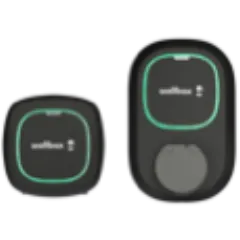
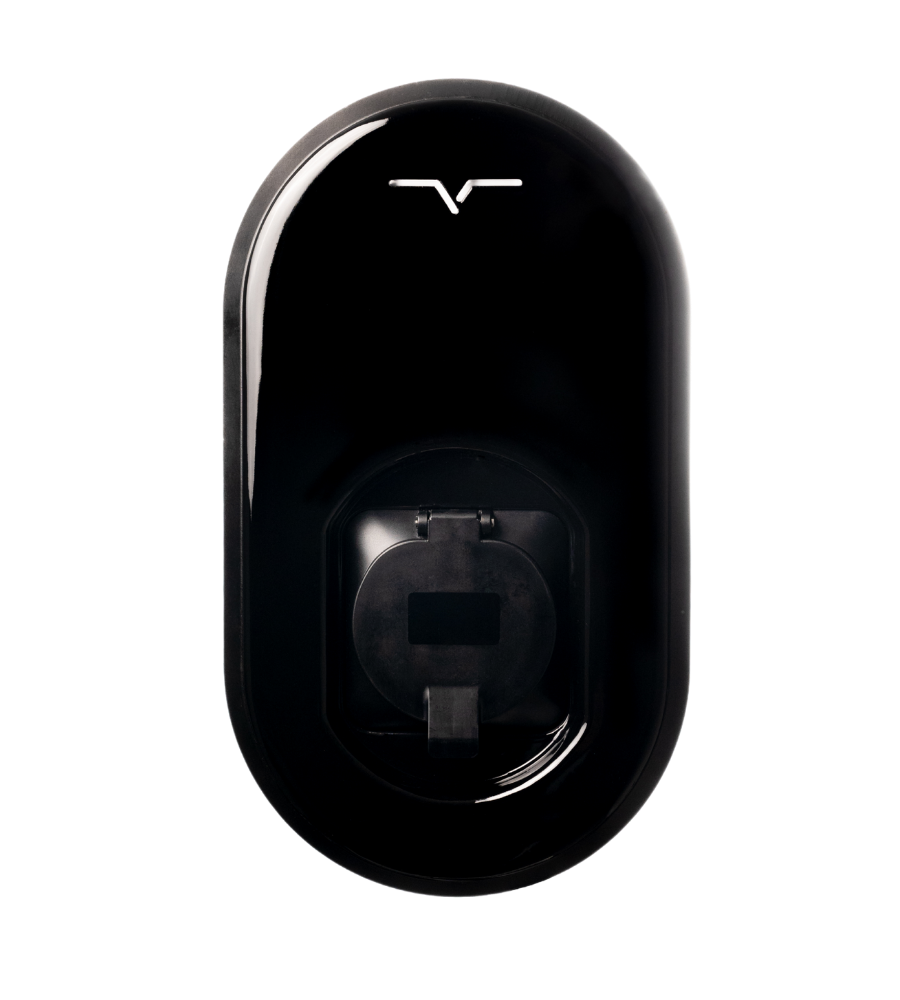
Compact Premium vs Feature-Packed Value
These two chargers represent opposite philosophies in the UK home EV charging market. The Wallbox Pulsar Max is from an established global brand, commands a premium price, and offers three-phase capability in one of the smallest units you can buy. The VCHRGD Seven Pro, from a newer British brand, undercuts it by £267 while somehow packing in more smart features — including smart tariff integration, OCPP compliance, and RFID access cards.
If you are choosing between these two, you are likely asking yourself a simple question: is the Wallbox brand pedigree, compact design, and five-year warranty worth paying 62% more? Or does the VCHRGD Seven Pro's extraordinary feature-per-pound ratio make it the smarter buy? Let us dig into the details.
In a nutshell:
- Wallbox Pulsar Max (£496): The most compact charger on the market with three-phase capability, a five-year warranty, and voice control — ideal where space or aesthetics are the priority.
- VCHRGD Seven Pro (£432): Arguably the best-value smart charger in the UK, bundling solar integration, smart tariff support, dynamic load balancing, and RFID access at a price that undercuts most rivals.
Spec Comparison
| Feature | Wallbox Pulsar Max | VCHRGD Seven Pro |
|---|---|---|
| Price (unit only) | £496 | £432 (tethered 7.5m) |
| Power Output | 7.4kW / 22kW (three-phase) | 7.4kW (single-phase only) |
| Cable Length | 5 metres | 7.5 metres |
| Type | Tethered (Type 2) | Tethered (Type 2) |
| Smart Tariff Integration | No | Yes (Octopus Intelligent Go) |
| Solar Integration | Eco-Smart (requires extra meter) | Solar Export + Solar Only (CT clamp included) |
| Connectivity | Bluetooth, Wi-Fi | Wi-Fi, Bluetooth (optional 4G) |
| RFID Access | No | Yes (2 cards included) |
| OCPP Support | No | Yes (OCPP 1.6J) |
| Dynamic Load Balancing | Power Boost | Yes (CT clamp included) |
| Voice Control | Alexa / Google Assistant | No |
| Warranty | 5 years | 3 years |
| IP / IK Rating | IP54 + IK10 | IP54 + IK10 |
| Dimensions | 198 × 201 × 99mm | 300 × 180 × 90mm |
| Weight | ~4.2 kg | ~4 kg |
| Colours | 6 options | Black only |
| OZEV Approved | Yes | Yes |
Smart Tariff Integration
This is where the VCHRGD Seven Pro pulls decisively ahead. It integrates directly with Octopus Intelligent Go, the UK's most popular EV-specific tariff, which offers electricity at around 7p/kWh during off-peak hours. The charger communicates with Octopus to automatically schedule your charging during the cheapest slots — you simply plug in and let it handle the rest. For a typical Tesla Model 3 owner covering the UK average of 7,400 miles per year, that is roughly £150 in annual charging costs versus £400+ on a standard variable tariff. The savings practically pay for the charger within two years.
The Wallbox Pulsar Max has no built-in smart tariff integration. You can schedule charging manually through the myWallbox app to target off-peak windows on tariffs like Octopus Go (7.5p/kWh between 00:30 and 04:30), but you lose the automatic, hands-off optimisation that makes Intelligent Go so appealing. For drivers who want a genuine set-and-forget experience with a smart tariff, the VCHRGD has a clear advantage here.
Solar Integration
Both chargers offer solar compatibility, but the implementations differ significantly. The VCHRGD Seven Pro includes a CT clamp as standard and provides two distinct solar modes: Solar Export, which diverts surplus generation to your car rather than exporting it to the grid, and Solar Only, which charges exclusively from solar — perfect for maximising self-consumption on sunny days. There is no additional hardware to buy.
The Wallbox Pulsar Max offers its Eco-Smart solar feature, but it requires a separate Wallbox Power Meter, which adds to the overall cost. If you already have solar panels — or plan to install them — the VCHRGD's included CT clamp and dual-mode approach represents better out-of-the-box value. That said, the Wallbox system is backed by a more established ecosystem, which some homeowners may find reassuring. As tinyeco.com notes, solar integration is becoming a key differentiator among the best home EV chargers in the UK, and both units tick this box — the VCHRGD just does it more affordably.
Power, Charging Speed, and Cable Length
On a standard UK single-phase supply, both chargers deliver 7.4kW, which adds roughly 25–30 miles of range per hour. A typical 60kWh EV battery charges from empty to full in about eight and a half hours — comfortably overnight. For the vast majority of UK homes, there is no practical difference in charging speed between these two.
However, the Wallbox Pulsar Max has a trick up its sleeve: three-phase support at up to 22kW. If your property has a three-phase supply (rare in UK residential settings, but increasingly common in new-builds and rural properties), the Pulsar Max can charge that same 60kWh battery in roughly 2.7 hours. It is a genuine advantage for the small percentage of homeowners who can use it.
Cable length is another practical consideration. The VCHRGD Seven Pro comes with a generous 7.5-metre tethered cable, while the Wallbox Pulsar Max includes just 5 metres. If your charger is mounted on a garage wall and your car parks at the far end of a driveway, that extra 2.5 metres could save you from needing a more expensive installation with a longer cable run. It is a small detail that matters in real-world use.
Build Quality and Design
The Wallbox Pulsar Max is genuinely tiny — at 198 × 201 × 99mm, it is one of the most compact chargers you can buy, as highlighted by electriccarguide.co.uk in their review of the Pulsar Plus predecessor. It is available in six colours, so you can match it to your brickwork or front door. The RGB LED halo provides clear charging status at a glance. For homeowners who care deeply about kerb appeal, the Pulsar Max is hard to beat.
The VCHRGD Seven Pro is slightly larger at 300 × 180 × 90mm but still compact by charger standards, and it is marginally lighter at around 4 kg. The trade-off is that it only comes in black — no colour options. Both units share IP54 weatherproofing and IK10 impact resistance, so durability is evenly matched. Both will handle British weather and the occasional bump from a wheelie bin without complaint.
The Wallbox's five-year warranty versus the VCHRGD's three years is worth noting. That extra two years of cover provides meaningful peace of mind, particularly given that VCHRGD is a relatively new brand with limited long-term reliability data. As bestchargers.co.uk notes, the Pulsar Max builds on the proven Pulsar Plus platform, giving it a track record the VCHRGD cannot yet match.
Price and Value
| Wallbox Pulsar Max | VCHRGD Seven Pro | |
|---|---|---|
| Unit Price | £496 | £432 |
| Typical Installation | £400–£600 | £400–£600 |
| Total Installed Cost | £896–£1,096 | £832–£1,032 |
| After OZEV Grant (if eligible) | £396–£596 | £332–£532 |
The price gap has narrowed considerably. At £496 versus £432, the Wallbox is just £64 more — a much smaller premium than it once was. The VCHRGD still offers strong value with the included CT clamp for dynamic load balancing, two RFID cards, and a generous 7.5-metre cable. When you factor in the VCHRGD's smart tariff integration potentially saving £200+ per year, both chargers represent excellent value.
The Wallbox counters with an established brand, a longer warranty (5 years vs 3), three-phase readiness, voice control, and six colour options. At just £64 more, those extras are now much easier to justify.
Who Should Buy Which?
Buy the Wallbox Pulsar Max if:
- You have (or plan to get) a three-phase electricity supply and want 22kW charging
- Wall space is extremely limited and you need the most compact unit possible
- You value a longer five-year warranty from an established brand
- You use Alexa or Google Assistant and want voice-controlled charging
- Aesthetics matter and you want to choose from six colour options
Buy the VCHRGD Seven Pro if:
- You want the most features for the least money — full stop
- You are on (or plan to switch to) Octopus Intelligent Go and want automatic tariff optimisation
- You have solar panels and want included solar integration without buying extra hardware
- You need a longer cable (7.5m vs 5m) for your parking setup
- You share a driveway and want RFID access control out of the box
Our recommendation: For the majority of UK homeowners on a single-phase supply, the VCHRGD Seven Pro is the better buy. It delivers more smart features, better solar integration, smart tariff support, and a longer cable — all for £267 less. The savings on Octopus Intelligent Go alone could recoup the charger's cost within two to three years. The Wallbox Pulsar Max earns its place if you specifically need three-phase charging, want the smallest possible unit, or simply prefer the reassurance of a more established brand with a five-year warranty. But on pure value, the VCHRGD Seven Pro is exceptionally difficult to argue against.
For the full specs-level breakdown, see our Wallbox Pulsar Max vs VCHRGD Seven Pro comparison page.
Read our full Wallbox Pulsar Max review or VCHRGD Seven Pro review.
For total installed cost rankings, see our cheapest EV charger guide.
We’ll handle the installation
We’ll match you with vetted UK electricians — up to 3 free quotes, no obligation.