Wallbox Pulsar Max vs NexBlue Point 2: Proven Compact vs Future-Proofed Newcomer
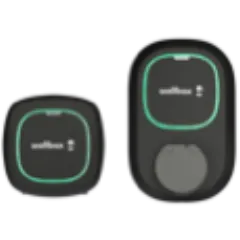
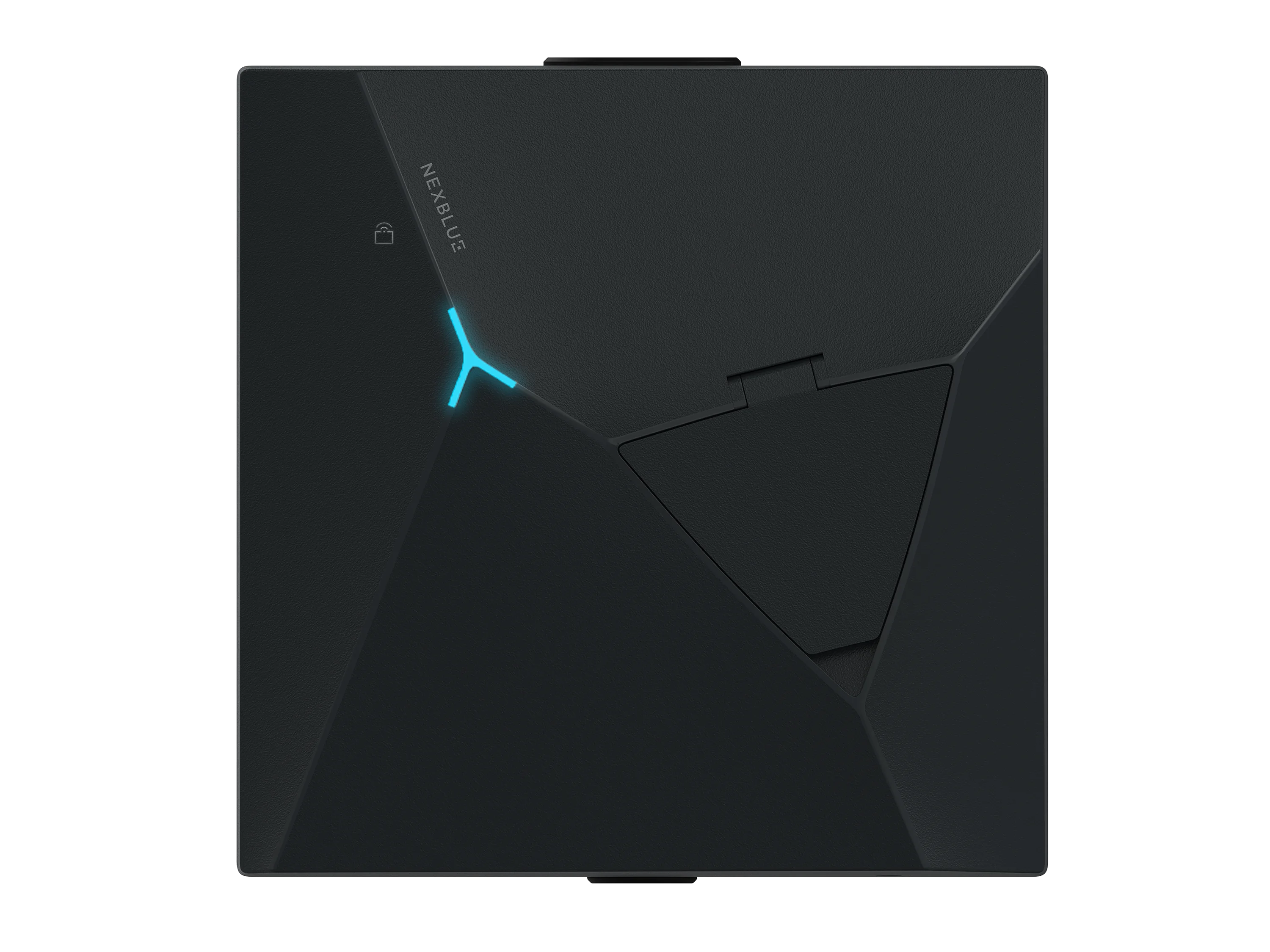
Established Favourite vs the Feature-Packed Newcomer
These two chargers represent two very different philosophies in the UK home EV charging market. The Wallbox Pulsar Max is the latest evolution from a brand that has sold over 400,000 units of its predecessor worldwide, backed by a decade of experience and a reputation for compact, reliable hardware. The NexBlue Point 2, meanwhile, is a relative newcomer that packs a staggering amount of future-facing technology — V2G readiness, smart tariff automation, and lifetime 4G connectivity — into a box that costs £169 less.
If you are choosing between these two, you are likely someone who values smart features and wants more than a basic "dumb" charger, but you are weighing up whether to go with a proven name or take a punt on a newer brand offering significantly more tech per pound. It is a genuinely interesting decision, and the right answer depends on your priorities.
In a nutshell:
- Wallbox Pulsar Max (£496): A compact, well-proven charger with a 5-year warranty, voice control, and three-phase capability — ideal if you want a trusted brand and a discreet unit on your wall.
- NexBlue Point 2 (£530): A feature-rich, future-proofed charger with V2G readiness, built-in smart tariff integration, and lifetime 4G — remarkable value if you are comfortable with a newer brand.
Spec Comparison
| Feature | Wallbox Pulsar Max | NexBlue Point 2 |
|---|---|---|
| Price (unit only) | £496 | £530–£600 |
| Max Power Output | 7.4kW (single-phase) / 22kW (three-phase) | 7.4kW (single-phase only) |
| Cable Type | Tethered (Type 2) | Untethered (Type 2 socket) |
| Smart Tariff Integration | No built-in tariff integration | EcoPilot tariff automation |
| Solar Compatibility | Eco-Smart (requires separate Power Meter) | Solar surplus charging (requires Zen accessory) |
| Connectivity | Wi-Fi, Bluetooth | Wi-Fi, Bluetooth, 4G eSIM (lifetime free) |
| V2G / ISO 15118 | No | Yes — V2G and Plug & Charge ready |
| Dynamic Load Balancing | Power Boost (accessory may be needed) | CT clamp included in the box |
| Warranty | 5 years | 5 years |
| IP / IK Rating | IP54, IK10 | IP54, IK10 |
| Dimensions | 198mm × 201mm × 99mm | 235mm × 230mm × 107mm |
| Weight | ~4.2 kg | 2.1 kg |
Smart Tariff Integration
This is where the NexBlue Point 2 pulls clearly ahead. Its EcoPilot feature integrates directly with smart energy tariffs, automatically scheduling your charging sessions to hit the cheapest rate windows. If you are on Octopus Intelligent Go (around 7p/kWh off-peak) or Octopus Go (7.5p/kWh between 00:30 and 04:30), EcoPilot can handle the optimisation for you without fiddling with manual schedules.
The Wallbox Pulsar Max, by contrast, has no built-in smart tariff integration. You can set scheduled charging times through the myWallbox app — so you could manually programme it to start at 00:30 for an Octopus Go window — but it will not dynamically respond to variable tariffs like Octopus Agile, where prices change every 30 minutes. For Agile users in particular, that is a significant limitation at this price point.
To put some numbers on it: charging a Tesla Model 3 Long Range (75kWh battery) from 20% to 80% on Octopus Intelligent Go at 7p/kWh costs roughly £3.15. On a standard variable tariff at 24.5p/kWh, the same charge costs around £11.03. Automated tariff integration makes it far easier to consistently capture those savings — and the NexBlue delivers that out of the box.
App, Connectivity, and Future-Proofing
Both chargers offer app-based control, but the underlying connectivity differs meaningfully. The Wallbox Pulsar Max connects via Wi-Fi and Bluetooth, which is perfectly adequate if your router signal reaches your driveway. The myWallbox app is well-regarded — electriccarguide.co.uk praised its intuitive interface for scheduling and energy monitoring, and those strengths carry over to the Pulsar Max. You also get voice control through Amazon Alexa and Google Assistant, which is a genuinely useful touch if your household already uses smart speakers.
The NexBlue Point 2, however, adds a built-in 4G eSIM with a lifetime free data subscription. This is a real advantage if your charger is installed in a garage or at the far end of a long driveway where Wi-Fi can be patchy. It also supports OCPP 1.6-J and 2.0.1, which means it can communicate with third-party energy management platforms and is ready for future smart grid services.
The headline future-proofing feature is ISO 15118 and V2G (vehicle-to-grid) readiness. While V2G is not yet widely available in the UK, it is coming — and when it does, the NexBlue Point 2 should be able to support bi-directional charging without needing a hardware swap. The Wallbox Pulsar Max does not offer this. If you plan to keep your charger for five-plus years, that V2G readiness could prove genuinely valuable as energy markets evolve.
Build Quality and Design
Both chargers share the same IP54 and IK10 ratings, meaning they are weatherproof and can handle a solid knock — important if your charger sits on an exposed driveway. As wallbox.com notes, the Pulsar Max is specifically engineered for UK weather, from cold snaps to coastal humidity.
The Wallbox Pulsar Max is the more compact of the two at 198mm × 201mm × 99mm, and it is available in six colour options — a nice touch if aesthetics matter to you. At 4.2 kg it is heavier than the NexBlue, but still very manageable. The signature LED halo gives clear visual feedback on charging status, a design element praised across multiple reviews including bestchargers.co.uk.
The NexBlue Point 2 is slightly larger at 235mm × 230mm × 107mm but remarkably light at just 2.1 kg — roughly half the weight of the Pulsar Max. It has no integrated display, relying entirely on the app for status updates. Being untethered only, you will need to supply your own Type 2 cable (typically £80–£150 for a quality 5-metre cable), which adds cost but gives you the flexibility to swap cables or use different lengths.
Installation Considerations
Standard installation costs for both chargers fall in the £400–£600 range, depending on cable run length and any consumer unit work required. Neither charger requires an earth rod thanks to built-in protective features, which can save £50–£100 on installation — a point highlighted by electriccarguide.co.uk for the Wallbox range and equally applicable here.
One practical difference: the NexBlue Point 2 includes a CT clamp for dynamic load balancing in the box, whereas the Wallbox Pulsar Max's Power Boost feature may require a separate accessory. Dynamic load balancing is genuinely useful — it monitors your home's total electricity draw and adjusts the charge rate to prevent your main fuse from tripping. Having it included at no extra cost is a clear win for the NexBlue.
The Wallbox Pulsar Max does have a notable advantage for the small percentage of UK homes with three-phase power: it can charge at up to 22kW, reducing a 20–80% charge on a Tesla Model 3 Long Range from roughly 6.5 hours to around 2 hours. The NexBlue is single-phase only at 7.4kW. For the vast majority of UK homes on single-phase supply, this is irrelevant — but if you have three-phase, it is a significant differentiator.
Price and Value
| Cost Element | Wallbox Pulsar Max | NexBlue Point 2 |
|---|---|---|
| Unit price | £496 | £530–£600 |
| Standard installation | £400–£600 | £400–£600 |
| Total installed cost | £896–£1,096 | £930–£1,200 |
| After OZEV grant (if eligible) | £396–£596 | £430–£700 |
The Wallbox Pulsar Max is now the cheaper option at £496, undercutting the NexBlue Point 2 by £34–£104 at the unit level. Add in the fact that the NexBlue is untethered only — meaning an additional £80–£150 for a decent Type 2 cable — and the Wallbox's total cost advantage becomes even more pronounced.
That said, the NexBlue fights back with V2G readiness, lifetime free 4G, OCPP 2.0.1 support, and a 5-year warranty that matches the Wallbox's. Whether those forward-looking features justify the higher total cost depends on how much you value future-proofing versus the Wallbox's established brand, voice control, and the convenience of a tethered cable.
Who Should Buy Which?
Buy the Wallbox Pulsar Max if:
- You want a proven, established brand with a strong track record and extensive installer network
- Your property has three-phase power and you want 22kW charging speeds
- You prefer a tethered charger with the cable permanently attached for convenience
- Aesthetics matter — you want to choose from six colour options for a discreet wall-mounted look
- You already use Alexa or Google Assistant and value voice control
Buy the NexBlue Point 2 if:
- You want built-in smart tariff integration to automatically charge at the cheapest rates on Octopus Go, Intelligent Go, or Agile
- Future-proofing matters — V2G and ISO 15118 readiness means this charger should grow with the technology
- Your charger location has poor Wi-Fi and you need reliable 4G connectivity
- You want dynamic load balancing included in the box at no extra cost
- You are comfortable being an early adopter with a newer brand in exchange for exceptional feature-to-price ratio
Our recommendation: For most UK Tesla owners on a single-phase supply, the NexBlue Point 2 offers genuinely better value. The EcoPilot tariff integration alone could save you hundreds of pounds annually if you are on a smart tariff, and the V2G readiness is a meaningful hedge for the future. However, the NexBlue is still a young brand with limited long-term reliability data, and that is a legitimate concern for a product you expect to use daily for five-plus years. If you prioritise peace of mind from an established manufacturer, need three-phase charging, or simply prefer a tethered setup, the Wallbox Pulsar Max remains a solid, well-built choice backed by a company with a proven global track record.
For the full specs-level breakdown, see our Wallbox Pulsar Max vs NexBlue Point 2 comparison page.
Read our full Wallbox Pulsar Max review or NexBlue Point 2 review.
We’ll handle the installation
We’ll match you with vetted UK electricians — up to 3 free quotes, no obligation.