Wallbox Pulsar Max vs Indra Smart LUX: Compact Rivals Compared
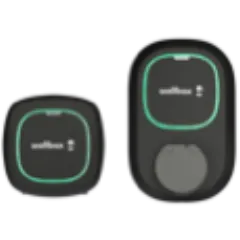
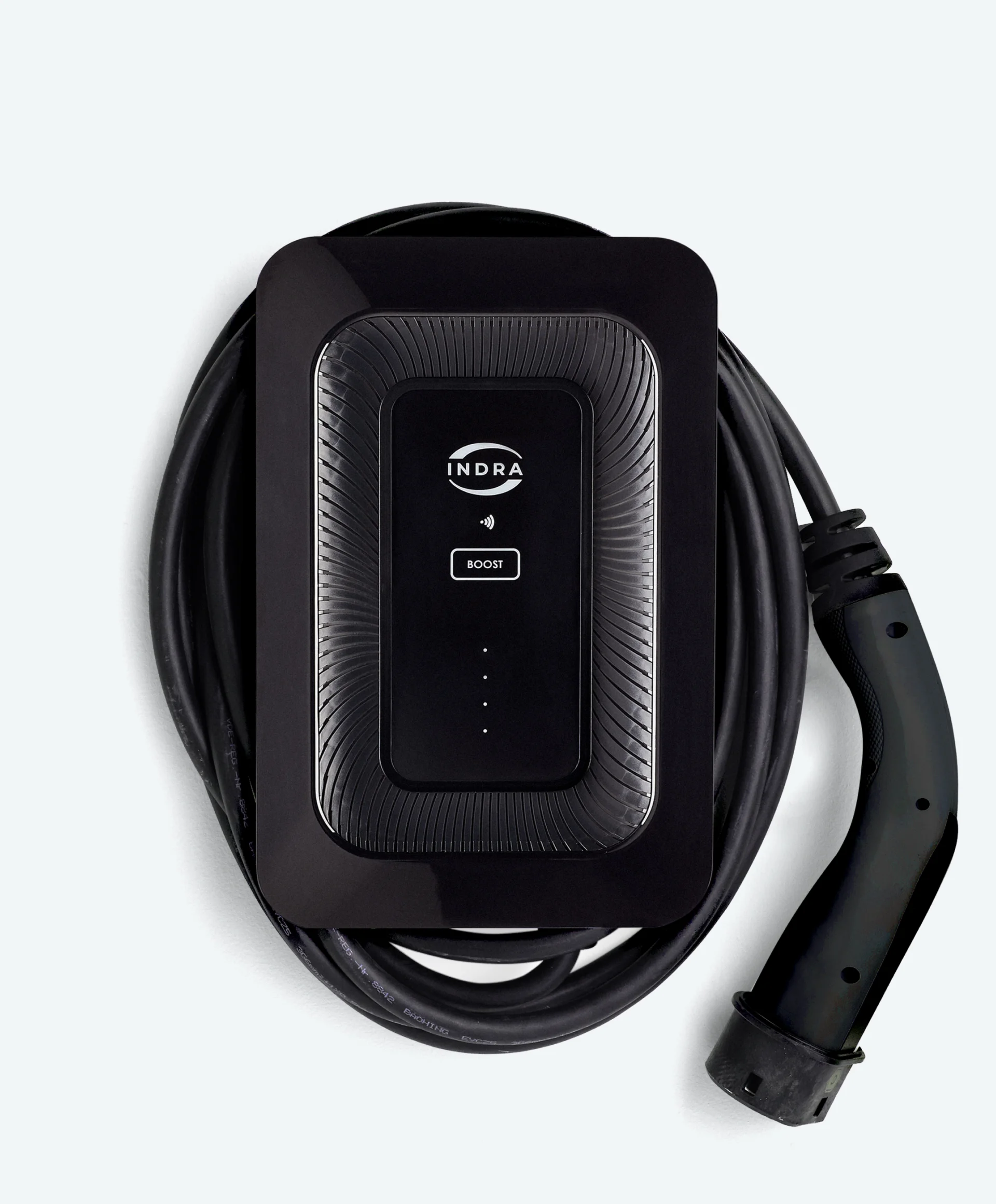
Two Ultra-Compact Chargers, Two Very Different Philosophies
If you've narrowed your shortlist down to the Wallbox Pulsar Max and the Indra Smart LUX, you clearly value good design. These are two of the most discreet home EV chargers money can buy — both small enough to make a traditional wallbox look like a relic from the industrial revolution. But beneath their svelte exteriors, they take quite different approaches to what a smart charger should do.
The Wallbox Pulsar Max is a Barcelona-designed global bestseller that offers three-phase capability, voice control, and a five-year warranty out of the box. The Indra Smart LUX, meanwhile, is a proudly British-built unit from Worcestershire that doubles down on smart tariff integration, solar diversion, and class-leading weatherproofing. Both are OZEV-approved, both use the universal Type 2 connector, and both will happily charge your Tesla — or any other EV — overnight.
So which one deserves a spot on your wall? Let's break it down.
In a nutshell:
- Wallbox Pulsar Max (£496): A beautifully compact charger with three-phase capability, voice control, and a reassuring 5-year warranty — ideal if future-proofing and design flexibility matter most.
- Indra Smart LUX (£615): The UK's slimmest smart charger with best-in-class IP67 weatherproofing and integration with over 1,000 energy tariffs — the smarter choice for saving money on every charge.
Spec Comparison
| Feature | Wallbox Pulsar Max | Indra Smart LUX |
|---|---|---|
| Price (unit only) | £496 | £615 (10m cable) |
| Max Power Output | 7.4kW (single-phase) / 22kW (three-phase) | 7.4kW (single-phase only) |
| Cable Length | 5 metres | 6 metres (10m available) |
| Smart Tariff Integration | No built-in tariff integration | Yes — 1,000+ tariffs including Octopus Agile |
| Solar Integration | Eco-Smart (requires separate Power Meter) | Solar PV diversion with CT clamp included |
| Connectivity | Bluetooth, Wi-Fi | Wi-Fi (Ethernet and 4G optional) |
| Warranty | 5 years | 3 years (extendable to 5 for £100) |
| IP Rating | IP54 + IK10 | IP67 + IK10 |
| Type | Tethered (Type 2) | Tethered (Type 2) |
| Dimensions | 198 × 201 × 99mm | 201 × 306 × 78mm |
| Weight | ~4.2 kg | 3.6 kg |
Smart Tariff Integration
This is where the Indra Smart LUX pulls decisively ahead. It integrates directly with over 1,000 UK energy tariffs, including variable-rate tariffs like Octopus Agile, where electricity prices change every 30 minutes. The charger can automatically schedule your charging sessions around the cheapest slots — no manual fiddling required. If you're on Octopus Intelligent Go (~7p/kWh off-peak) or Octopus Go (7.5p/kWh between 00:30 and 04:30), the Indra will ensure you're only drawing power when it's cheapest.
The Wallbox Pulsar Max, by contrast, has no built-in smart tariff integration. You can schedule charging times manually through the myWallbox app — so you could set it to start at 00:30 and stop at 04:30 to catch the Octopus Go window — but it won't dynamically respond to variable pricing the way the Indra does. For drivers on a flat-rate off-peak tariff, this might not matter much. But if you're on Agile or a similar time-of-use tariff, the Indra could save you a meaningful amount over a year. Based on average UK mileage of around 7,400 miles and a Tesla Model 3's efficiency of roughly 3.5 miles per kWh, you're looking at approximately 2,114 kWh of charging per year. The difference between charging at an average Agile rate versus a flat standard rate could easily save £150–£200 annually.
Solar Integration
Both chargers offer solar compatibility, but the implementations differ significantly. The Indra Smart LUX includes a CT clamp in the box, allowing it to divert surplus solar PV generation directly into your car. There's no additional hardware to buy — plug it in, configure it through the Indra app, and you're charging on sunshine.
The Wallbox Pulsar Max supports solar through its Eco-Smart feature, but you'll need to purchase a separate Wallbox Power Meter to make it work. That's an additional cost on top of the already higher unit price. If you've already got solar panels on your roof — and with UK electricity prices where they are, more homeowners than ever do — the Indra's all-inclusive approach is genuinely more convenient and more cost-effective. As bestchargers.co.uk notes in their review, the Pulsar Max is solar compatible, but the extra hardware requirement is worth factoring into your budget.
Build Quality and Design
Both chargers share an IK10 impact resistance rating, meaning they'll shrug off accidental knocks from wheelie bins, footballs, or wayward shopping bags. But the Indra Smart LUX takes weatherproofing to another level with its IP67 rating — that means it's rated for temporary submersion in water, not just rain and splashes. The Wallbox Pulsar Max carries an IP54 rating, which is perfectly adequate for UK weather but doesn't offer the same peace of mind if your charger is in an exposed or flood-prone location. electriccarguide.co.uk praised the Wallbox range's build quality, and the Pulsar Max continues that tradition with a robust, glossy finish and RGB LED status halo.
On dimensions, it's a fascinating split. The Wallbox Pulsar Max is more compact overall at 198 × 201 × 99mm — essentially a chunky square. The Indra Smart LUX is taller at 306mm but just 78mm deep, making it the slimmest tethered smart charger on the UK market. If your wall space is narrow — say beside a garage door frame — the Indra's slim profile could be the deciding factor. The Wallbox, available in six colours, offers more aesthetic flexibility to match your home's exterior. The Indra's turbine LED status light is a nice design touch, though colour options are more limited.
App and Connectivity
The myWallbox app is well-established and widely praised for its intuitive interface, offering scheduled charging, energy monitoring, and voice control through Alexa and Google Assistant — a feature the Indra lacks. Bluetooth connectivity on the Pulsar Max also means you can control the charger even if your Wi-Fi drops, which is handy if your router is at the far end of the house.
The Indra app counters with real-time energy monitoring, OCPP 1.6 support, RFID and QR code authorisation, and those deep tariff integrations. It also receives OTA (over-the-air) updates, so new features can be added without an engineer visit. However, the Indra is Wi-Fi only as standard — if you want 4G connectivity as a backup, that's an additional £250. The Wallbox doesn't offer 4G either, but its Bluetooth fallback partially mitigates the issue. As wallbox.com highlights, the Pulsar Max is designed to work seamlessly with UK energy providers like Octopus Energy and Scottish Power, though this is through the app's scheduling rather than direct tariff integration.
Price and Value
| Cost Element | Wallbox Pulsar Max | Indra Smart LUX |
|---|---|---|
| Unit price | £496 | £615 |
| Typical installation | £400–£600 | £300–£500 |
| Total installed cost | £896–£1,096 | £915–£1,115 |
| After OZEV grant (if eligible) | £396–£596 | £415–£615 |
The Wallbox Pulsar Max is now £119 cheaper at the unit level than the Indra Smart LUX. However, the Indra's built-in SPD and PEN fault detection can simplify the electrical work required, potentially saving £100–£150 on installation. You also get a longer 6-metre cable as standard versus the Wallbox's 5 metres. Once installation is factored in, the two chargers land at very similar total costs.
The Wallbox Pulsar Max includes a 5-year warranty as standard, whereas the Indra's 3-year warranty costs an extra £100 to extend to five years. If you value the three-phase upgrade path (22kW charging for those rare UK properties with three-phase supply), the Wallbox is the only option here — the Indra is single-phase only. As carwow.co.uk notes in their roundup of the best home chargers, both units rank among the top options in the UK market.
Who Should Buy Which?
Buy the Wallbox Pulsar Max if:
- You have (or plan to get) a three-phase electricity supply and want 22kW charging
- Voice control through Alexa or Google Assistant is important to your smart home setup
- You want a 5-year warranty included in the price with no extras to pay
- You prefer Bluetooth as a backup when Wi-Fi is unreliable
- You want to choose from six colour options to match your home
Buy the Indra Smart LUX if:
- You're on a variable energy tariff like Octopus Agile and want automatic cost-optimised charging
- You have solar panels and want surplus diversion included without buying extra hardware
- Your charger will be in an exposed or coastal location where IP67 weatherproofing matters
- You want a UK-designed and manufactured product with OCPP 1.6 support
- A slim, almost flush-to-wall profile is your top design priority
Our recommendation: For most UK Tesla owners on a single-phase supply, the Indra Smart LUX edges it. Its deep smart tariff integration can genuinely save you money on every charge, the solar diversion comes ready to go, and that IP67 rating is the best weatherproofing you'll find on any home charger. The lower installed cost sweetens the deal further. That said, the Wallbox Pulsar Max is the better pick if you need three-phase capability, want voice control baked in, or simply prefer the peace of mind of a no-questions 5-year warranty. Both are excellent chargers — you're really choosing between the smartest energy management and the most flexible hardware.
For the full specs-level breakdown, see our Wallbox Pulsar Max vs Indra Smart LUX comparison page.
Read our full Wallbox Pulsar Max review or Indra Smart LUX review.
We’ll handle the installation
We’ll match you with vetted UK electricians — up to 3 free quotes, no obligation.