Tesla Wall Connector (Gen 3) vs NexBlue Point 2: Proven Pedigree or Future-Proof Newcomer?
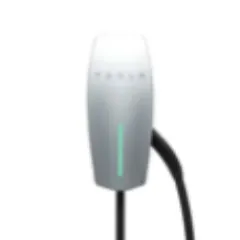
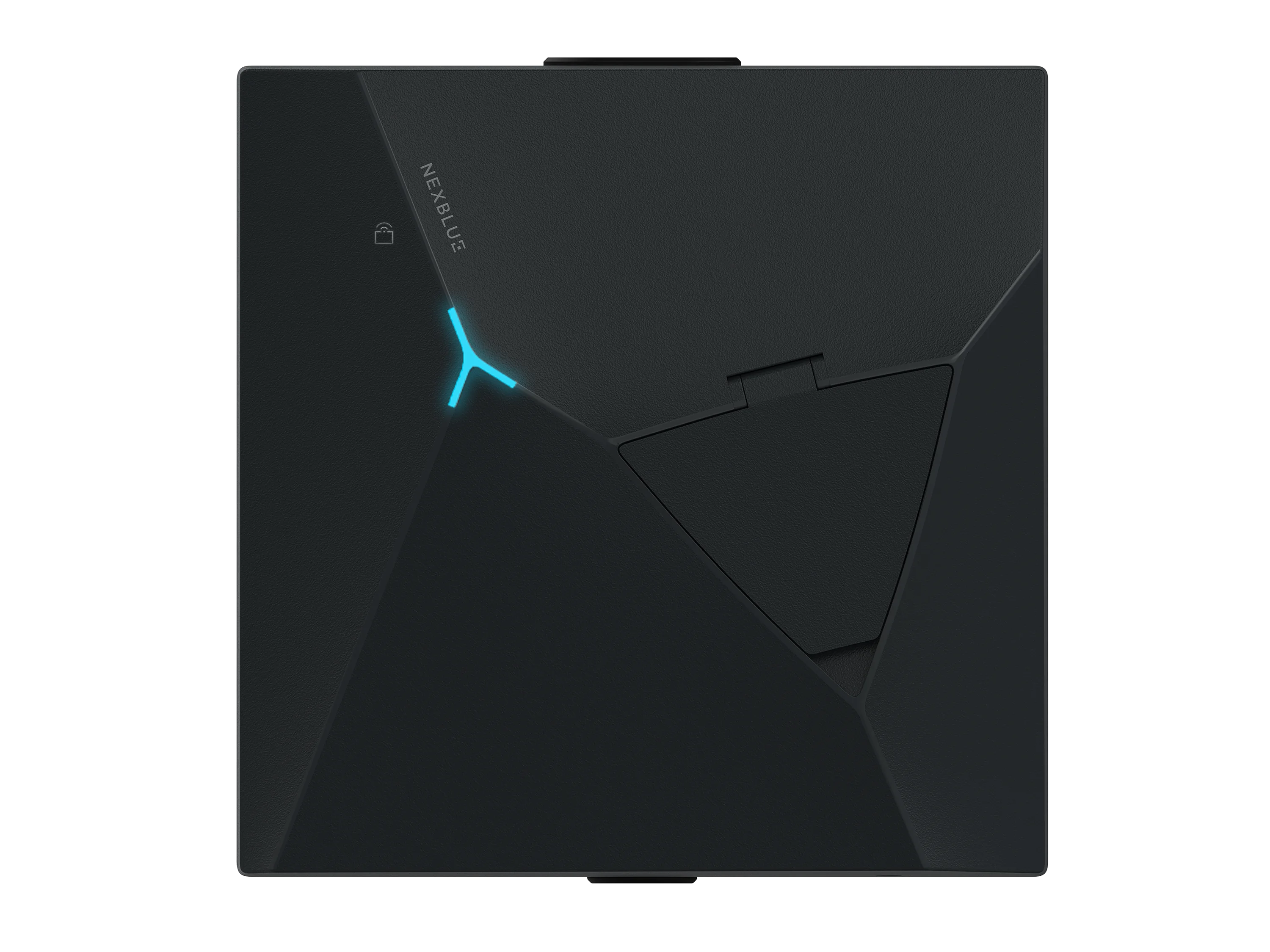
Proven Pedigree vs Future-Proof Newcomer
These two chargers represent fundamentally different philosophies. The Tesla Wall Connector (Gen 3) is the established choice — backed by one of the world's most recognisable EV brands, seamlessly woven into the Tesla app ecosystem, and trusted by hundreds of thousands of owners worldwide. The NexBlue Point 2, by contrast, is the ambitious newcomer that arrives loaded with forward-looking tech like V2G readiness and ISO 15118 Plug & Charge, betting that the features you'll want in two or three years matter more than brand heritage today.
If you're a Tesla owner who values simplicity and tight integration with your car, the Wall Connector is the obvious starting point. But if you're the kind of driver who wants automatic smart tariff optimisation, dynamic load balancing out of the box, and a charger that's ready for bi-directional energy flows, the NexBlue Point 2 makes a compelling case — even from a relatively young brand. Let's dig into the details to see which one deserves a spot on your wall.
In a nutshell:
- Tesla Wall Connector (Gen 3) (£425): The gold-standard Tesla-integrated charger with a 4-year warranty, power sharing for up to 6 units, and the slickest app experience for Tesla owners.
- NexBlue Point 2 (£530): A feature-packed, V2G-ready smart charger with automatic tariff optimisation, built-in 4G, and dynamic load balancing included — all at a surprisingly competitive price.
Spec Comparison
| Feature | Tesla Wall Connector (Gen 3) | NexBlue Point 2 |
|---|---|---|
| Price | £425 | £530–£600 |
| Power | 7.4kW (single-phase) / 22kW (three-phase) | 7.4kW (single-phase only) |
| Type | Tethered (Type 2, 7.3m cable) | Untethered (Type 2 socket) |
| Smart tariffs | Manual scheduling only | EcoPilot automatic tariff integration |
| Solar diversion | No (requires additional hardware) | Yes (requires NexBlue Zen accessory) |
| Connectivity | Wi-Fi | Wi-Fi, Bluetooth, 4G eSIM (lifetime free) |
| Load balancing | Power sharing (up to 6 units) | Dynamic load balancing (CT clamp included) |
| Warranty | 4 years | 5 years |
| IP Rating | IP44 | IP54 + IK10 |
| Weight | 5.3 kg | 2.1 kg |
| V2G / ISO 15118 | No | Yes (V2G-ready, Plug & Charge ready) |
| OCPP | No | OCPP 1.6-J and 2.0.1 |
Smart Tariff Integration
This is where the NexBlue Point 2 pulls ahead decisively. Its EcoPilot feature connects directly to smart energy tariffs and automatically shifts your charging to the cheapest half-hour slots — much like the Ohme Home Pro's approach. If you're on a tariff like Octopus Agile, where prices fluctuate every 30 minutes, this kind of automation can save you a meaningful amount over a year. At roughly 7p/kWh off-peak versus 24p+ at peak times, a typical Tesla Model 3 driver covering 7,400 miles annually could save well over £200 per year compared to charging at flat-rate prices.
The Tesla Wall Connector, by contrast, has no built-in smart tariff integration. You can set charging schedules via the Tesla app — say, starting at 00:30 to catch Octopus Go's 7.5p/kWh window — but you're doing this manually. It works perfectly well for simple time-of-use tariffs, but it can't react dynamically to variable pricing the way EcoPilot can. Tesla does offer its own Tesla Energy plan, but for most UK drivers, the lack of native third-party tariff support is a genuine limitation. As viablepower.co.uk notes, smart tariff integration is increasingly what separates a good charger from a great one.
App, Connectivity, and Future-Proofing
Tesla owners already know the Tesla app is superb — charging schedules, live session monitoring, cost history, and notifications all sit alongside your car's controls in one polished interface. For a Tesla household, this integration is genuinely unmatched. However, non-Tesla EV owners using the Wall Connector will find the app experience more limited, as electriccarguide.co.uk highlights in its review.
The NexBlue Point 2 takes a different approach with triple connectivity: Wi-Fi, Bluetooth, and a built-in 4G eSIM with a lifetime free data subscription. That 4G fallback is a real advantage if your charger sits at the far end of a driveway where Wi-Fi signal drops off — a surprisingly common problem in UK installations. The myNexBlue app handles scheduling, energy monitoring, and EcoPilot tariff control, plus RFID and NFC activation add flexibility if you want to restrict access.
The headline future-proofing story belongs to the NexBlue, though. ISO 15118 and V2G readiness mean this charger is hardware-prepared for bi-directional charging — the ability to feed energy from your car's battery back to your home or the grid. While V2G is still in its infancy in the UK, OCPP 2.0.1 compliance and Plug & Charge support mean the Point 2 won't need replacing when these technologies go mainstream. The Tesla Wall Connector offers OTA updates, which is welcome, but it lacks OCPP support and V2G readiness entirely.
Power, Charging Speed, and Installation
On a standard UK single-phase supply, both chargers deliver 7.4kW — enough to add roughly 25–30 miles of range per hour and fully charge a 60kWh battery in about 8.5 hours. For overnight charging, that's more than adequate for the vast majority of drivers.
Where the Tesla Wall Connector gains an edge is three-phase support. If you're one of the small percentage of UK homes with a three-phase supply, the Wall Connector can deliver up to 22kW, slashing a full charge to around 2.7 hours. The NexBlue Point 2 is single-phase only, so three-phase homes should look elsewhere — or at least factor this in.
The tethered vs untethered question is worth considering carefully. The Tesla Wall Connector comes with a generous 7.3-metre tethered cable, so you simply grab the plug and connect — no fumbling in the boot on a wet Tuesday evening. The NexBlue is untethered only, meaning you'll need to supply your own Type 2 cable (typically £100–£150 for a decent one). Untethered looks neater on the wall and offers flexibility if you change cars, but the convenience trade-off is real. Installation costs for both chargers fall in the typical £400–£600 range, though the NexBlue's included CT clamp for dynamic load balancing could save you a small additional cost that some other chargers charge extra for. As qualityheating.co.uk notes, the Tesla Wall Connector requires a PME fault device or earth rod for PEN protection, which is standard practice but worth budgeting for.
Price and Value
| Tesla Wall Connector (Gen 3) | NexBlue Point 2 | |
|---|---|---|
| Unit price | £425 | £530–£600 |
| Installation | £400–£600 | £400–£600 |
| Total installed | £825–£1,025 | £930–£1,200 |
| After OZEV grant | Not eligible | £430–£700 |
At £425, the Tesla Wall Connector is one of the most competitively priced branded chargers on the market — remarkable given Tesla's premium positioning. The NexBlue Point 2 costs £105–£175 more for the unit alone, and you'll likely need to add £100+ for a Type 2 cable since it's untethered.
However, the NexBlue includes a CT clamp for dynamic load balancing and a lifetime 4G eSIM — features that would cost extra with many competitors. Factor in the longer 5-year warranty versus Tesla's 4 years, and the value gap narrows considerably. If smart tariff automation saves you even £50 more per year than manual scheduling, the NexBlue pays back its premium within a year or two.
Who Should Buy Which?
Buy the Tesla Wall Connector (Gen 3) if:
- You own a Tesla and want the tightest possible integration with the Tesla app
- You have (or plan to install) a three-phase supply and want 22kW charging
- You prefer a tethered charger with a long 7.3m cable for grab-and-go convenience
- You have multiple EVs and want to power-share up to 6 Wall Connectors on one circuit
- You value a proven, established product with extensive real-world reliability data
Buy the NexBlue Point 2 if:
- You want automatic smart tariff optimisation to minimise charging costs without manual scheduling
- Future-proofing matters to you — V2G readiness and OCPP 2.0.1 mean no hardware swap later
- Your Wi-Fi doesn't reach your charger location and you need built-in 4G connectivity
- You want dynamic load balancing included in the box at no extra cost
- You prefer an untethered socket for a cleaner wall-mounted look and cable flexibility
Our recommendation: For most Tesla owners who want a hassle-free, beautifully integrated charging experience today, the Tesla Wall Connector remains the smarter pick — it's cheaper, tethered, and the app experience is second to none. But if you're an EV driver who prioritises running costs, future-proofing, and smart energy features over brand loyalty, the NexBlue Point 2 offers a genuinely impressive feature set that's hard to match at this price. Just be aware you're backing a newer brand with less long-term track record. If that doesn't bother you, the NexBlue could be the shrewder investment.
For the full specs-level breakdown, see our Tesla Wall Connector (Gen 3) vs NexBlue Point 2 comparison page.
Read our full Tesla Wall Connector (Gen 3) review or NexBlue Point 2 review.
We’ll handle the installation
We’ll match you with vetted UK electricians — up to 3 free quotes, no obligation.