Tesla Wall Connector vs Cord Zero: Brand Power or Smarter Connectivity?
The Tesla Ecosystem vs the Connected All-Rounder
Choosing a home EV charger in the UK often comes down to a simple question: do you want the charger that works best with your car, or the one that works best with everything else? That is precisely the dilemma when you are weighing up the Tesla Wall Connector (Gen 3) against the Cord Zero.
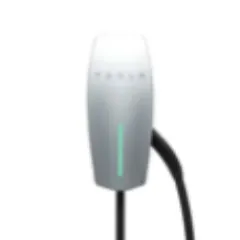
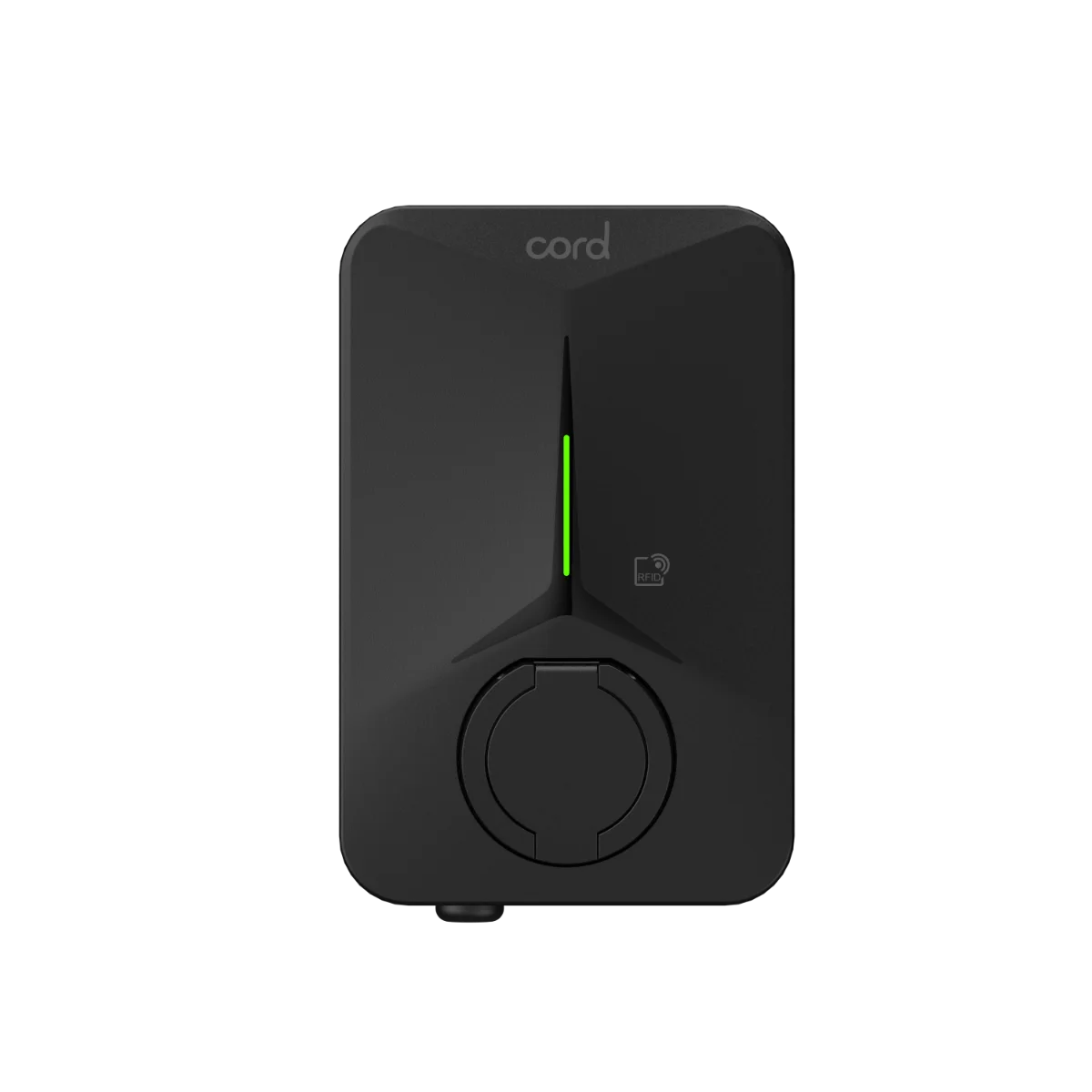
The Tesla Wall Connector is the official home charger from Tesla — sleek, competitively priced, and deeply woven into the Tesla app ecosystem. The Cord Zero, meanwhile, is a newer challenger that packs in dual Wi-Fi and 4G connectivity, built-in smart tariff integration, and a comprehensive safety suite that can genuinely trim your installation bill. Both deliver 7.4kW on the single-phase supply found in the vast majority of UK homes, and both score an identical 4.7 user rating. The Cord Zero is OZEV-approved for the £500 government grant; the Tesla Wall Connector is not. So which one deserves a spot on your garage wall?
In a nutshell:
- Tesla Wall Connector (Gen 3) (£425): The most seamless charging experience for Tesla owners, with unmatched app integration, power sharing for up to six units, and the longest standard warranty at four years.
- Cord Zero (£555): The most reliably connected charger on the market, with built-in 4G failover, direct smart tariff integration, and comprehensive built-in safety features that can reduce installation costs.
Spec Comparison
| Feature | Tesla Wall Connector (Gen 3) | Cord Zero |
|---|---|---|
| Price (unit only) | £425 | £555 (5m tethered); £625 (8m); £475 untethered |
| Max Power | 7.4kW (single-phase) / 22kW (three-phase) | 7.4kW (single-phase only) |
| Cable Length | 7.3 metres | 5 metres (8m available) |
| Smart Tariff Integration | No (manual scheduling or Tesla Energy plan) | Yes — Octopus Go, OVO, British Gas, EDF and more |
| Solar Compatible | No (requires additional hardware) | Yes (built-in) |
| Connectivity | Wi-Fi | Wi-Fi 2.4GHz + 4G (built-in multi-network SIM) |
| Warranty | 4 years | 3 years (currently free upgrade to 5 years) |
| IP Rating | IP44 | IP54 + IK08 impact resistance |
| Type | Tethered (Type 2) | Tethered (Type 2) |
| Dynamic Load Balancing | No (power sharing up to 6 units) | Yes |
| RFID Access Control | No | Yes |
| OCPP Support | No | Yes (OCPP 1.6J) |
Smart Tariff Integration: Where the Cord Zero Pulls Ahead
If you are on a time-of-use tariff like Octopus Go (7.5p/kWh between 00:30 and 04:30) or Octopus Intelligent Go (~7p/kWh off-peak), automatic tariff integration is arguably the single most valuable feature a home charger can have. Charging a 60kWh Tesla Model 3 at off-peak rates costs roughly £4.20 on Intelligent Go versus around £17 at the current Ofgem cap rate. That is a saving of nearly £13 per full charge — and it adds up fast over a year of driving.
The Cord Zero integrates directly with a broad range of UK smart tariffs including Octopus Go, OVO Smart Charge, British Gas Electric Driver, and EDF, automatically scheduling your sessions to hit the cheapest slots without you needing to lift a finger. As viablepower.co.uk notes, this kind of dynamic tariff-aware charging is becoming a key differentiator among smart chargers.
The Tesla Wall Connector, by contrast, has no built-in smart tariff integration. You can set scheduled charging times via the Tesla app, but you are doing the maths yourself. Tesla does offer its own Tesla Energy plan, but if you want the flexibility to shop around for the cheapest tariff — something most savvy EV owners do — the Cord Zero makes life considerably easier.
App and Connectivity
The Tesla app experience is, frankly, superb — but only if you drive a Tesla. Charging schedules, real-time power monitoring, session history, and push notifications are all handled within the same app you use to check your car's battery, pre-condition the cabin, or open the boot. It is seamless in a way that third-party chargers simply cannot replicate. As electriccarguide.co.uk points out in their review, the Tesla Wall Connector scores highly for Tesla owners but offers limited functionality for non-Tesla users.
The Cord Zero takes a different approach. Its Cord AI app is functional — covering scheduling, energy monitoring, and tariff integration — but reviewers consistently note it is more basic than the polished experiences offered by Tesla, Ohme, or Wallbox. Where the Cord Zero truly excels is connectivity reliability. Its dual Wi-Fi plus 4G setup with automatic failover means your charger stays online even if your home broadband drops. This is not a trivial advantage; a charger that loses its Wi-Fi connection cannot follow your tariff schedule, potentially costing you money overnight. For homes with patchy Wi-Fi near the driveway or garage, the Cord Zero's built-in multi-network 4G SIM is a genuine problem-solver.
Power, Charging Speed, and Future-Proofing
On a standard UK single-phase supply, both chargers deliver an identical 7.4kW, adding roughly 25–30 miles of range per hour. A typical 60kWh battery will go from near-empty to full in about 8.5 hours — comfortably overnight.
The key difference is three-phase capability. The Tesla Wall Connector can deliver up to 22kW on a three-phase supply, slashing that same charge to around 2.7 hours. While three-phase power is rare in UK homes (fewer than 5% have it), it is more common in commercial settings and some rural properties. If you are planning a three-phase upgrade — or already have one — the Tesla Wall Connector is the only option here. The Cord Zero is single-phase only.
The Tesla Wall Connector also supports power sharing across up to six units on a single circuit, which is ideal for households with multiple EVs or landlords managing small blocks of flats. The Cord Zero offers dynamic load balancing instead, which intelligently adjusts charging power based on your home's overall electricity demand — a different but equally useful feature for avoiding tripped breakers.
Cable length is worth noting too. The Tesla Wall Connector comes with a generous 7.3-metre cable as standard. The Cord Zero's base model includes just 5 metres, which may be tight if your consumer unit is on the opposite side of the house from your parking spot. The 8-metre version is available but pushes the price to £625.
Build Quality and Installation
Both chargers are built for UK outdoor conditions, but the Cord Zero edges ahead on paper with its IP54 rating and IK08 impact resistance, compared to the Tesla's IP44. In practical terms, both will handle British rain without issue, but the Cord Zero offers slightly better dust ingress protection and is rated to withstand knocks — useful if it is mounted near a tight driveway.
Where the Cord Zero can save you real money is at installation. Its comprehensive built-in safety suite — including RCD protection, PEN fault detection, and surge and overvoltage protection — means your electrician may not need to add as many external components to your consumer unit. The Tesla Wall Connector requires an external PME fault device or earth rod for PEN protection, as noted by electriccarguide.co.uk, which can add to installation costs.
Price and Value
| Tesla Wall Connector | Cord Zero (5m) | Cord Zero (8m) | |
|---|---|---|---|
| Unit Price | £425 | £555 | £625 |
| Typical Installation | £400–£600 | £400–£500 | £400–£500 |
| Total Installed (est.) | £825–£1,025 | £955–£1,055 | £1,025–£1,125 |
| After OZEV Grant (if eligible) | Not eligible | £455–£555 | £525–£625 |
On unit price alone, the Tesla Wall Connector is the cheaper option at £425 — undercutting even the Cord Zero's untethered version. However, the Cord Zero's built-in safety features can reduce installation costs, potentially narrowing the gap. When you factor in the Cord Zero's current promotional five-year warranty upgrade (versus Tesla's standard four years), the value proposition tightens further.
The real value question is whether smart tariff integration saves you enough to justify the Cord Zero's higher unit price. If you are on Octopus Intelligent Go and charge three times a week, automatic tariff optimisation could easily save you £150–£250 per year compared to charging at standard rates. Even compared to manual scheduling on the Tesla, the Cord Zero's set-and-forget approach eliminates the risk of human error — and that is worth something.
Who Should Buy Which?
Buy the Tesla Wall Connector (Gen 3) if:
- You drive a Tesla and want the cleanest, most integrated app experience
- You have (or plan to install) a three-phase supply and want 22kW charging
- You have multiple EVs and need power sharing across up to six chargers
- You want the longest standard warranty (four years) without relying on promotions
- You value a longer 7.3-metre cable as standard
Buy the Cord Zero if:
- You want automatic smart tariff integration with Octopus Go, OVO, British Gas, or EDF
- Your charger location has poor Wi-Fi and you need rock-solid 4G failover connectivity
- You want built-in safety features (RCD, PEN detection, surge protection) that may reduce installation costs
- You have solar panels and want basic solar-compatible charging without additional hardware
- You want RFID access control or OCPP support for future flexibility
Our recommendation: For Tesla owners who want a beautifully integrated, fuss-free experience and are happy to manage their own charging schedule, the Tesla Wall Connector remains the best-in-class choice — and at £425, it is hard to argue with the value. But if keeping your electricity bill as low as possible is your top priority, the Cord Zero's direct smart tariff integration and bulletproof dual connectivity make it the smarter financial choice in the long run. The savings from automatic off-peak charging will likely pay back the price difference within the first year. For non-Tesla EV owners, the Cord Zero is the stronger pick overall.
For the full specs-level breakdown, see our Tesla Wall Connector (Gen 3) vs Cord Zero comparison page.
Read our full Tesla Wall Connector (Gen 3) review or Cord Zero review.
We’ll handle the installation
We’ll match you with vetted UK electricians — up to 3 free quotes, no obligation.