Pod Point Solo 3S vs VCHRGD Seven Pro: Convenience vs Value
The Turnkey Package vs the Feature-Packed Bargain
These two chargers represent fundamentally different philosophies in the UK home charging market. The Pod Point Solo 3S is the all-inclusive option — you pay £999 and everything is handled for you, from the charger to the installation. The VCHRGD Seven Pro takes the opposite approach: it packs in more smart features than chargers costing twice the price, but you'll need to source your own installer.
If you're choosing between these two, you're likely weighing up convenience against raw value for money. Pod Point is one of the UK's most established EV charging brands, with over 250,000 chargers installed according to topcharger.co.uk. VCHRGD, by contrast, is a newer entrant — less proven but offering a genuinely impressive specification sheet at a price that undercuts most of the competition. So which approach actually serves you better day-to-day?
In a nutshell:
- Pod Point Solo 3S (£999): A hassle-free, fully installed package from one of the UK's most trusted charging brands, backed by an industry-leading 5-year warranty.
- VCHRGD Seven Pro (£432): The most feature-rich charger at its price point, with smart tariff integration, dual solar modes, RFID access, and a 7.5-metre cable — all for less than half the Solo 3S's headline price.
Spec Comparison
| Feature | Pod Point Solo 3S | VCHRGD Seven Pro |
|---|---|---|
| Price | £999 (installed) | £432 (tethered 7.5m) / £395 (untethered) |
| Power | 7.4kW (single-phase) | 7.4kW (single-phase) |
| Cable | 5m (tethered version) | 7.5m (tethered version) |
| Smart tariffs | No integration | Octopus Intelligent Go |
| Solar | Compatible | Solar Export + Solar Only modes, CT clamp included |
| Connectivity | Wi-Fi | Wi-Fi, Bluetooth (optional 4G) |
| Warranty | 5 years | 3 years |
| IP Rating | IP54 | IP54 + IK10 |
| Type | Tethered or untethered | Tethered or untethered |
| OCPP | No | OCPP 1.6J |
| RFID | No | Yes (2 cards included) |
Smart Tariff Integration
This is where the VCHRGD Seven Pro opens up a significant advantage. It integrates directly with Octopus Intelligent Go, one of the UK's most popular EV tariffs offering off-peak electricity at around 7p/kWh. That means the charger can automatically shift your charging sessions to the cheapest overnight slots without you lifting a finger. For a typical Tesla Model 3 owner covering 7,400 miles a year, charging at 7p/kWh instead of a standard 24p/kWh rate could save you roughly £250-£300 annually.
The Pod Point Solo 3S, by contrast, offers no smart tariff integration. You can schedule charging via the Pod Point app to coincide with off-peak windows — setting it to charge between 00:30 and 04:30 on Octopus Go, for instance — but you're doing this manually. There's no API-level communication with your energy supplier, which means you miss out on the dynamic session optimisation that tariffs like Intelligent Go provide.
If you're on a variable tariff like Octopus Agile, neither charger offers native integration, but the VCHRGD's OCPP 1.6J compatibility at least opens the door to third-party energy management platforms down the line.
Solar Charging
Both chargers are solar compatible, but the depth of that compatibility is vastly different. The VCHRGD Seven Pro offers two dedicated solar modes — Solar Export and Solar Only — and includes a CT clamp as standard for dynamic load balancing. Solar Export mode diverts excess generation to your car rather than sending it back to the grid at a pittance, while Solar Only mode ensures your EV charges exclusively from your panels. For households with a 4kW+ solar array, this can meaningfully reduce your charging costs during summer months.
The Pod Point Solo 3S is listed as solar compatible, and the app does support solar scheduling. However, it lacks the dedicated solar diversion modes and the included CT clamp hardware that make the VCHRGD's solar integration more sophisticated out of the box. If you've invested in solar panels and want to maximise self-consumption, the VCHRGD is the stronger choice here.
App and Connectivity
The Pod Point app covers the essentials — you can schedule charging sessions, monitor energy usage, and control the charger remotely. Pod Point also offers 24/7 customer support, which is reassuring if things go wrong. That said, multiple sources describe the app as functional but basic compared to competitors, as noted by chargingathome.co.uk and evenergyhub.com.
The VCHRGD Seven Pro uses the third-party Powerverse app, which includes an AI assistant called Raya. It offers scheduled charging, solar mode management, and smart tariff control in one interface. The charger also connects via both Wi-Fi and Bluetooth, with optional 4G connectivity — handy if your Wi-Fi signal struggles to reach your driveway. The trade-off is that you're relying on a third-party platform; if the Powerverse partnership were to change, it could affect your charger's smart functionality. That's a genuine risk worth acknowledging with a newer brand.
Build Quality and Design
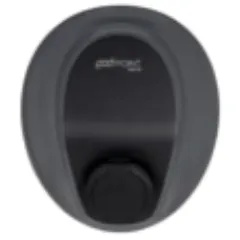
The Pod Point Solo 3S has a distinctive oval design measuring 330mm × 290mm × 112mm and weighing 3.5kg in untethered form. It's a polycarbonate unit rated IP54 for weather resistance — perfectly adequate for UK conditions.
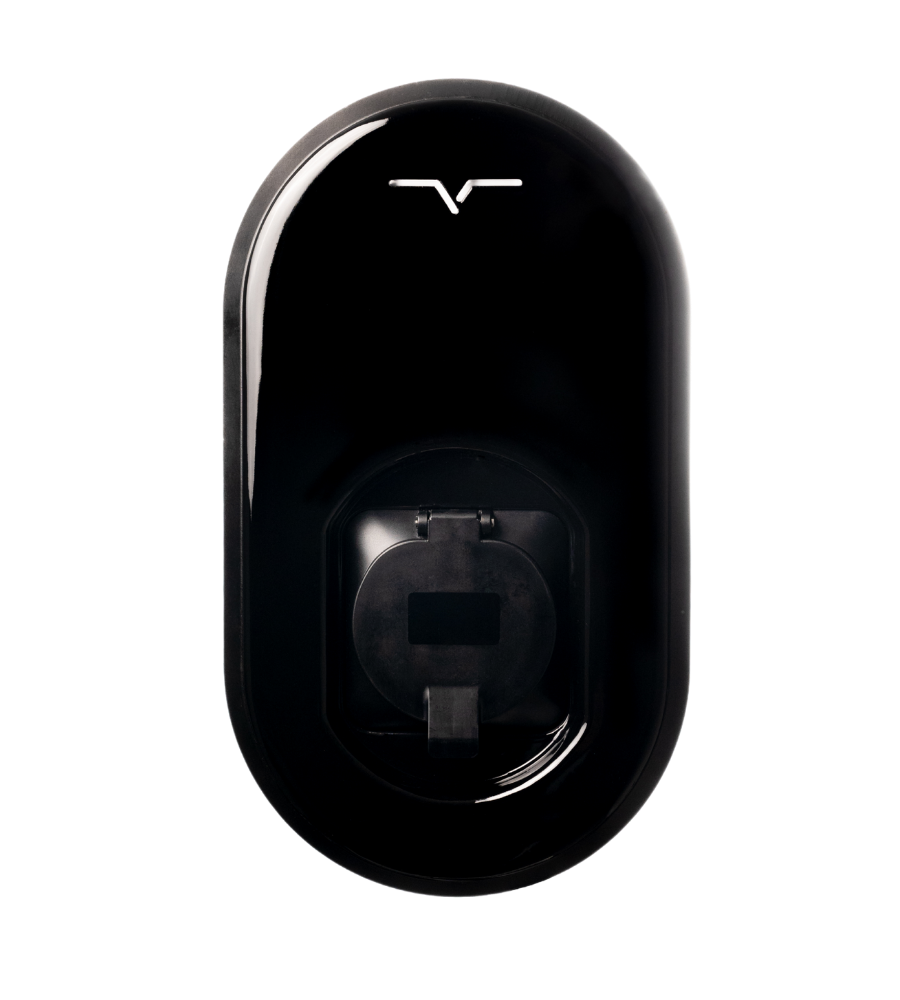
The VCHRGD Seven Pro is noticeably more compact at 300mm × 180mm × 90mm, making it one of the smaller chargers on the market. It matches the Solo 3S's IP54 waterproofing but adds IK10 impact resistance — the highest rating on the standard scale, meaning it can withstand serious knocks. If your charger is mounted near a tight driveway or in a spot where it might get clipped, that's a practical advantage. The downside? It only comes in black, so if aesthetics matter and your wall is light-coloured, your options are limited.
Price and Value
| Cost Element | Pod Point Solo 3S | VCHRGD Seven Pro |
|---|---|---|
| Unit price | £999 (installed) | £432 (tethered) / £395 (untethered) |
| Installation | Included | £400–£600 (independent installer) |
| Total installed cost | £999 | £832–£1,032 |
| After OZEV grant (if eligible) | £499 | £332–£532 |
The headline prices tell a slightly misleading story. Yes, the VCHRGD is less than half the price as a unit, but once you factor in installation, the total cost gap narrows to somewhere between nothing and £167 in the VCHRGD's favour — depending on your installation complexity. Where the VCHRGD claws back serious value is in what you get for that money: smart tariff integration, dual solar modes, RFID, a longer 7.5m cable, and OCPP support. Feature-for-feature, it's remarkably hard to beat at this price.
The Pod Point's value proposition is simplicity. One price, one phone call, everything sorted. You're paying a premium for that convenience and for the reassurance of a 5-year warranty from a brand with 15 years of track record.
Who Should Buy Which?
Buy the Pod Point Solo 3S if:
- You want a completely hands-off experience — one price, one call, done
- You value a longer 5-year warranty from an established brand
- You don't have solar panels and aren't on a smart EV tariff
- You prefer the security of a Which?-endorsed installation service
- You want 24/7 customer support from a major UK charging provider
Buy the VCHRGD Seven Pro if:
- You want smart tariff integration to maximise savings on Octopus Intelligent Go
- You have solar panels and want dedicated solar diversion modes with a CT clamp included
- You need a longer cable — 7.5m vs 5m makes a real difference on many driveways
- You want RFID access control for a shared parking space
- You're comfortable sourcing your own OZEV-approved installer to keep costs down
Our recommendation: For most buyers, the VCHRGD Seven Pro offers significantly more for your money. The smart tariff integration alone could save you hundreds of pounds a year, the solar features are genuinely superior, and the longer cable is a practical win. Yes, it's a newer brand with a shorter warranty, and you'll need to arrange your own installation — but if you're willing to do that legwork, the feature set is outstanding at this price. The Pod Point Solo 3S remains an excellent choice if you simply want everything handled for you and aren't fussed about smart tariff savings, but you are paying a meaningful premium for that peace of mind.
For the full specs-level breakdown, see our Pod Point Solo 3S vs VCHRGD Seven Pro comparison page.
Read our full Pod Point Solo 3S review or VCHRGD Seven Pro review.
For total installed cost rankings, see our cheapest EV charger guide.
We’ll handle the installation
We’ll match you with vetted UK electricians — up to 3 free quotes, no obligation.