Ohme Home Pro vs VCHRGD Seven Pro: Smart Tariff King vs Value Champion
The Established Smart Charger vs the Feature-Packed Newcomer
These two chargers sit in an interesting sweet spot. Both are 7.4kW single-phase smart chargers with solar integration, smart tariff support, and dynamic load balancing. Both are OZEV-approved. And both cost well under £600 for the unit alone. Yet they take noticeably different approaches to winning your money.
The Ohme Home Pro has built its reputation as the undisputed king of smart tariff integration. It's the charger Octopus Energy officially recommends for Intelligent Go, and its deep API connections to UK energy suppliers are genuinely unmatched. The VCHRGD Seven Pro, meanwhile, is a relative newcomer that throws an almost absurd number of features at you — RFID cards, OCPP compliance, IK10 impact resistance, a 7.5m cable, and a CT clamp all included — for over £100 less than the Ohme. The question is whether raw feature count or proven smart tariff pedigree matters more for your daily charging routine.
In a nutshell:
- Ohme Home Pro (£535): The UK's best smart tariff charger, with built-in 4G connectivity and official Octopus Intelligent Go integration that can cut your charging costs to as little as 7p/kWh.
- VCHRGD Seven Pro (£432): Remarkable value with more included accessories than any rival at this price — solar modes, RFID, CT clamp, OCPP support, and a generous 7.5m cable all as standard.
Spec Comparison
| Feature | Ohme Home Pro | VCHRGD Seven Pro |
|---|---|---|
| Price | £535 | £432 (tethered 7.5m) |
| Power | 7.4kW (single-phase) | 7.4kW (single-phase) |
| Cable Length | 5m (8m optional at extra cost) | 7.5m |
| Smart Tariffs | Octopus Intelligent Go, OVO, and others | Octopus Intelligent Go |
| Solar | Solar diverting | Solar Export + Solar Only modes |
| Connectivity | Wi-Fi + 3G/4G (SIM included) | Wi-Fi + Bluetooth (optional 4G) |
| Display | Colour LCD screen | None |
| RFID | No | Yes (2 cards included) |
| OCPP | No | Yes (OCPP 1.6J) |
| Dynamic Load Balancing | Pre-wired | CT clamp included |
| IP Rating | IP65 | IP54 + IK10 |
| Warranty | 3 years | 3 years |
| Type | Tethered (Type 2) | Tethered or untethered |
Smart Tariff Integration
This is where the Ohme Home Pro truly earns its keep. As electriccarguide.co.uk and wepoweryourcar.com both highlight, Ohme's deep API integration with UK energy suppliers goes beyond simple scheduling. On Octopus Intelligent Go (~7p/kWh off-peak), the Ohme doesn't just charge during a fixed window — it communicates directly with Octopus's platform to find the cheapest half-hour slots across the entire night, even extending your off-peak window beyond the standard 23:30–05:30. It also integrates with other suppliers, though wepoweryourcar.com notes that OVO Charge Anytime compatibility has been revoked, which is worth knowing if you're with OVO.
The VCHRGD Seven Pro supports Octopus Intelligent Go via the Powerverse app, which is genuinely useful. However, its tariff integration is narrower — the data only confirms Octopus Intelligent Go support, compared to Ohme's broader multi-supplier compatibility. If you're already on Octopus and plan to stay, the VCHRGD will still get you that ~7p/kWh rate. But if you like to switch suppliers for the best deal, the Ohme's wider tariff ecosystem gives you more flexibility.
For context, charging a Tesla Model 3 (60kWh battery) at 7p/kWh costs roughly £4.20 for a full charge — enough for around 210 miles. At the standard Ofgem cap rate of approximately 24.5p/kWh, that same charge would cost over £14. Over a year of average UK driving (~7,400 miles), the savings from a smart tariff add up to roughly £400–500 annually, regardless of which charger you choose.
Solar Integration
Both chargers support solar charging, but they approach it differently. The Ohme Home Pro offers solar diverting — it can use surplus energy from your solar panels to charge your EV rather than exporting it back to the grid. It's a solid, straightforward implementation.
The VCHRGD Seven Pro goes a step further with two distinct solar modes. Solar Export mode diverts surplus generation to your car (similar to the Ohme), while Solar Only mode restricts charging exclusively to solar power — your car won't draw a single watt from the grid. This is genuinely useful if you want to run your EV on 100% free electricity during sunny months, even if it means slower or partial charges. The included CT clamp makes setup straightforward, as it monitors your home's energy consumption in real time to calculate available surplus.
If you have solar panels and want maximum control over how that energy is used, the VCHRGD's dual-mode approach is the more sophisticated option.
App, Connectivity, and Access Control
The Ohme app is widely regarded as one of the best in the UK EV charging space. As mcnallyev.uk notes, it's "the most powerful option for UK users" for tariff integration. You get detailed cost tracking per session, charging schedules, and real-time status updates on the charger's built-in colour display — a genuinely handy feature when you just want to glance at your charger and see what's happening without pulling out your phone.
Crucially, the Ohme includes a 3G/4G SIM with three years of data, so it works even if your Wi-Fi doesn't reach your driveway. As warmzilla.co.uk points out, this built-in cellular connectivity ensures the charger stays connected to the cloud regardless of your home network situation.
The VCHRGD Seven Pro uses the Powerverse app with its Raya AI assistant, connecting via Wi-Fi and Bluetooth (4G is optional, not included). It adds two features the Ohme lacks: RFID access control with two cards included — ideal if your charger is on a shared driveway or accessible to passers-by — and OCPP 1.6J compliance, which means it can connect to third-party energy management platforms. OTA updates keep the firmware current. However, as a third-party app platform, Powerverse's long-term continuity is worth considering — if that partnership changes, your charger's smart features could be affected.
Build Quality and Design
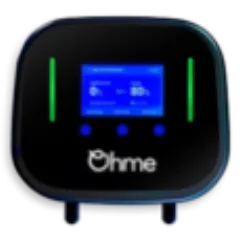
The Ohme Home Pro is the more compact unit at 170mm × 200mm × 100mm and roughly 3.5kg, with an IP65 rating that makes it fully weatherproof against sustained water jets — ideal for exposed installations. It's available in black or white and features that useful colour LCD screen on the front.
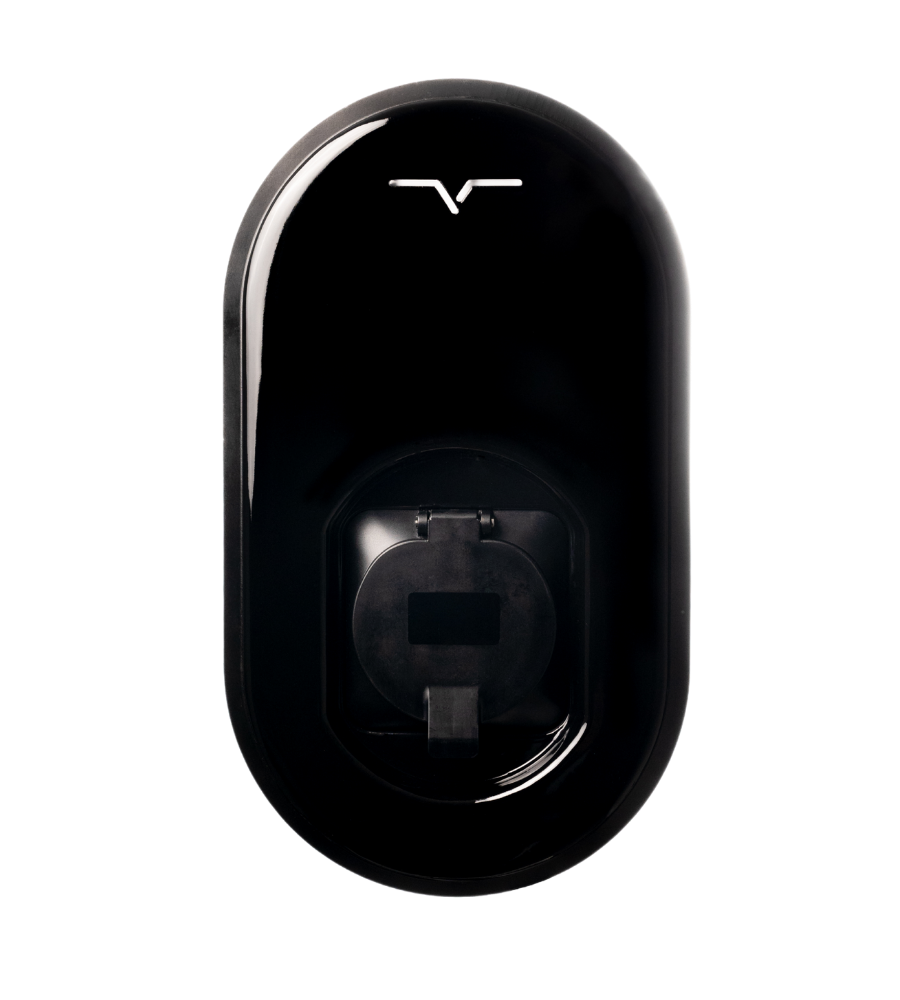
The VCHRGD Seven Pro is larger at 300mm × 180mm × 90mm and 4kg, available only in black. Its IP54 rating is adequate for outdoor use (protected against splashing water) but a step below the Ohme's IP65. However, the VCHRGD counters with an IK10 impact resistance rating — the highest on the scale — meaning it can withstand serious knocks. If your charger is in a location where it might get clipped by a car door or a wayward football, that's a meaningful advantage.
Price and Value
| Ohme Home Pro | VCHRGD Seven Pro | |
|---|---|---|
| Unit price | £535 | £432 |
| Installation | £400–500 | £400–600 |
| Total installed | £935–1,035 | £832–1,032 |
| After OZEV grant | £435–535 | £332–532 |
The VCHRGD Seven Pro is £103 cheaper at the unit level and includes extras that would cost more with the Ohme — notably the longer 7.5m cable (the Ohme's 5m cable may require the 8m upgrade at extra cost) and the CT clamp for dynamic load balancing. When you factor in those included accessories, the real-world price gap widens further.
That said, the Ohme's included 4G SIM (three years of connectivity) is a genuine value-add if your Wi-Fi is unreliable, and its broader smart tariff ecosystem can deliver savings that dwarf the upfront price difference within months.
Who Should Buy Which?
Buy the Ohme Home Pro if:
- You're on Octopus Intelligent Go (or plan to switch) and want the deepest, most proven tariff integration available
- You value a built-in colour display for at-a-glance charging status
- Your Wi-Fi doesn't reach your charger location and you need guaranteed 4G connectivity
- You might switch energy suppliers in future and want broad tariff compatibility
- You prefer an established brand with years of proven reliability in the UK market
Buy the VCHRGD Seven Pro if:
- You want the most features for the least money — it's hard to beat at £432
- You have solar panels and want granular control with two distinct solar charging modes
- You need RFID access control for a shared driveway or semi-public location
- A longer 7.5m cable matters for your parking setup
- You want OCPP compliance for future-proofing or third-party platform integration
Our recommendation: For most UK Tesla owners on a smart tariff, the Ohme Home Pro remains the safer, smarter choice. Its tariff integration is deeper, its 4G connectivity is more reliable, and Ohme's track record in the UK market provides peace of mind that a newer brand simply can't match yet. However, if you're budget-conscious, have solar panels, or need RFID access control, the VCHRGD Seven Pro offers genuinely extraordinary value — you're getting features that typically cost £600+ elsewhere for well under £450. Just go in with eyes open about the brand's relative newness and the Powerverse app dependency.
For the full specs-level breakdown, see our Ohme Home Pro vs VCHRGD Seven Pro comparison page.
Read our full Ohme Home Pro review or VCHRGD Seven Pro review.
For smart tariff integration rankings, see our best smart EV charger guide.
For total installed cost rankings, see our cheapest EV charger guide.
We’ll handle the installation
We’ll match you with vetted UK electricians — up to 3 free quotes, no obligation.