Ohme Home Pro vs Cord Zero: Smart Tariff King vs Connectivity Champion
The Tariff Whisperer vs the Connectivity King
If you're shopping for a smart home charger in the £500–£600 bracket, there's a good chance the Ohme Home Pro and the Cord Zero have both landed on your shortlist. They're separated by just £20 on sticker price, both deliver 7.4kW single-phase charging, and both come with built-in 4G connectivity — a feature that was practically unheard of at this price point a couple of years ago.
So what actually separates them? In short: the Ohme Home Pro has built its reputation on deep smart tariff integration, particularly with Octopus Energy, making it the go-to for drivers who want to squeeze every penny from off-peak rates. The Cord Zero, meanwhile, leads with rock-solid dual connectivity, a comprehensive built-in safety suite, and a promotional 5-year warranty that undercuts the competition on long-term peace of mind. Both are excellent chargers — but depending on your priorities, one will suit you significantly better than the other.
In a nutshell:
- Ohme Home Pro (£535): The UK's best charger for automated smart tariff charging, officially recommended by Octopus Energy for their Intelligent Go tariff.
- Cord Zero (£555): A reliably connected, safety-first charger with dual Wi-Fi + 4G failover and a current free upgrade to a 5-year warranty.
Spec Comparison
| Feature | Ohme Home Pro | Cord Zero |
|---|---|---|
| Price | £535 | £555 (tethered 5m) |
| Power | 7.4kW (single-phase) | 7.4kW (single-phase) |
| Cable | 5m (optional 8m at extra cost) | 5m (8m version £625) |
| Type | Tethered, Type 2 | Tethered, Type 2 |
| Smart tariffs | Octopus Intelligent Go, OVO, and others | Octopus Go, OVO, British Gas, EDF, and more |
| Solar | Solar diverting built-in | Solar compatible |
| Connectivity | Wi-Fi + 3G/4G (SIM included) | Wi-Fi 2.4GHz + 4G with automatic failover |
| Display | Colour display | No on-unit display |
| RFID | No | Yes |
| Warranty | 3 years | 3 years (currently free upgrade to 5 years) |
| IP Rating | IP65 | IP54 + IK08 |
| Certification | OZEV approved | OZEV approved |
Smart Tariff Integration
This is where the Ohme Home Pro genuinely shines — and where it's built its formidable reputation. The Ohme is officially recommended by Octopus Energy for their Intelligent Go tariff, which offers off-peak electricity at around 7p/kWh. Crucially, the Ohme doesn't just let you schedule charging during a fixed off-peak window; it communicates directly with Octopus via API to access additional cheap slots outside the standard 23:30–05:30 period. That deeper integration means more hours of ultra-cheap charging and, for many drivers, annual savings north of £500 compared to standard rate charging electriccarguide.co.uk.
The Cord Zero supports a broader range of tariff providers — Octopus Go, OVO, British Gas, EDF, and more — which is genuinely useful if you're not on Octopus or prefer to keep your options open. However, its tariff integration works through scheduled charging rather than the deep API-level communication the Ohme offers with Intelligent Go. If you're already on Octopus Intelligent Go (or plan to switch), the Ohme is the clear winner here. If you're on British Gas Electric Driver or EDF, the Cord Zero's wider compatibility gives it the edge.
As mcnallyev.uk notes, the Ohme app is widely considered the most powerful option for UK users when it comes to tariff-optimised charging — and that assessment holds true in this head-to-head.
App and Connectivity
Both chargers include built-in 4G with an included SIM, which is a significant advantage over chargers that rely solely on your home Wi-Fi. If your consumer unit is in the garage and your router is upstairs, a 4G-equipped charger eliminates one of the most common frustrations in home EV charging.
The Cord Zero takes connectivity a step further with automatic failover between Wi-Fi and 4G. If your Wi-Fi drops, the charger seamlessly switches to 4G without missing a beat. The Ohme Home Pro offers both Wi-Fi and 3G/4G with a 3-year SIM included, but the Cord's dual-connectivity with automatic failover is the more robust implementation — and it's the charger we'd trust most in areas with patchy broadband evenergyhub.com.
On the app side, the picture reverses. The Ohme app is feature-rich, with detailed cost tracking per session, real-time updates, and intuitive control over charging schedules. The Cord AI app is functional but, by most accounts, more basic in comparison. If you enjoy granular data about your charging costs and energy usage, the Ohme app will keep you happier.
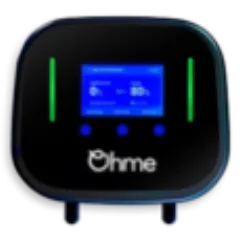
The Ohme also features a built-in colour display on the unit itself, giving you at-a-glance charging status without reaching for your phone — a small but genuinely appreciated touch on dark winter evenings.
Build Quality and Installation
The Cord Zero is the physically larger unit at 320mm × 210mm × 132mm and roughly 5 kg, compared to the Ohme's more compact 170mm × 200mm × 100mm at around 3.5 kg. If wall space is tight, the Ohme's smaller footprint is a practical advantage.
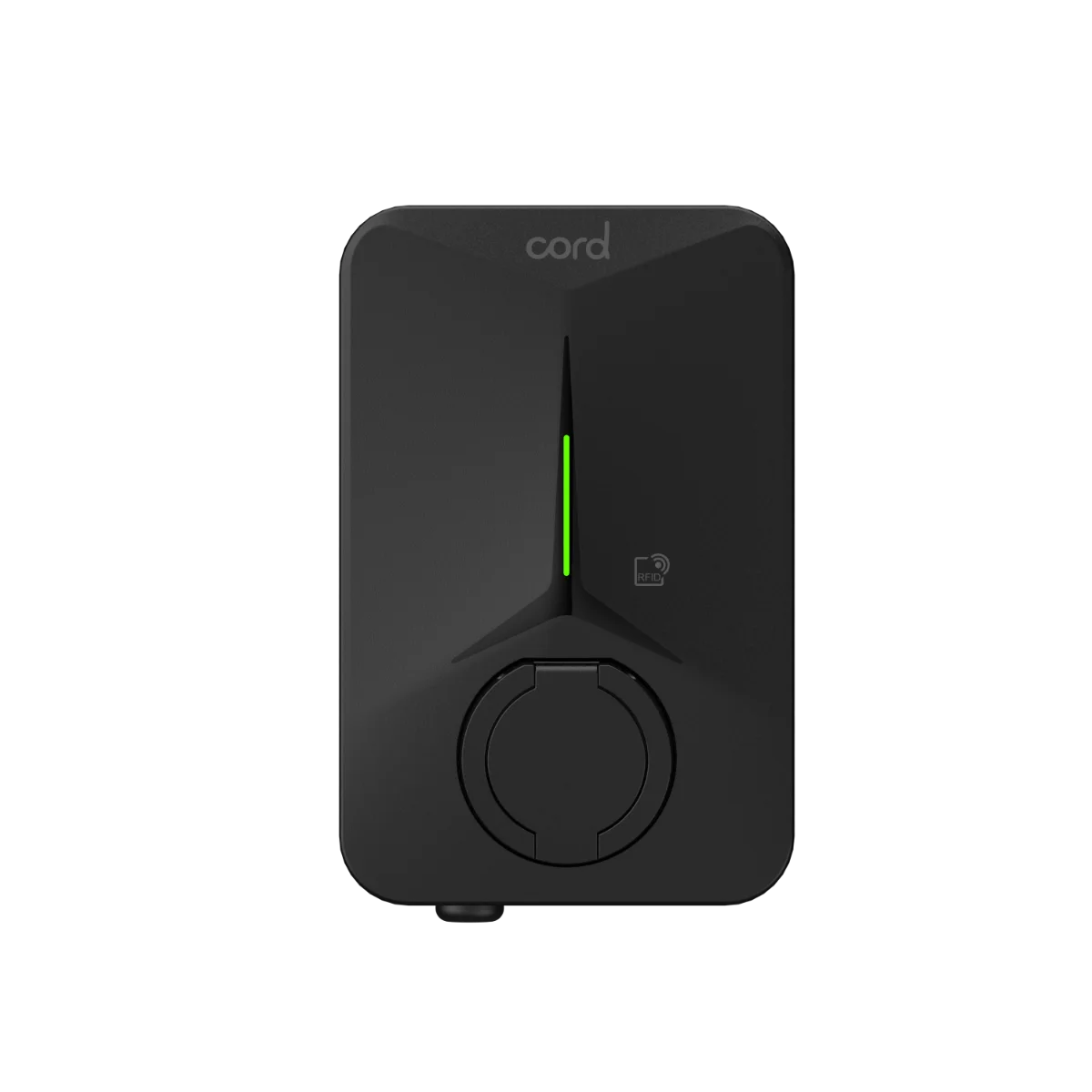
Where the Cord Zero fights back is on safety and durability. It includes a comprehensive built-in safety suite covering RCD protection, PEN fault detection, surge protection, and overvoltage protection. This can potentially reduce installation costs, as your electrician may not need to add as many additional components to your consumer unit. It also boasts IK08 impact resistance — handy if the charger is mounted in a garage or near a driveway where it might take a knock.
The Ohme counters with a superior IP65 weatherproof rating (fully protected against water jets from any direction), compared to the Cord's IP54 (protected against splashing water). For exposed outdoor installations, the Ohme offers slightly better weather protection. Both chargers operate comfortably in UK temperatures, and both are OZEV approved.
Installation costs are identical for both — expect £400–£500 for a standard fit. The Cord Zero does advertise a typically fast turnaround of within 2 weeks from ordering, which is worth noting if you need to get charging quickly. The Cord Zero also includes RFID access control, a useful feature if your charger is accessible to the public or you share a parking area.
Price and Value
| Ohme Home Pro | Cord Zero | |
|---|---|---|
| Unit price | £535 | £555 |
| Installation | £400–£500 | £400–£500 |
| Total installed | £935–£1,035 | £955–£1,055 |
| After OZEV grant | £435–£535 | £455–£555 |
With just £20 separating the unit prices, value comes down to which features matter most to you rather than outright cost. The Ohme's deeper tariff integration could save you an extra £50–£100 per year compared to basic scheduled charging, meaning it effectively pays back that difference many times over if you're on Octopus Intelligent Go. The Cord Zero's current promotional 5-year warranty (up from the standard 3 years) adds genuine long-term value — though it's worth noting this promotion may not last indefinitely tinyeco.com.
Both chargers offer an optional 8m cable — useful for larger driveways — though the Cord Zero's 8m version is priced at £625, a £70 premium over the 5m model. The Cord Zero also offers an untethered socket version at £475, giving it more configuration flexibility.
Who Should Buy Which?
Buy the Ohme Home Pro if:
- You're on Octopus Intelligent Go (or plan to switch) and want the deepest possible tariff integration
- You have solar panels and want built-in solar diverting without a separate device
- You prefer a compact, lightweight unit with a colour display on the charger itself
- You value a polished, data-rich app for tracking charging costs per session
- You want the strongest weatherproofing (IP65) for an exposed outdoor location
Buy the Cord Zero if:
- You want the most reliable connectivity possible, with automatic Wi-Fi-to-4G failover
- You're on a non-Octopus tariff like British Gas Electric Driver or EDF and want broad compatibility
- You value comprehensive built-in safety features (RCD, PEN, surge protection) that may reduce installation costs
- A 5-year warranty matters to you — the current free upgrade is a significant sweetener
- You need RFID access control for a shared or publicly accessible charging point
Our recommendation: For most Tesla owners reading this site, the Ohme Home Pro gets our nod — but only just. The combination of Octopus Intelligent Go integration and built-in solar diverting makes it the smarter long-term investment for drivers who are willing to optimise their energy tariff. Charging at 7p/kWh on Intelligent Go, a typical Tesla Model 3 covering 7,400 miles annually would cost roughly £150 in electricity — that's genuinely transformative compared to petrol costs. However, if you're not on Octopus, or if rock-solid connectivity and a longer warranty are your priorities, the Cord Zero is a thoroughly competent alternative that won't disappoint.
For the full specs-level breakdown, see our Ohme Home Pro vs Cord Zero comparison page.
Read our full Ohme Home Pro review or Cord Zero review.
For smart tariff integration rankings, see our best smart EV charger guide.
We’ll handle the installation
We’ll match you with vetted UK electricians — up to 3 free quotes, no obligation.