Ohme ePod vs VCHRGD Seven Pro: Smart Charging Heavyweights Compared
The Established Favourite vs the Feature-Packed Newcomer
If you're shopping for a smart home EV charger in the UK right now and your budget sits comfortably under £450, two names will keep surfacing: the Ohme ePod and the VCHRGD Seven Pro. Both deliver 7.4kW single-phase charging, both integrate with smart tariffs like Octopus Intelligent Go, and both include solar compatibility and dynamic load balancing as standard. On paper, they look remarkably similar — yet the experience of living with each is quite different.
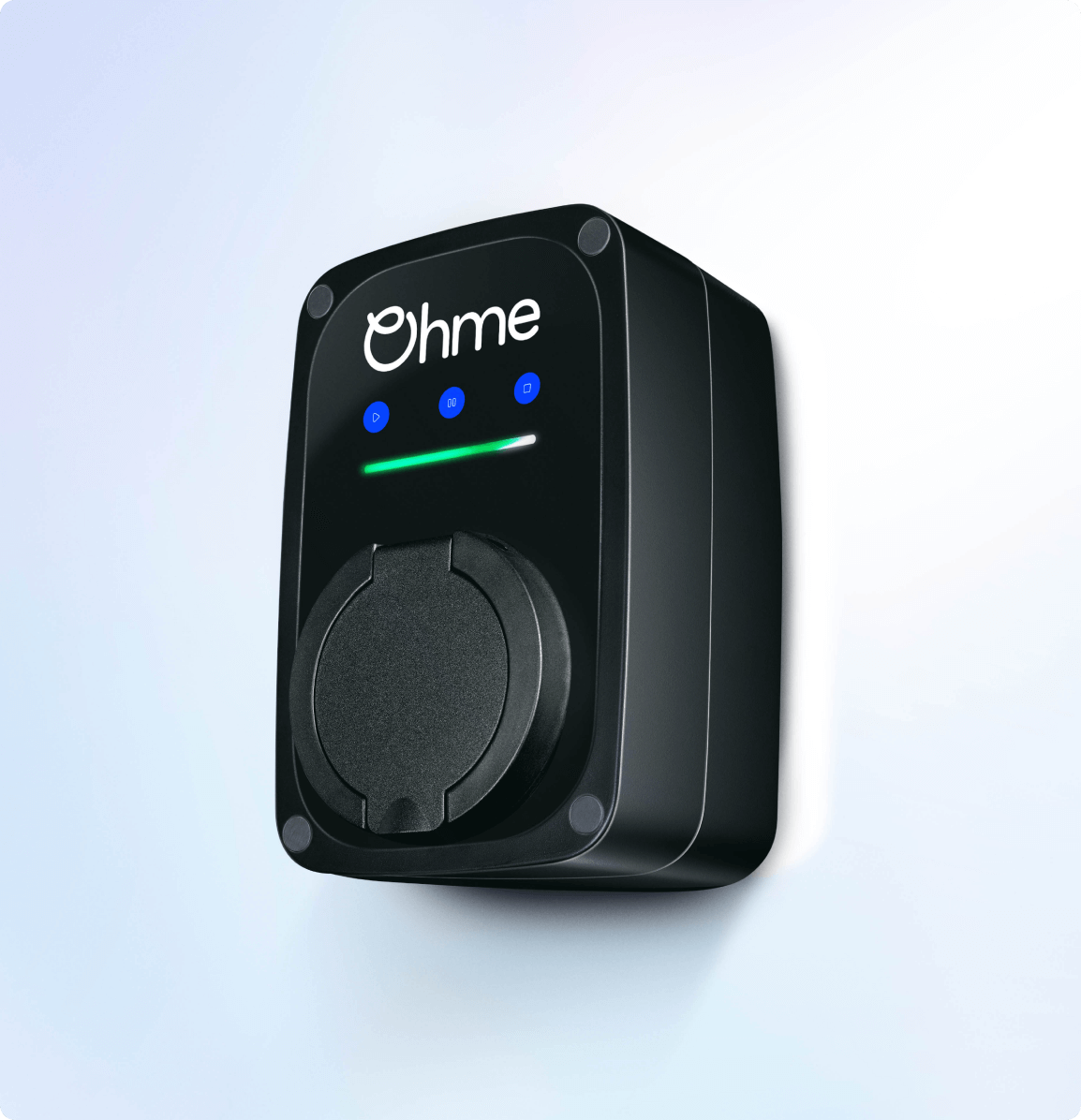
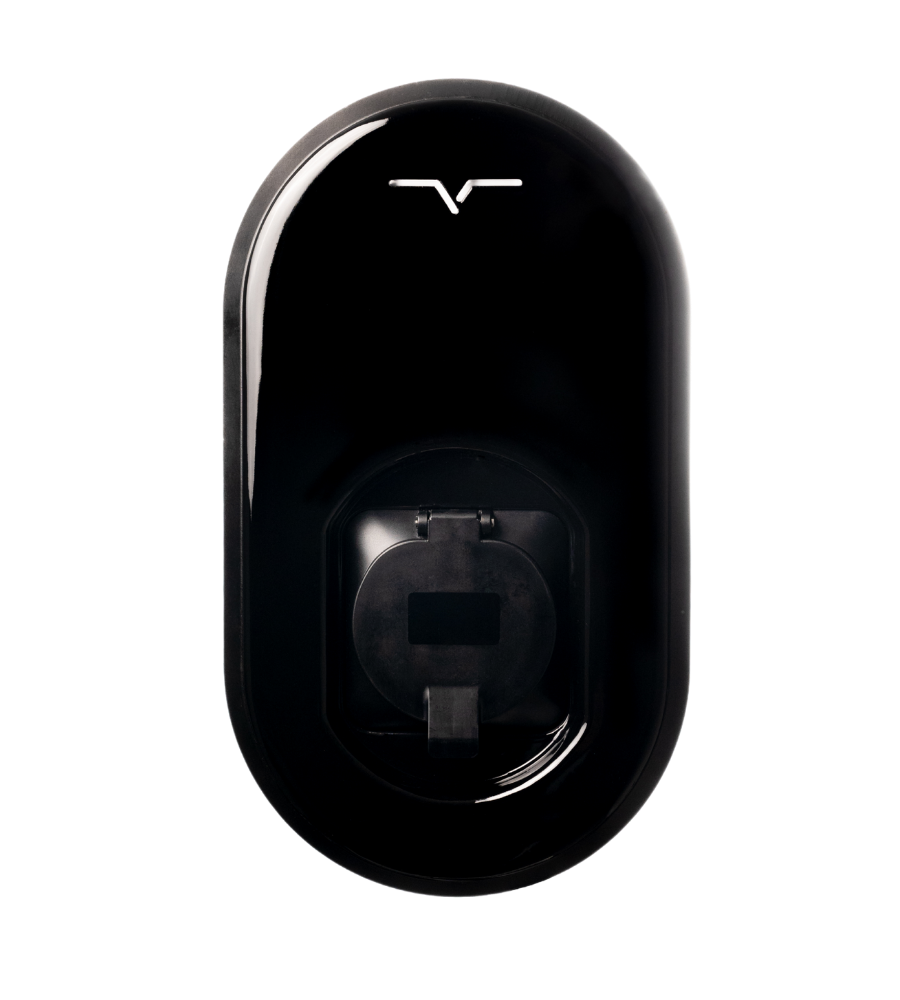
The Ohme ePod is the compact, untethered darling of the UK smart charging scene. Ohme has built a serious reputation for tariff integration, and the ePod distils that intelligence into what is genuinely the smallest smart charger on the market. The VCHRGD Seven Pro, meanwhile, is the newcomer that's turning heads by cramming features like RFID access, OCPP compliance, a 7.5-metre tethered cable, and an AI-powered app into a package that costs just £432. It's a lot of charger for the money — but can a relatively new brand match Ohme's proven track record?
In a nutshell:
- Ohme ePod (£409): The UK's smartest untethered charger — tiny, cellular-connected, and unmatched for automatic off-peak tariff savings.
- VCHRGD Seven Pro (£432): The most feature-rich charger at this price — tethered convenience, RFID security, solar modes, and OCPP support all included.
Spec Comparison
| Feature | Ohme ePod | VCHRGD Seven Pro |
|---|---|---|
| Price (unit only) | £409 | £432 (tethered 7.5m) |
| Max Power | 7.4kW (single-phase) | 7.4kW (single-phase) |
| Cable | Untethered — cable not included | 7.5m tethered Type 2 |
| Smart Tariff Integration | Octopus Intelligent Go, Agile, OVO, British Gas | Octopus Intelligent Go |
| Solar Modes | Solar Boost + Solar Only | Solar Export + Solar Only |
| Connectivity | Built-in 3G/4G SIM | Wi-Fi + Bluetooth (optional 4G) |
| Dynamic Load Balancing | Yes (included) | Yes (CT clamp included) |
| RFID Access | No | Yes (2 cards included) |
| OCPP Support | No | Yes (OCPP 1.6J) |
| Display | None (app only) | None (app only) |
| IP Rating | IP54 | IP54 + IK10 |
| Warranty | 3 years | 3 years |
| Weight | 1.48 kg | ~4 kg |
| Dimensions | 230 × 140 × 100mm | 300 × 180 × 90mm |
| OZEV Approved | Yes | Yes |
Smart Tariff Integration
This is where the Ohme ePod has a genuine, tangible advantage. Ohme's tariff integration isn't just a scheduling feature — it's a deep, API-level connection with multiple UK energy providers. The ePod works with Octopus Intelligent Go (which extends your off-peak window to roughly 23:30–05:30), Octopus Agile (charging during the cheapest 30-minute slots), OVO Smart Charge, and British Gas Electric Driver. As electriccarguide.co.uk notes, the ePod's ability to set schedules for off-peak charging and monitor energy usage through the Ohme app is one of its standout strengths. The "Price Cap" feature lets you set a maximum pence-per-kWh you're willing to pay, and the charger simply won't draw power above that threshold.
The VCHRGD Seven Pro supports Octopus Intelligent Go integration via the Powerverse app, which is a solid start. However, the breadth of tariff support doesn't yet match Ohme's roster. If you're on Octopus Go or Intelligent Go — by far the most popular UK EV tariffs — both chargers will serve you well, potentially saving you hundreds of pounds a year by charging at around 7p/kWh rather than the standard 24p+ rate. But if you're on Agile, OVO, or British Gas, the Ohme ePod is currently the only option here that integrates natively.
On a typical Intelligent Octopus Go tariff, charging a 60kWh Tesla Model 3 from 20% to 80% would cost roughly £2.52 at the off-peak rate — compared to around £8.64 at standard rates. Over a year of average UK mileage (7,400 miles), that difference adds up to savings of approximately £400–500 annually. Both chargers unlock those savings, but the Ohme ePod does it across more tariffs with less manual input.
Solar Compatibility
Both chargers offer genuine solar diversion, which is increasingly important as more UK homes add rooftop panels. The Ohme ePod provides Solar Boost mode (tops up grid power with solar surplus) and Solar Only mode (charges exclusively from excess solar generation). The VCHRGD Seven Pro offers an equivalent pair — Solar Export and Solar Only — and includes the CT clamp in the box, which is a nice touch since CT clamps can cost £30–50 separately.
In practice, both approaches work similarly: a CT clamp monitors your home's energy flow and diverts surplus solar generation to your car rather than exporting it to the grid at a measly 4–5p/kWh. If your 4kW solar array is generating more than your home needs on a sunny afternoon, your EV effectively becomes a battery, soaking up free energy. The VCHRGD Seven Pro's inclusion of the CT clamp as standard gives it a slight edge on out-of-the-box solar readiness, though the difference is marginal.
App, Connectivity, and Access Control
The Ohme app is widely regarded as one of the best EV charger apps in the UK. As mcnallyev.uk highlights, it's "the most powerful option for UK users" when it comes to tariff scheduling and energy optimisation. The ePod's built-in 3G/4G SIM means it's always online regardless of your home Wi-Fi situation — a genuine advantage if your charger is mounted far from your router or your broadband is unreliable.
The VCHRGD Seven Pro uses the Powerverse app, which includes an AI assistant called Raya for energy insights and scheduling. It connects via Wi-Fi and Bluetooth, with optional 4G available. The app is capable, but as evenergyhub.com cautions, the reliance on a third-party platform means long-term continuity depends on that partnership enduring. That said, the Seven Pro's OCPP 1.6J support provides a safety net — if the Powerverse app ever disappeared, the charger could theoretically connect to other OCPP-compatible platforms.
The VCHRGD Seven Pro also includes two RFID cards, which is a genuinely useful feature if you share a driveway or want to prevent unauthorised use. The Ohme ePod relies on app-based locking only, and being untethered, there's no physical cable lock mechanism — though the absence of a permanently attached cable does mean there's nothing to steal when the charger isn't in use.
Build Quality and Design
The Ohme ePod is astonishingly small. At just 1.48 kg and 230 × 140 × 100mm, it's barely larger than a paperback book. As evergy.co.uk notes, the compact, untethered design gives a cleaner look on the wall. If aesthetics and minimal visual impact matter to you, the ePod is hard to beat.
The VCHRGD Seven Pro is larger at 300 × 180 × 90mm and around 4 kg, though that's still compact by charger standards and includes a 7.5-metre tethered cable. Crucially, it adds IK10 impact resistance on top of the IP54 weatherproofing that both units share. IK10 is the highest impact resistance rating — the unit can withstand a 5-joule impact — making it the tougher choice for exposed installations or busy driveways.
Price and Value
| Cost Element | Ohme ePod | VCHRGD Seven Pro |
|---|---|---|
| Unit price | £409 | £432 |
| Type 2 cable (if needed) | £100–200 | Included (7.5m) |
| Effective unit cost | £509–609 | £432 |
| Installation estimate | £300–600 | £400–600 |
| Total installed range | £709–1,209 | £832–1,032 |
| After OZEV grant (if eligible) | £209–709 | £332–532 |
The headline prices look similar, but the real-world cost gap is wider than it appears. The Ohme ePod is untethered, so you'll need to budget £100–200 for a decent Type 2 charging cable. That pushes the effective unit cost to £509–609 — potentially £177 more than the VCHRGD Seven Pro, which includes a 7.5-metre cable, a CT clamp, and two RFID cards in the box. The Seven Pro also includes OCPP compliance, which could add value if you ever want to integrate with third-party energy management systems.
That said, the Ohme ePod's installation can start from as low as £300 (it's lighter and often simpler to mount), and the £949 all-in package including standard installation — as listed by electriccarguide.co.uk — represents a known, fixed cost that removes guesswork.
Who Should Buy Which?
Buy the Ohme ePod if:
- You're on Octopus Agile, OVO, or British Gas and want native tariff integration beyond just Intelligent Go
- You need cellular connectivity because your Wi-Fi doesn't reach the driveway
- You want the smallest, most discreet charger possible on your wall
- You already own a Type 2 cable or want the flexibility of an untethered setup
- You value Ohme's established reputation and proven app ecosystem
Buy the VCHRGD Seven Pro if:
- You want plug-and-go convenience with a 7.5-metre tethered cable included
- You share a driveway or parking space and need RFID access control
- You want solar charging with the CT clamp included in the box — no extras to buy
- You value OCPP 1.6J compliance for future flexibility or third-party platform integration
- You want maximum features per pound and prefer not to buy a separate cable
Our recommendation: For most UK EV owners on Octopus Intelligent Go or a similar smart tariff, the VCHRGD Seven Pro offers the better overall package purely on value — you get a tethered cable, RFID cards, a CT clamp, and OCPP support for £432 all-in. However, if tariff integration breadth is your priority, or if you specifically need cellular connectivity and the smallest possible footprint, the Ohme ePod remains the smarter choice. Ohme's deeper tariff partnerships and proven app reliability give it an edge that matters most to drivers who want their charger to think for them. The ePod is the better brain; the Seven Pro is the better bundle.
For the full specs-level breakdown, see our Ohme ePod vs VCHRGD Seven Pro comparison page.
Read our full Ohme ePod review or VCHRGD Seven Pro review.
For smart tariff integration rankings, see our best smart EV charger guide.
For total installed cost rankings, see our cheapest EV charger guide.
We’ll handle the installation
We’ll match you with vetted UK electricians — up to 3 free quotes, no obligation.