NexBlue Point 2 vs Rolec EVO: Future-Proof Tech vs Proven UK Value
Future-Proof Tech vs Proven UK Value
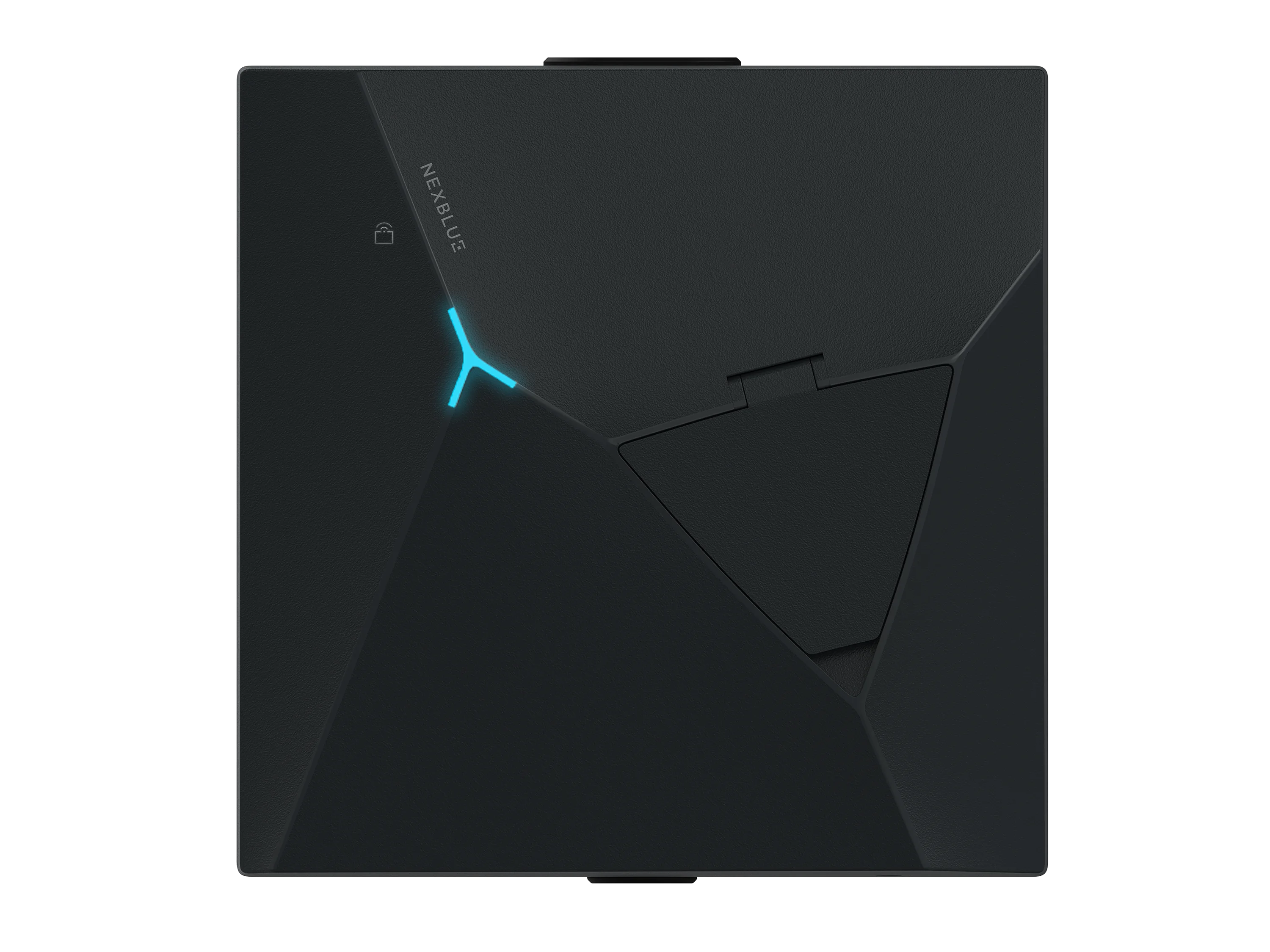
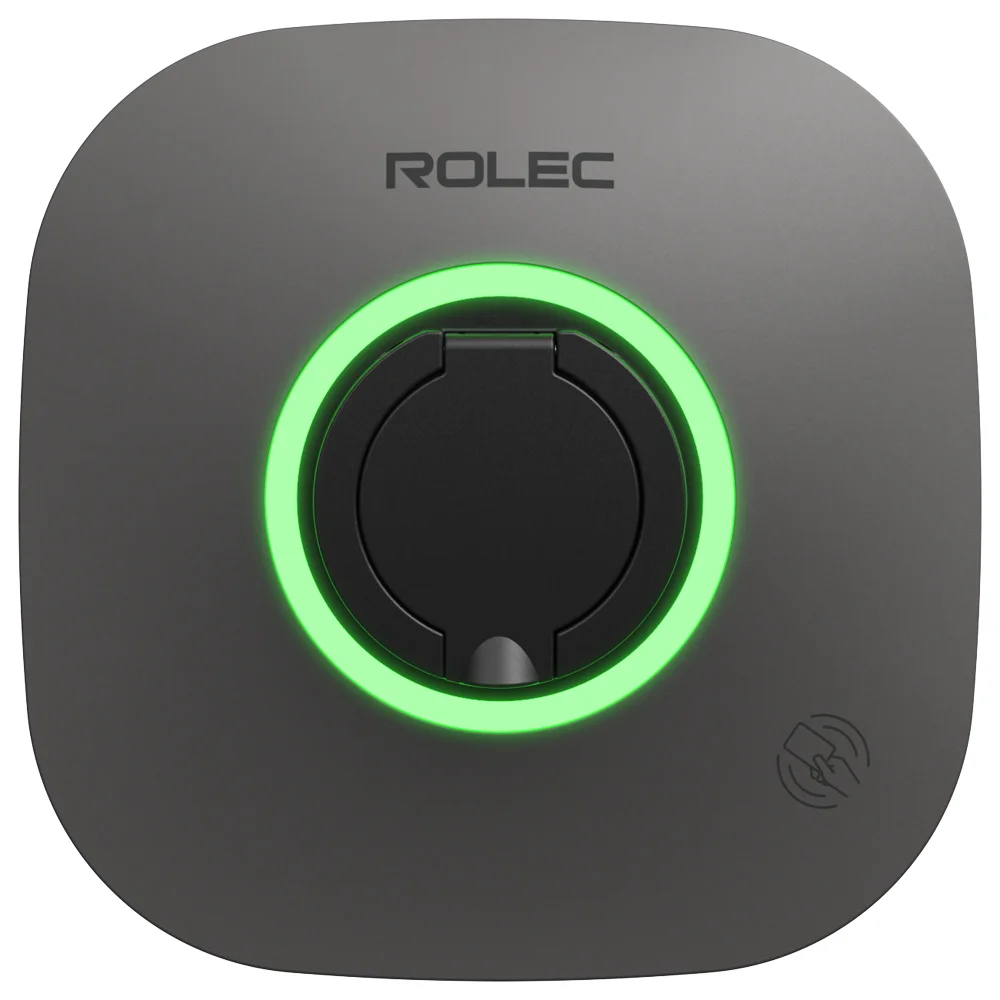
If you have been shopping for a smart EV charger under £600, chances are the NexBlue Point 2 and the Rolec EVO have both landed on your shortlist. They occupy a similar price bracket, both deliver 7.4kW single-phase charging, and both pack in features that would have cost twice as much just a couple of years ago. Yet they take fundamentally different approaches: the NexBlue bets big on tomorrow's technology — V2G readiness, ISO 15118, and a built-in 4G eSIM — while the Rolec EVO focuses on delivering rock-solid value today with built-in solar modes, PME fault detection, and the reassurance of a well-established UK manufacturer.
Choosing between them comes down to what you value more: cutting-edge future-proofing from a newer brand, or a mature feature set backed by a company with over a decade in the UK EV charging industry. Let us break it all down.
In a nutshell:
- NexBlue Point 2 (£530): V2G-ready and ISO 15118 compliant with lifetime free 4G connectivity — the most future-proofed charger at this price.
- Rolec EVO (£449): UK-built with built-in solar Eco/Eco+ modes and PME fault detection as standard — outstanding value from a proven manufacturer.
Spec Comparison
| Feature | NexBlue Point 2 | Rolec EVO |
|---|---|---|
| Price | £530–600 | £449 |
| Power | 7.4kW (single-phase) | 7.4kW (single-phase) |
| Cable | Untethered (Type 2 socket) | Untethered (Type 2 socket) |
| Smart tariffs | EcoPilot tariff integration | Charge scheduling |
| Solar | Solar surplus (requires Zen accessory) | Eco + Eco+ modes (built-in) |
| Load balancing | Dynamic (CT clamp included) | Dynamic (CT clamp included) |
| Connectivity | Wi-Fi, Bluetooth, 4G eSIM (lifetime free) | Wi-Fi 6, Bluetooth 5.0, Ethernet |
| OCPP | 1.6-J and 2.0.1 | 1.6J |
| V2G / ISO 15118 | Yes | No |
| Warranty | 5 years | 5 years |
| IP / IK rating | IP54 / IK10 | IP54 / IK10 |
| Weight | 2.1 kg | 3 kg |
| Built-in RCD | Not specified | Type A + 6mA DC protection |
| PME fault detection | Not specified | Yes (built-in) |
Smart Tariff Integration and Scheduling
Both chargers support scheduled charging, which is essential if you want to take advantage of cheap overnight electricity on tariffs like Octopus Go (7.5p/kWh between 00:30 and 04:30) or Octopus Intelligent Go (around 7p/kWh). On a typical 60kWh Tesla battery, charging at off-peak rates rather than the standard variable tariff can save you well over £400 a year.
The NexBlue Point 2 offers its EcoPilot tariff integration feature, which is designed to automatically identify and charge during the cheapest rate windows. This is a step beyond basic scheduling — rather than you manually setting a timer, the charger works with your tariff data to optimise when electrons flow. The Rolec EVO provides charge scheduling through its app, giving you direct control over start and stop times. It is a more traditional approach, but perfectly effective if you know your tariff windows and set them once.
Where the NexBlue pulls ahead on paper is its OCPP 2.0.1 support alongside OCPP 1.6-J. OCPP 2.0.1 is the newer protocol that enables richer communication between your charger and energy platforms, which could unlock deeper smart tariff integrations — including variable-rate tariffs like Octopus Agile — as the ecosystem matures. The Rolec EVO supports OCPP 1.6J, which is the current industry standard and perfectly functional today, but lacks that forward-looking protocol layer.
Solar Diversion
This is where the two chargers diverge most sharply. The Rolec EVO has solar integration baked in from the start, with dedicated Eco and Eco+ modes and a CT clamp included in the box. Eco mode blends solar surplus with grid power to keep charging moving, while Eco+ mode charges exclusively from solar surplus — ideal for maximising your self-consumption on sunny days. For a charger at £449, this is genuinely impressive and puts it in direct competition with the Myenergi Zappi, which costs considerably more, as noted by mjwallace.co.uk.
The NexBlue Point 2 does support solar surplus charging, but it requires either the included CT clamp in a hardwired configuration or the separate NexBlue Zen wireless accessory for full solar optimisation, as detailed on nexblue.com. The solar capability is there, but it is not quite as turnkey as the Rolec's built-in modes. If you already have solar panels or are planning an installation, the EVO's out-of-the-box solar readiness gives it a meaningful edge.
App and Connectivity
Connectivity is one area where the NexBlue Point 2 genuinely stands out. It offers triple connectivity — Wi-Fi, Bluetooth, and a built-in 4G eSIM with a lifetime free data subscription. That 4G fallback is a real-world advantage if your charger sits on a driveway at the far end of the house where Wi-Fi signal drops out. As evenergyhub.com rightly points out, Wi-Fi dropout is a genuine pain point that many buyers overlook until it is too late.
The Rolec EVO counters with Wi-Fi 6, Bluetooth 5.0, and — unusually at this price — an Ethernet port. If you can run a network cable to your charger location, Ethernet provides the most reliable connection possible, with zero dropout concerns. Wi-Fi 6 is also a step up from standard Wi-Fi, offering better range and stability. However, there is no cellular fallback, so if your Wi-Fi goes down and you have no Ethernet run, you lose smart functionality until it reconnects.
Both chargers support RFID for access control — handy if your charger is on a shared driveway or you want to prevent unauthorised use. The NexBlue adds NFC activation as well. On the app front, both the myNexBlue and Rolec EVO apps are relatively new and still maturing. Neither has the polish of the Ohme or Hypervolt apps yet, so set expectations accordingly.
Installation Considerations
Both chargers share IP54 weatherproofing and IK10 impact resistance — the highest impact rating available — so either will handle whatever British weather throws at them. Installation costs for both fall in the standard £400–600 range.
The Rolec EVO has a significant installation advantage: built-in PME/PEN fault detection and integrated Type A RCD with 6mA DC protection. This eliminates the need for a separate PEN fault device or earth rod, which can save £100–200 on installation costs. For many UK homes on a PME earthing system (which is the majority), this is a meaningful saving that effectively closes the price gap — or even reverses it.
The NexBlue Point 2 is remarkably compact at just 235mm × 230mm × 107mm and weighs only 2.1 kg, making it one of the lightest chargers on the market. Its backplate design allows installation in under four minutes according to NexBlue, which your installer will appreciate.
Price and Value
| Cost element | NexBlue Point 2 | Rolec EVO |
|---|---|---|
| Unit price | £530–600 | £449 |
| Typical installation | £400–600 | £400–600 |
| Total installed cost | £930–1,200 | £849–1,049 |
| After OZEV grant (if eligible) | £430–700 | £349–549 |
The Rolec EVO is £80–150 cheaper at the unit level, and the gap can widen further once you factor in the built-in PME fault detection saving you £100–200 on installation extras. In a like-for-like installed scenario, the EVO could end up £200–300 cheaper overall.
The NexBlue Point 2 justifies its premium through V2G readiness, ISO 15118 Plug and Charge support, OCPP 2.0.1, and that lifetime free 4G eSIM. Whether those features are worth the extra spend depends entirely on your time horizon. V2G is coming to the UK, but widespread availability is still a year or two away. If you plan to keep your charger for five-plus years, the NexBlue's future-proofing could pay for itself many times over.
Who Should Buy Which?
Buy the NexBlue Point 2 if:
- You want a charger that is ready for V2G bi-directional charging without needing a hardware swap
- Your charger location has poor Wi-Fi and you need reliable 4G cellular connectivity
- You value OCPP 2.0.1 and ISO 15118 Plug and Charge for future smart grid integration
- You are comfortable being an early adopter of a newer brand with a strong feature set
- You want the lightest, most compact charger possible at just 2.1 kg
Buy the Rolec EVO if:
- You have solar panels and want built-in Eco/Eco+ solar diversion modes without buying accessories
- You want to minimise installation costs with built-in PME fault detection and integrated RCD
- You prefer buying from an established UK manufacturer with a proven track record
- You want the lowest possible total installed cost without sacrificing smart features
- You value Ethernet connectivity for a rock-solid wired connection
Our recommendation: For most UK buyers in 2025, the Rolec EVO is the smarter purchase. It delivers a genuinely comprehensive feature set — solar modes, dynamic load balancing, PME fault detection, and OCPP support — at a price that is hard to argue with, especially once you factor in the installation savings from its built-in safety features. The backing of an established UK manufacturer with a 5-year warranty provides peace of mind that a newer brand simply cannot match yet. However, if you are planning for the long haul and want a charger that is genuinely ready for V2G and the next generation of smart grid technology, the NexBlue Point 2 offers a level of future-proofing that nothing else at this price can touch. It is a calculated bet on tomorrow — and it could prove to be a brilliant one.
For the full specs-level breakdown, see our NexBlue Point 2 vs Rolec EVO comparison page.
Read our full NexBlue Point 2 review or Rolec EVO review.
We’ll handle the installation
We’ll match you with vetted UK electricians — up to 3 free quotes, no obligation.