Indra Smart LUX vs Rolec EVO: Slim Premium vs Smart Value
Slim Premium vs Smart Value: Two UK-Built Chargers Go Head to Head
If you're shopping for a home EV charger in 2025 and you want something designed and manufactured right here in Britain, the Indra Smart LUX and the Rolec EVO should both be on your shortlist. They share a surprising amount of DNA — both deliver 7.4kW single-phase charging, both include solar integration and dynamic load balancing as standard, and both come with built-in PEN fault detection that can save you £100–200 on installation. Yet they take very different approaches to design, pricing, and even how the cable connects to your car.
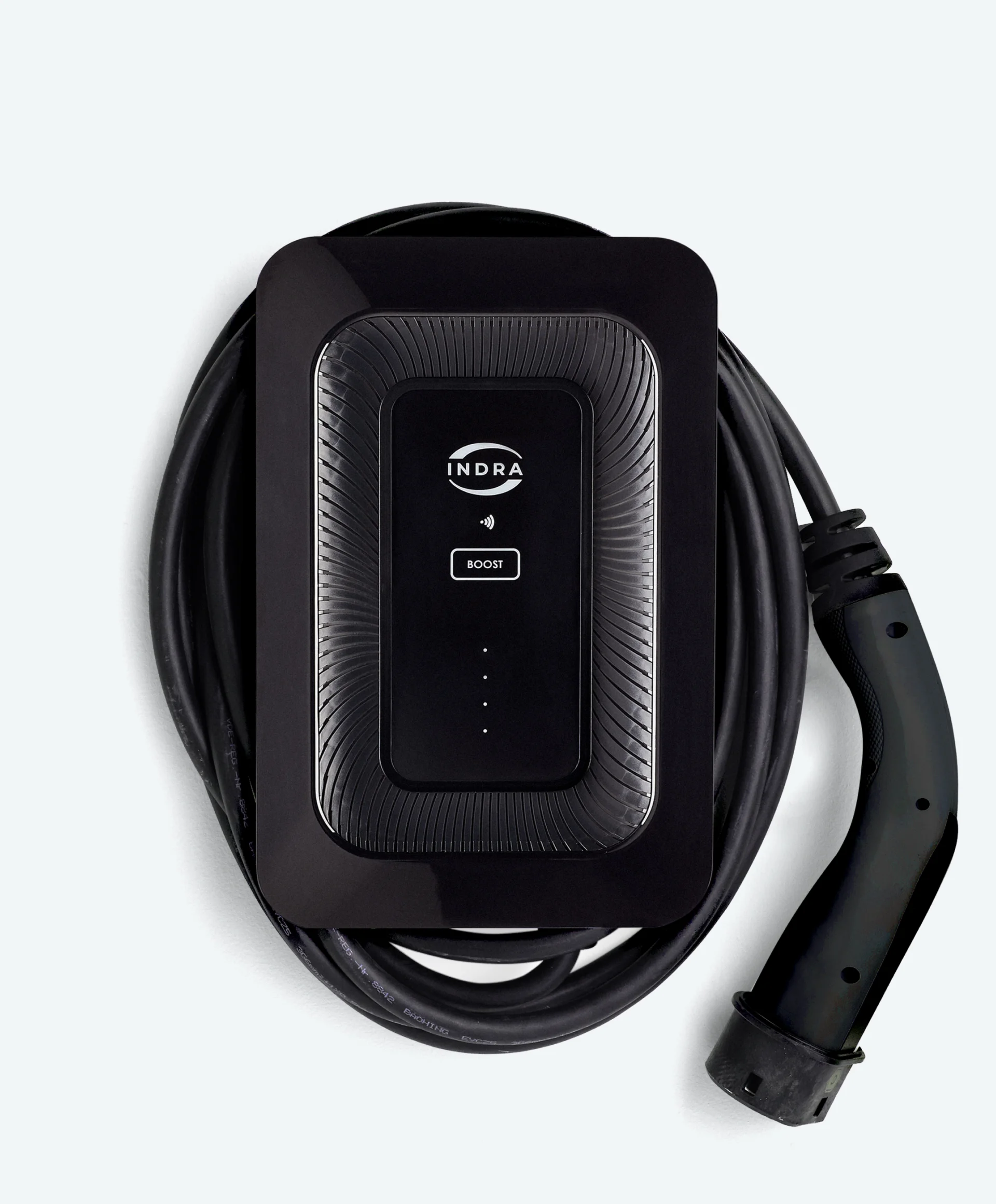
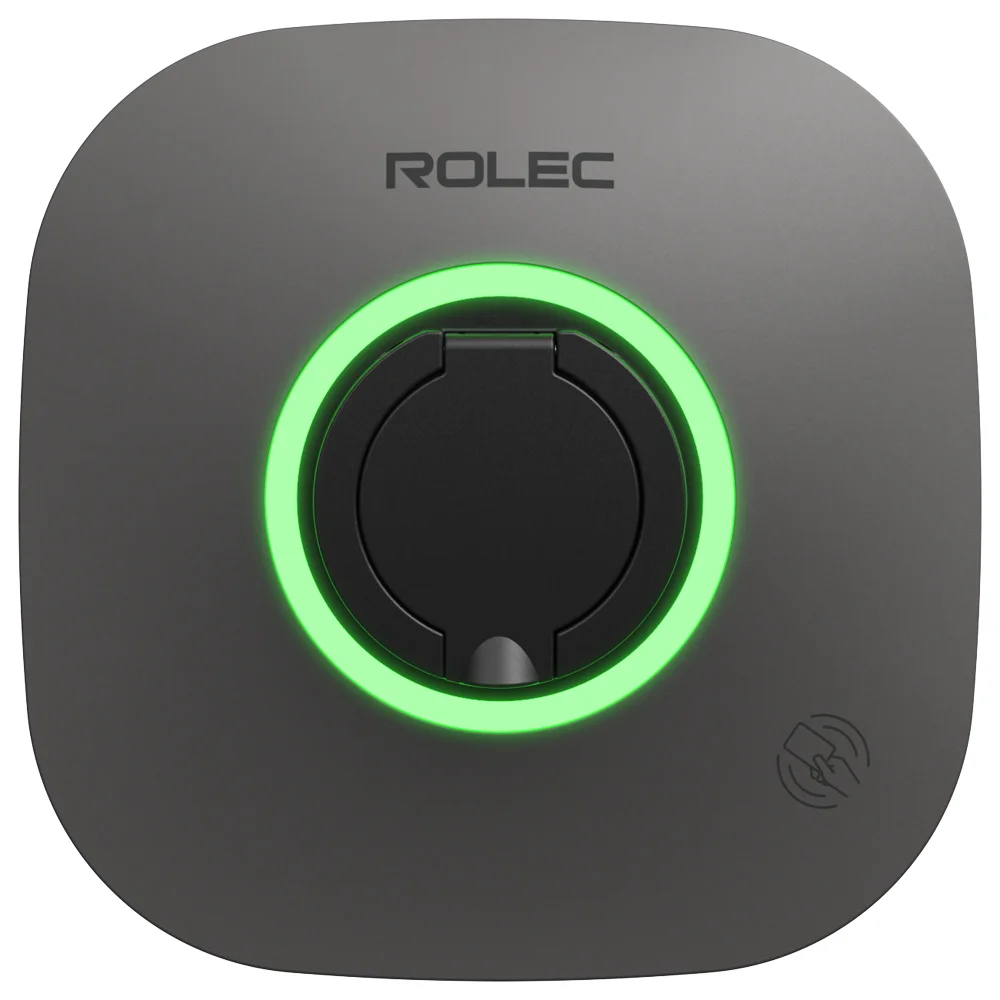
The Indra Smart LUX, built in Worcestershire, is the design-conscious choice — an ultra-slim unit at just 78mm deep with IP67 waterproofing and four colour options. The Rolec EVO, manufactured in Boston, Lincolnshire, takes a more value-driven approach, packing a remarkably comprehensive feature set into a compact square unit at a price that undercuts most smart chargers on the market. The biggest practical difference? The LUX is tethered (cable permanently attached), while the EVO is untethered (you plug in your own cable each time).
In a nutshell:
- Indra Smart LUX (£615): The UK's slimmest smart charger with class-leading IP67 weatherproofing, deep tariff integration, and a premium design available in four colours.
- Rolec EVO (£449): Outstanding value with a 5-year warranty, built-in solar modes, and every smart feature you need — all for under £450.
Spec Comparison
| Feature | Indra Smart LUX | Rolec EVO |
|---|---|---|
| Price (supply only) | £615 (10m) / from £670 (6m) | £449 |
| Price (installed) | From £1,075 | £849–1,049 (est.) |
| Power Output | 7.4kW (single-phase) | 7.4kW (single-phase) |
| Cable Type | Tethered Type 2 (6m or 10m) | Untethered Type 2 socket |
| Smart Tariff Support | Yes — 1,000+ tariffs | Yes — charge scheduling |
| Solar Integration | Yes — PV surplus diversion (CT clamp included) | Yes — Eco and Eco+ modes (CT clamp included) |
| Connectivity | Wi-Fi (Ethernet and 4G optional) | Wi-Fi 6, Bluetooth 5.0, Ethernet |
| Warranty | 3 years (extendable to 5 for £100) | 5 years |
| IP Rating | IP67 + IK10 | IP54 + IK10 |
| Dimensions | 201 × 306 × 78mm | 260 × 260 × 112mm |
| Weight | 3.6kg (6m cable) | 3kg |
| OCPP Support | OCPP 1.6 | OCPP 1.6J |
| PEN Fault Detection | Built-in | Built-in |
Smart Tariff Integration
This is where the Indra Smart LUX really flexes. Indra claims compatibility with over 1,000 UK energy tariffs, including full integration with Intelligent Octopus Go and Octopus Agile's half-hourly variable pricing. According to indra.co.uk, their smart tariff integration can unlock around £280 in annual savings — the equivalent of driving for less than 3p per mile on the cheapest off-peak rates. The charger can also work with OVO Charge Anytime tariffs, as noted by chargeguru.com.
The Rolec EVO supports charge scheduling through its app, which means you can absolutely take advantage of off-peak tariffs like Octopus Go (7.5p/kWh between 00:30 and 04:30) by setting your charge window manually. However, the depth of tariff integration — particularly the ability to respond dynamically to Agile pricing slots — appears more mature on the Indra platform. If you're on a variable tariff where every half-hour slot counts, the LUX has the edge.
That said, most EV owners on a simple off-peak tariff like Octopus Go or Intelligent Octopus Go will find either charger perfectly adequate. The difference really matters for Agile users chasing the absolute lowest cost per kWh.
Solar Diversion
Both chargers include solar PV integration with a CT clamp in the box — a genuine money-saver if you have rooftop panels. The Indra Smart LUX diverts surplus solar generation to your car, so any energy your home isn't using goes straight into the battery rather than being exported to the grid at a fraction of the import price.
The Rolec EVO takes a slightly different approach with its dedicated Eco and Eco+ modes. Eco mode blends solar and grid power to maintain a minimum charge rate, while Eco+ mode charges exclusively from solar surplus — ideal for sunny days when you want truly free miles. This dual-mode approach gives you more granular control over how much grid power you're willing to use.
In practice, both systems achieve the same goal: free driving from sunshine. With a typical 4kW solar array generating around 3,800kWh per year in the UK, you could realistically add 30–40 miles of free range per sunny day during summer months. The Rolec's explicit Eco/Eco+ toggle is arguably more intuitive for solar owners who want to switch behaviour quickly.
Build Quality and Design
Here, the two chargers diverge sharply. The Indra Smart LUX boasts an IP67 rating — meaning it's fully dust-tight and can withstand temporary submersion in water — plus IK10 impact resistance. As electriccarguide.co.uk noted in their review, the LUX scored 9/10 for design and durability. At just 78mm deep, it's one of the slimmest chargers you can buy, sitting almost flush against the wall. The four colour options (Indra White, Symphony Black, Malvern Stone, and Elgar Grey) are a genuine differentiator if aesthetics matter to you.
The Rolec EVO is no slouch — it shares the same IK10 impact rating and won a Red Dot Design Award in 2024. But its IP54 rating, while perfectly adequate for UK weather, means it's splash-proof rather than submersible. If your charger is exposed to direct rainfall or sits in a flood-prone area, the LUX's IP67 rating provides meaningfully better protection. The EVO is also slightly deeper at 112mm versus the LUX's remarkable 78mm, though both are compact enough for tight driveways and narrow garages.
Installation Considerations
Both chargers include built-in PEN fault detection, which is a significant cost saver. Without this, your installer would need to fit a separate PEN fault device or install an earth rod — typically adding £100–200 to the bill. Both chargers also include built-in Type A RCD with 6mA DC protection, further simplifying the consumer unit work.
The Indra Smart LUX is available fully installed from £1,075 according to indra.co.uk, or from £1,099 through third-party installers like chargeguru.com. The Rolec EVO at £449 supply-only will need a separate installation booking, typically costing £400–600 depending on cable run length and consumer unit requirements.
One practical note: the LUX is tethered, so your cable is always attached and ready to go — convenient in the rain. The EVO is untethered, meaning you'll use your own Type 2 cable each time. Some drivers prefer this flexibility (especially if you have multiple EVs with different cable lengths), but others find the plug-unplug routine tiresome in British weather.
Price and Value
| Cost Element | Indra Smart LUX | Rolec EVO |
|---|---|---|
| Unit price (supply only) | £615 (10m) | £449 |
| Typical installation | £300–500 | £400–600 |
| Total installed (estimate) | £915–1,115 | £849–1,049 |
| After OZEV grant (if eligible) | £415–615 | £349–549 |
The Rolec EVO is the clear value winner here. You're getting solar integration, dynamic load balancing, OCPP, RFID (with two cards included), Wi-Fi 6, Bluetooth 5.0, Ethernet connectivity, and a 5-year warranty — all for £449. To match the EVO's warranty length on the Indra, you'd need to pay an additional £100 for the extension, pushing the LUX's effective cost to £715 or more.
That said, the LUX's premium buys you genuinely superior weatherproofing (IP67 vs IP54), a slimmer profile, colour choice, and deeper smart tariff integration. Whether that's worth an extra £166+ depends on your priorities. For most buyers on a standard off-peak tariff with reasonable wall-mounting conditions, the EVO represents the smarter spend.
Who Should Buy Which?
Buy the Indra Smart LUX if:
- You want the slimmest possible charger for a narrow driveway or tight garage
- You're on Octopus Agile or another variable tariff and want dynamic half-hourly optimisation
- Your charger will be fully exposed to harsh weather — the IP67 rating is unmatched
- Aesthetics matter and you want to choose from four colour options
- You prefer a tethered cable that's always ready to grab and plug in
Buy the Rolec EVO if:
- Value is your priority — you want maximum features for minimum spend
- A 5-year warranty out of the box gives you peace of mind without paying extra
- You have solar panels and want dedicated Eco/Eco+ charging modes
- You prefer an untethered socket for flexibility with multiple vehicles or cable lengths
- You want Wi-Fi 6 and Bluetooth 5.0 connectivity as standard without paying for upgrades
Our recommendation: For most UK homeowners, the Rolec EVO is the smarter buy. It delivers virtually every smart feature the LUX offers — solar, load balancing, PEN fault detection, OCPP — while adding a longer warranty and saving you at least £166. The Indra Smart LUX earns its premium if you specifically need best-in-class weatherproofing, the slimmest possible profile, or deep integration with variable energy tariffs like Octopus Agile. Both are excellent, genuinely smart chargers built by British manufacturers — you won't go wrong with either.
For the full specs-level breakdown, see our Indra Smart LUX vs Rolec EVO comparison page.
Read our full Indra Smart LUX review or Rolec EVO review.
We’ll handle the installation
We’ll match you with vetted UK electricians — up to 3 free quotes, no obligation.