Indra Smart LUX vs Cord Zero: Slim Design vs Rock-Solid Connectivity
Slim Design vs Rock-Solid Connectivity: Two Smart Chargers, Two Different Philosophies
If you're shopping for a 7.4kW smart home charger in 2025, the Indra Smart LUX and the Cord Zero will almost certainly appear on your shortlist — and for good reason. Both are competitively priced, both pack genuine smart tariff integration, and both include the built-in safety features that can shave hundreds off your installation bill. But they take very different approaches to what matters most.
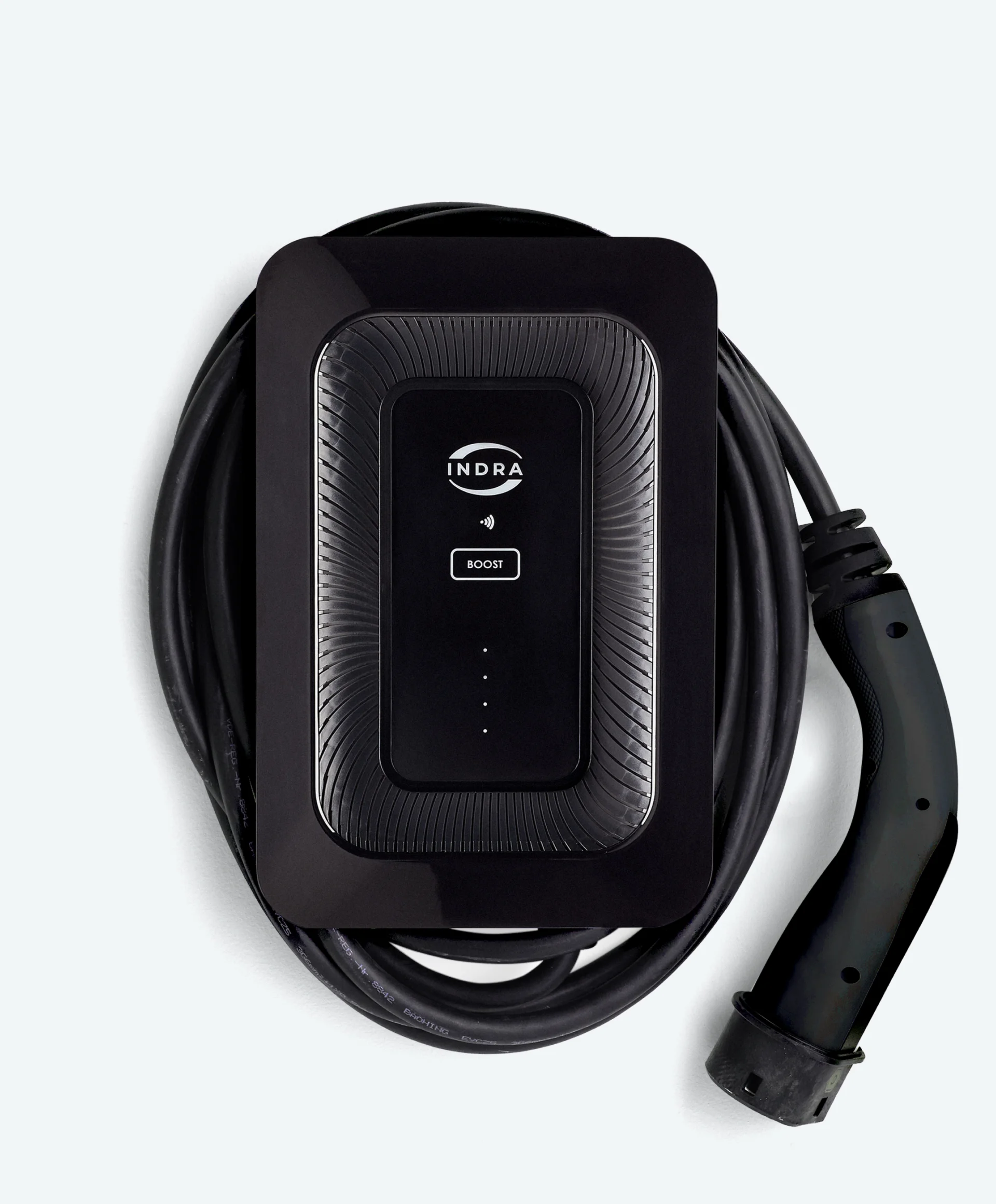
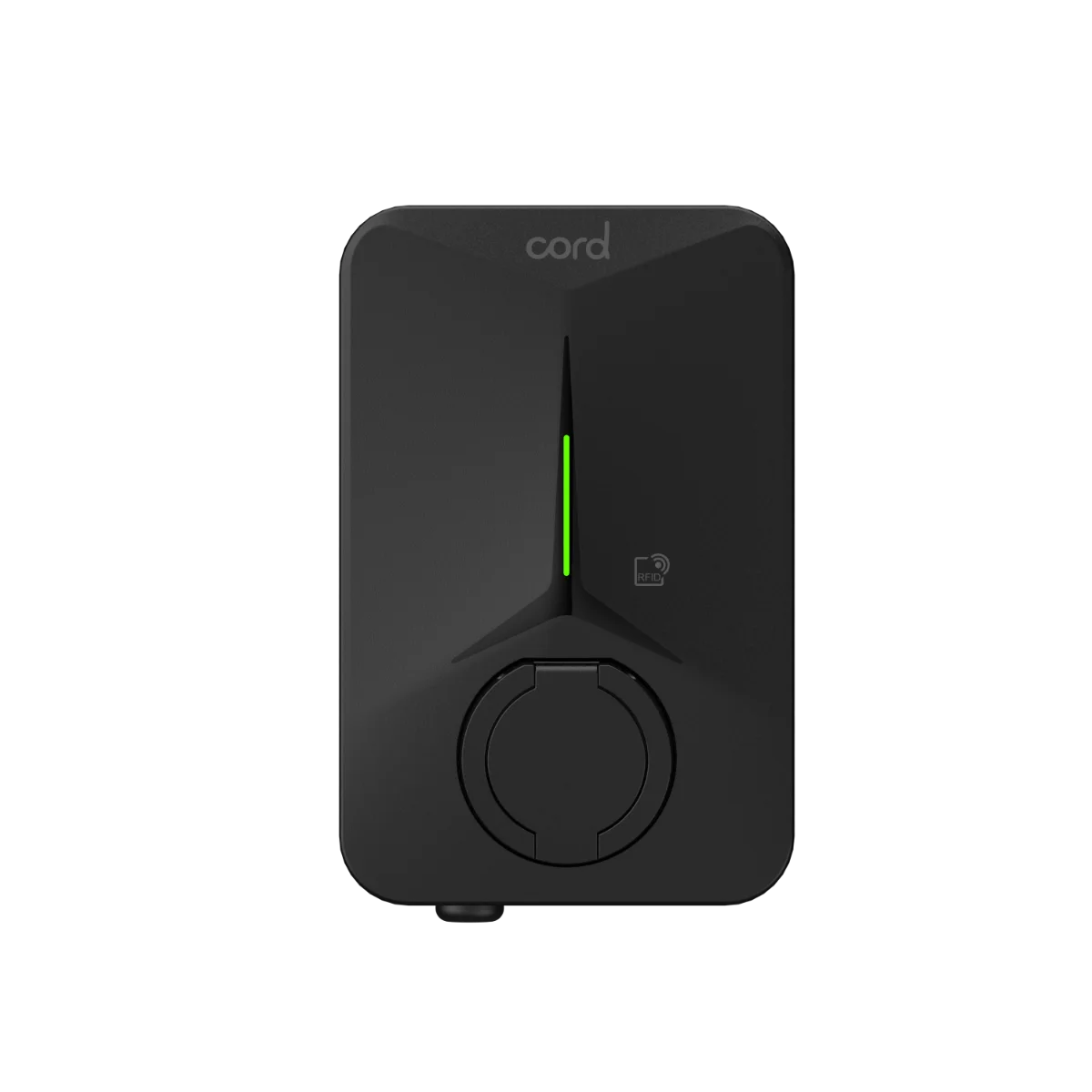
The Indra Smart LUX is a proudly British-designed charger that prioritises aesthetics and extreme durability. At just 78mm deep, it's the slimmest tethered smart charger on the UK market, and its IP67 rating means it could theoretically survive being submerged — a level of weather protection no other mainstream home charger matches. The Cord Zero, meanwhile, is a more pragmatic proposition: slightly chunkier, but it ships with dual Wi-Fi and 4G connectivity as standard, something Indra charges an extra £250 for. It's the charger that simply refuses to lose its internet connection.
Both deliver the same 7.4kW charge speed, both work with all UK Teslas and Type 2 EVs, and both are OZEV-approved. So the real question is: which set of trade-offs suits your home, your budget, and your priorities?
In a nutshell:
- Indra Smart LUX (£615): The UK's slimmest smart charger with class-leading IP67/IK10 protection and integration with over 1,000 energy tariffs.
- Cord Zero (£555): The most reliably connected charger on the market, with built-in dual Wi-Fi + 4G and a current free upgrade to a 5-year warranty.
Spec Comparison
| Feature | Indra Smart LUX | Cord Zero |
|---|---|---|
| Price (supply only) | From £615 (10m) / £670 (6m) | From £555 (5m) / £625 (8m) |
| Max Power Output | 7.4kW (single-phase) | 7.4kW (single-phase) |
| Cable Length | 6m or 10m tethered | 5m or 8m tethered |
| Smart Tariff Support | 1,000+ tariffs incl. Octopus Agile | Octopus Go, OVO, British Gas, EDF & more |
| Solar Integration | Yes — CT clamp included | Yes — solar compatible |
| Connectivity | Wi-Fi (4G optional at £250) | Wi-Fi + 4G as standard |
| Warranty | 3 years (extendable to 5 for £100) | 3 years (currently free upgrade to 5) |
| IP / IK Rating | IP67 + IK10 | IP54 + IK08 |
| Dimensions | 201 × 306 × 78mm | 320 × 210 × 132mm |
| Weight | 3.6kg (6m cable) | ~5kg (8m cable) |
| Type | Tethered only | Tethered or untethered |
| OZEV Approved | Yes | Yes |
Smart Tariff Integration
This is where both chargers genuinely shine, though Indra pushes further. The Smart LUX claims compatibility with over 1,000 UK energy tariffs, including granular support for Octopus Agile's half-hourly variable pricing — the holy grail for EV owners who want to chase the cheapest 30-minute slots overnight. According to indra.co.uk, Indra claims you can drive for less than 3p per mile using the right tariff, which stacks up: on Octopus Intelligent Go at roughly 7p/kWh, a Tesla Model 3 averaging 3.5 miles per kWh costs just 2p per mile.
The Cord Zero covers the major players — Octopus Go, OVO Smart Charge, British Gas Electric Driver, and EDF — which will satisfy the vast majority of UK EV drivers. Where it falls slightly short is on the more exotic variable-rate tariffs. For most buyers on a standard off-peak tariff like Octopus Go (7.5p/kWh between 00:30 and 04:30), both chargers will deliver identical savings. It's only if you want to play the Agile pricing game that the Indra's broader tariff library becomes a meaningful advantage.
App and Connectivity
Here's the Cord Zero's headline advantage. It ships with both Wi-Fi and 4G connectivity built in, with automatic failover between the two. If your home Wi-Fi drops — and let's be honest, garage Wi-Fi can be patchy at best — the Cord Zero seamlessly switches to its multi-network 4G SIM. This matters because a smart charger without an internet connection is just an expensive dumb charger: no scheduled charging, no tariff optimisation, no remote monitoring.
The Indra Smart LUX connects via Wi-Fi as standard, with Ethernet available as a wired alternative. If you want 4G, you'll need to pay an additional £250 — a significant premium that pushes the total supply-only cost well above the Cord Zero. As electriccarguide.co.uk notes, the LUX does also support Ethernet, which is the most reliable option of all if you're willing to run a cable. But for sheer out-of-the-box connectivity confidence, the Cord Zero wins this round convincingly.
On the app side, the Indra app is the more polished experience, offering real-time energy monitoring, charge limits by miles, kWh, or cost, and OTA firmware updates. The Cord AI app is functional but, by most accounts, more basic — it gets the job done for scheduling and monitoring but lacks the refinement of the best apps from Ohme or Tesla.
Build Quality and Design
If your charger lives on an exposed front wall or in a coastal location, the Indra Smart LUX is in a league of its own. Its IP67 rating means complete dust-tightness and protection against temporary immersion in water — far beyond what any typical UK weather event will throw at it. The IK10 impact rating means it can withstand 20 joules of impact, roughly equivalent to a 5kg weight dropped from 40cm. As chargeguru.com highlights, this combination of IP67 and IK10 is unmatched among UK home chargers.
The Cord Zero's IP54 + IK08 ratings are perfectly adequate for most UK installations — IP54 covers splashing water from any direction, and IK08 handles moderate impacts. But if you're mounting on an exposed coastal wall or in a busy shared driveway where the charger might take a knock, the Indra's superior protection is worth the premium.
Design-wise, the Smart LUX is genuinely striking. At just 78mm deep, it barely protrudes from the wall, and the four colour options (Indra White, Symphony Black, Malvern Stone, and Elgar Grey) let you match it to your home's exterior. The turbine LED status lights are a lovely touch — you can see your charging status at a glance without opening the app. The Cord Zero is a perfectly presentable charger, but at 132mm deep it's nearly twice as thick, and colour options are more limited.
Solar Integration
Both chargers support solar PV integration, but the Indra Smart LUX has the edge here. It includes a CT clamp for solar surplus diversion, allowing it to dynamically match your charging rate to the excess energy your panels are generating. This means you can genuinely charge your Tesla for free on sunny days rather than exporting that energy back to the grid at a fraction of what you'd pay to import it.
The Cord Zero is listed as solar compatible, but its solar integration is more limited compared to dedicated solar chargers. If maximising your solar self-consumption is a priority, the Indra is the stronger choice — though neither charger matches the dedicated three-mode solar system offered by specialists like the myenergi Zappi.
Price and Value
| Cost Element | Indra Smart LUX | Cord Zero |
|---|---|---|
| Unit price (supply only) | From £615 (10m) | From £555 (5m) |
| Typical installation | £300–500 | £400–500 |
| Total installed range | £915–£1,115 | £955–£1,055 |
| After OZEV grant (if eligible) | £415–£615 | £455–£555 |
| Installed via brand | From £1,075 | N/A in data |
The supply-only price gap is around £60 in the Cord Zero's favour, but the Indra's lower installation estimate (from £300) narrows the gap when you factor in the built-in SPD and PEN fault detection that can simplify the electrical work required. In practice, your total installed cost for either charger is likely to land in the £950–£1,100 range, making them remarkably close on value.
The key differentiator is what's included. The Cord Zero gives you 4G connectivity and (currently) a free 5-year warranty as standard — features that would cost an extra £350 with the Indra. That's a significant hidden cost if reliable connectivity and extended peace of mind matter to you.
Who Should Buy Which?
Buy the Indra Smart LUX if:
- You want the slimmest, most visually refined charger on the market
- Your charger will be exposed to harsh weather — IP67 protection is unmatched
- You're on Octopus Agile or another variable-rate tariff and want the widest tariff compatibility
- You have solar panels and want effective surplus diversion with an included CT clamp
- You value UK design and manufacturing — the LUX is made in Worcestershire
Buy the Cord Zero if:
- Reliable connectivity is your top priority — dual Wi-Fi + 4G comes as standard
- You want a 5-year warranty without paying extra (while the current promotion lasts)
- You'd prefer an untethered socket option for a cleaner look
- You want a lower upfront cost with no hidden extras for essential features
- Your installation site has poor Wi-Fi coverage and running an Ethernet cable isn't practical
Our recommendation: For most UK Tesla owners, the Cord Zero offers better overall value right now. The inclusion of 4G connectivity and a 5-year warranty as standard — features that cost an extra £350 with the Indra — makes it the smarter buy for the majority of homes. However, if you have solar panels, live in an exposed location, or simply want the best-looking charger money can buy, the Indra Smart LUX justifies its premium with genuinely superior build quality and deeper energy management features. Neither is a bad choice — this is a contest between two very capable chargers.
For the full specs-level breakdown, see our Indra Smart LUX vs Cord Zero comparison page.
Read our full Indra Smart LUX review or Cord Zero review.
We’ll handle the installation
We’ll match you with vetted UK electricians — up to 3 free quotes, no obligation.