Hypervolt Home 3 Pro vs VCHRGD Seven Pro: Trusted Name or Best Value?
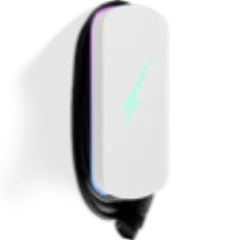
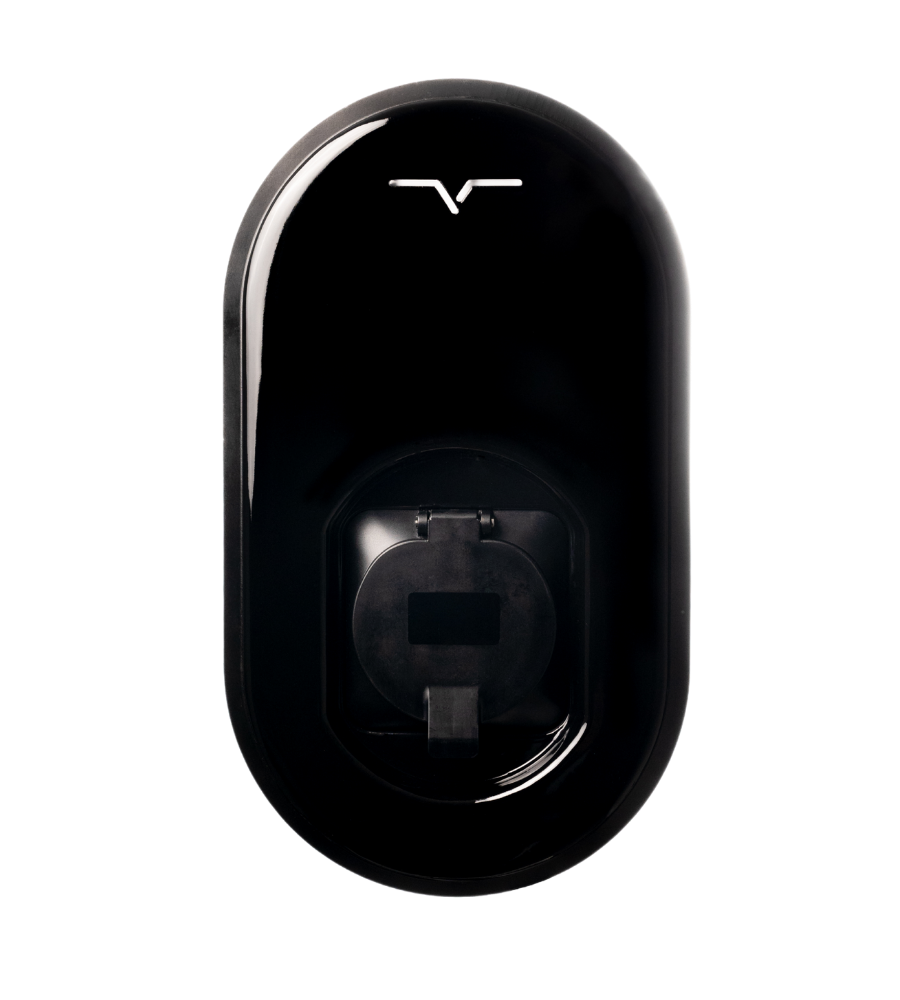
The Established All-Rounder vs the Value Upstart
Choosing a home EV charger in 2025 often comes down to a simple question: do you pay more for a proven name, or take a chance on a newer brand that offers more features for less money? That's precisely the dilemma when you pit the Hypervolt Home 3 Pro against the VCHRGD Seven Pro.
The Hypervolt Home 3 Pro has earned its reputation as one of the UK's most dependable smart chargers. Designed, engineered, and manufactured in Rainham, Essex, it's a charger that reviewers consistently score highly — electriccarguide.co.uk gave it 9 out of 10, while topcharger.co.uk awarded it 4.6 out of 5. It does everything competently and nothing badly. The VCHRGD Seven Pro, meanwhile, is the challenger that wants to rewrite the value equation — packing solar integration, RFID access, OCPP compliance, and dynamic load balancing into a unit that costs £258 less. Both charge at 7.4kW, both are OZEV-approved, and both work with every Tesla and EV sold in the UK. So which one actually deserves a spot on your wall?
In a nutshell:
- Hypervolt Home 3 Pro (£690): The UK-built all-rounder with exceptional build quality, proven reliability, and outstanding customer support.
- VCHRGD Seven Pro (£432): The feature-loaded value pick that includes RFID, OCPP, and two solar modes at a price that undercuts most rivals.
Spec Comparison
| Feature | Hypervolt Home 3 Pro | VCHRGD Seven Pro |
|---|---|---|
| Price (unit only) | £690 | £432 (tethered 7.5m) |
| Power Output | 7.4kW (single-phase) | 7.4kW (single-phase) |
| Cable Length | 5m / 7.5m / 10m options | 7.5m |
| Smart Tariff Support | Yes | Yes (inc. Octopus Intelligent Go) |
| Solar Integration | Yes (CT clamp included) | Yes — Solar Export + Solar Only modes (CT clamp included) |
| Connectivity | Wi-Fi, Bluetooth | Wi-Fi, Bluetooth (optional 4G) |
| RFID Access | No | Yes (2 cards included) |
| OCPP Support | No | Yes (OCPP 1.6J) |
| Warranty | 3 years (extendable to 5 for £100) | 3 years |
| IP Rating | IP66 + IK10 | IP54 + IK10 |
| Colour Options | 3 (Ultra White, Space Grey, Ultra Black) | Black only |
| Type | Tethered (Type 2) | Tethered or untethered |
Smart Tariff Integration
Both chargers support smart tariff scheduling, letting you shift your charging to cheap overnight electricity. On a tariff like Octopus Go (7.5p/kWh between 00:30 and 04:30), a typical Tesla Model 3 owner covering 7,400 miles a year could spend as little as £160 on home charging — compared to roughly £450 on a standard variable rate.
The VCHRGD Seven Pro specifically highlights compatibility with Octopus Intelligent Go, which extends your off-peak window to six hours and can even move your charging slots automatically in exchange for grid flexibility. The Hypervolt Home 3 Pro also integrates with smart tariffs through its app, though viablepower.co.uk notes that dedicated tariff-optimisation chargers like the Ohme still edge ahead in this specific area. For most drivers on a fixed off-peak tariff like Octopus Go, both chargers will do the job perfectly well — you set your schedule and forget about it.
Solar Integration
If you have solar panels, this comparison gets interesting. The Hypervolt Home 3 Pro includes a CT clamp for solar integration and lets you divert surplus generation to your car. heatable.co.uk highlights its three solar modes — Boost, Eco, and Super Eco — which give you varying levels of solar self-consumption versus charging speed. It works well, though the data notes it isn't quite as sophisticated as the Zappi's implementation.
The VCHRGD Seven Pro counters with two dedicated solar modes: Solar Export (which uses your excess solar generation to charge while topping up from the grid if needed) and Solar Only (which charges exclusively from surplus solar, stopping entirely when generation drops). The CT clamp is also included as standard. Having a strict Solar Only mode is genuinely useful during long summer days when you'd rather not pull a single watt from the grid.
Both chargers handle solar competently, but the VCHRGD's clearly labelled dual-mode approach makes it slightly easier to understand exactly what you're getting. Neither charger matches the Zappi's granular solar diversion, but for most solar households, either will meaningfully increase your self-consumption.
Build Quality and Design
This is where the Hypervolt Home 3 Pro pulls ahead convincingly. Its IP66 rating means it's fully protected against powerful water jets — think driving rain, pressure washers, the lot. Combined with IK10 impact resistance, it's arguably the toughest residential charger on the UK market. As wepoweryourcar.com and multiple reviewers note, the build quality is genuinely impressive.
The VCHRGD Seven Pro carries an IP54 rating, which protects against splashing water from any direction. That's perfectly adequate for a sheltered wall mount, but if your charger will be fully exposed to the elements — say, on a front-facing wall with no overhang — the Hypervolt's IP66 offers meaningfully more protection. Both share the IK10 impact rating, so neither will crack if someone bumps them with a wheelie bin.
Aesthetically, the Hypervolt wins again. Three interchangeable colour covers (Ultra White, Space Grey, and Ultra Black) let you match your home's exterior, while the VCHRGD comes in black only. The Hypervolt also offers cable length flexibility — 5m, 7.5m, or 10m — whereas the VCHRGD tethered version comes with a 7.5m cable. That said, the VCHRGD is available as an untethered (socketed) unit from £395, which the Hypervolt isn't.
App and Connectivity
The Hypervolt app handles scheduling, energy monitoring, and charging control. It integrates with Alexa and provides decent energy tracking. Reviewers describe it as functional rather than exceptional — it does what you need without dazzling you.
The VCHRGD Seven Pro uses the third-party Powerverse app, which includes an AI assistant called Raya. It covers the same scheduling and monitoring ground but adds OCPP 1.6J compatibility, meaning you can connect it to third-party charge point management platforms — a niche feature for most homeowners, but valuable if you ever want to offer paid charging on your driveway or manage multiple units. The VCHRGD also includes two RFID cards for access control, which is handy for shared driveways or preventing unauthorised use.
The trade-off? The Powerverse app is a third-party platform, so the VCHRGD's smart features depend on that partnership continuing. The Hypervolt controls its own software stack end-to-end, which offers more long-term certainty.
Price and Value
| Hypervolt Home 3 Pro | VCHRGD Seven Pro | |
|---|---|---|
| Unit price | £690 | £432 |
| Typical installation | £400–£600 | £400–£600 |
| Total installed cost | £1,090–£1,290 | £832–£1,032 |
| After OZEV grant (if eligible) | £590–£790 | £332–£532 |
The price gap is substantial. At £258 less for the unit alone, the VCHRGD Seven Pro saves you enough to cover a significant chunk of your installation costs. And it arguably offers *more* features — RFID, OCPP, optional 4G, and an untethered option. The Hypervolt justifies its premium through superior weatherproofing (IP66 vs IP54), colour choices, cable length options, a warranty that can be extended to five years, and the reassurance of an established UK manufacturer with a proven track record and five-second average customer support call response times.
Who Should Buy Which?
Buy the Hypervolt Home 3 Pro if:
- You want a proven, UK-manufactured charger from an established brand with excellent support
- Your charger will be fully exposed to the weather and you need IP66-level protection
- You value colour choice and want the charger to blend with your home's exterior
- You want the option to extend your warranty to five years
- You need a longer (10m) or shorter (5m) cable than the standard 7.5m
Buy the VCHRGD Seven Pro if:
- Budget matters and you want the most features per pound spent
- You need RFID access control for a shared driveway or parking area
- You want OCPP compatibility for third-party platform integration
- You'd prefer an untethered (socketed) option
- You're comfortable with a newer brand in exchange for significant savings
Our recommendation: For most buyers, the VCHRGD Seven Pro represents the smarter purchase. It matches the Hypervolt on charging speed, solar integration, and smart tariff support, while adding RFID and OCPP — all for £258 less. That's a genuinely compelling package. However, if you prioritise long-term peace of mind, superior weatherproofing, and the backing of an established UK manufacturer with a track record of excellent customer support, the Hypervolt Home 3 Pro remains a thoroughly safe and satisfying choice. The extra cost buys you proven reliability and a charger that's built like a tank. Neither is a bad decision — it comes down to whether you value savings or certainty more.
For the full specs-level breakdown, see our Hypervolt Home 3 Pro vs VCHRGD Seven Pro comparison page.
Read our full Hypervolt Home 3 Pro review or VCHRGD Seven Pro review.
If you have solar panels, see our best EV charger for solar panels guide.
For total installed cost rankings, see our cheapest EV charger guide.
We’ll handle the installation
We’ll match you with vetted UK electricians — up to 3 free quotes, no obligation.