Hypervolt Home 3 Pro vs Rolec EVO: Premium Polish or Smart Value?
Premium Polish or Smart Value? Two UK-Built Chargers Go Head to Head
Here's a genuinely interesting comparison. The Hypervolt Home 3 Pro and the Rolec EVO are both designed and manufactured right here in the UK — Hypervolt in Rainham, Essex, and Rolec in Boston, Lincolnshire. Both deliver 7.4kW single-phase charging, both include solar integration with CT clamps, and both carry OZEV approval. On paper, they look remarkably similar.
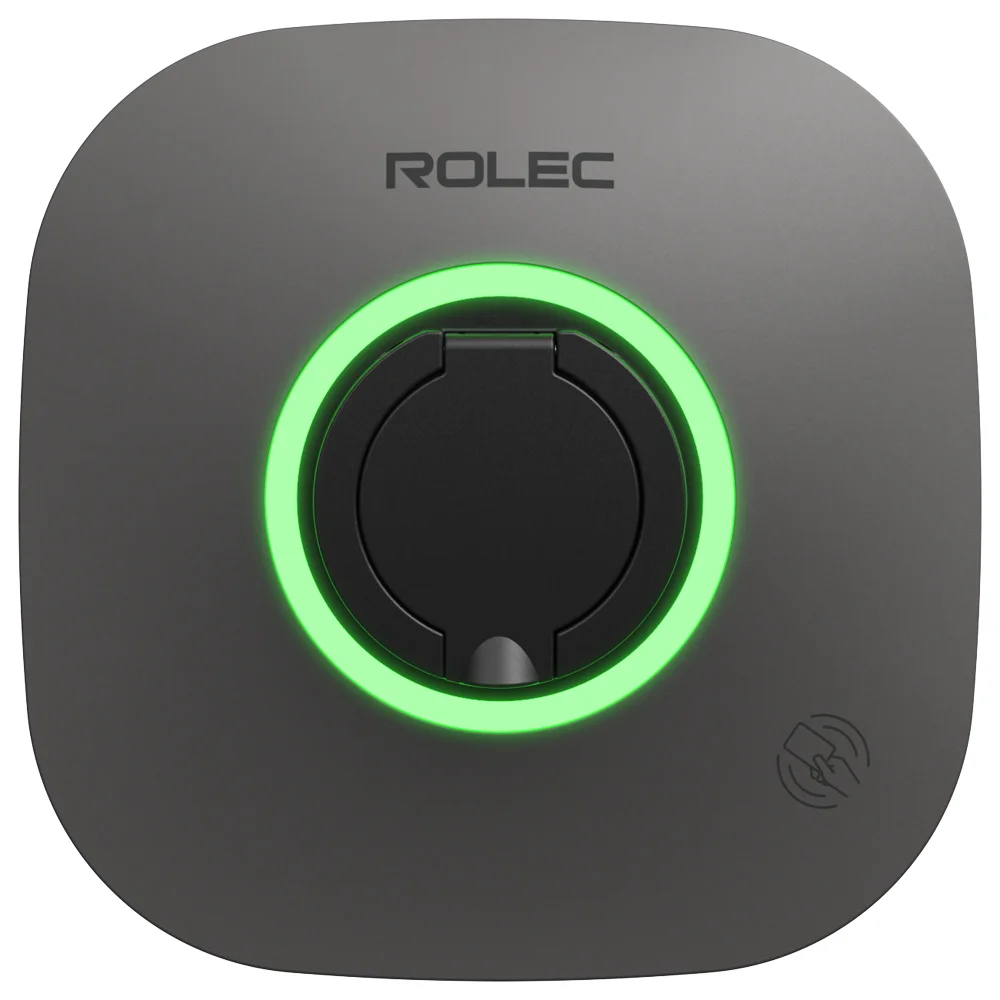
But there's a £241 price gap between them, and some meaningful differences in design philosophy. The Hypervolt is a tethered charger with a focus on build quality and a polished ownership experience. The Rolec EVO is an untethered unit that packs a frankly astonishing feature list — including built-in PME fault detection and OCPP support — into a price point that undercuts most of the competition. So which one actually deserves a spot on your wall?
In a nutshell:
- Hypervolt Home 3 Pro (£690): The best all-rounder — tough build, great support, and a tethered cable that makes daily charging effortless.
- Rolec EVO (£449): Exceptional value with built-in PME detection, OCPP, RFID, and solar modes that rival chargers costing £200 more.
Spec Comparison
| Feature | Hypervolt Home 3 Pro | Rolec EVO |
|---|---|---|
| Price (unit only) | £690 | £449 |
| Power Output | 7.4kW (single-phase) | 7.4kW (single-phase) |
| Cable | Tethered — 5m, 7.5m, or 10m | Untethered (Type 2 socket) |
| Smart Tariff Support | Yes | Yes (via scheduling) |
| Solar Integration | CT clamp included | CT clamp included (Eco + Eco+ modes) |
| Connectivity | Wi-Fi, Bluetooth | Wi-Fi 6, Bluetooth 5.0, Ethernet |
| Warranty | 3 years (5 years for +£100) | 5 years |
| IP / IK Rating | IP66 + IK10 | IP54 + IK10 |
| Type | Tethered (Type 2) | Untethered (Type 2 socket) |
| OCPP Support | No | Yes (OCPP 1.6J) |
| RFID | No | Yes (2 cards included) |
| Built-in RCD / PME | No | Yes — Type A RCD + 6mA DC + PME detection |
Solar Integration: Both Capable, Different Approaches
Both chargers include a CT clamp for solar integration, meaning neither requires extra hardware to start diverting your surplus solar energy into your EV. That's a genuine advantage over chargers that charge extra for solar accessories.
The Rolec EVO offers dedicated Eco and Eco+ modes — a feature set similar to the popular myenergi Zappi. Eco+ mode waits until there's enough surplus solar to begin charging, while Eco mode blends solar and grid power to maintain a minimum charge rate. For households with a decent solar array (3kW+), this level of control can meaningfully increase self-consumption and reduce grid reliance.
The Hypervolt Home 3 Pro also handles solar diversion via its app, but as topcharger.co.uk notes in their review, it isn't quite as sophisticated as the Zappi's implementation. That said, for most users who simply want to top up their car when the sun's out, the Hypervolt's solar features are perfectly adequate. The difference here is that the Rolec gives you more granular control — and it does so at a lower price point, which is impressive.
Build Quality and Weatherproofing
This is where the Hypervolt pulls ahead in a meaningful way. Its IP66 + IK10 rating makes it one of the toughest home chargers on the UK market. IP66 means it's fully protected against powerful water jets — think driving rain, pressure washers, the full British winter experience. As heatable.co.uk highlights, the charger is genuinely built to last, with three quality control stages at the Essex factory.
The Rolec EVO carries an IK10 impact resistance rating — identical to the Hypervolt — so it's equally tough against knocks and bumps. However, its IP54 rating is a step down. IP54 protects against splashing water from any direction, which is perfectly fine for a sheltered wall or garage, but if your charger will be fully exposed to the elements on an open driveway, the Hypervolt's IP66 rating offers noticeably more peace of mind.
The Hypervolt also offers interchangeable colour covers (Ultra White, Space Grey, and Ultra Black), letting you match it to your property. It's a small touch, but it shows the attention to design that electriccarguide.co.uk awarded a 9/10 for design and durability.
Installation Considerations: The Hidden Cost Saver
Both chargers fall in the standard £400–600 installation range, but the Rolec EVO has a trick up its sleeve that could save you a significant chunk of money. It includes built-in PME/PEN fault detection and a Type A RCD with 6mA DC protection. On most other charger installations — including the Hypervolt — your electrician will need to install a separate PEN fault device or drive an earth rod, which typically adds £100–200 to the installation bill.
With the Rolec, that cost simply disappears. When you factor this into the total installed price, the gap between these two chargers widens even further.
The Rolec also supports Ethernet connectivity alongside Wi-Fi 6 and Bluetooth 5.0. If your charger location has poor Wi-Fi signal (a common issue with detached garages), running an Ethernet cable gives you rock-solid connectivity without needing a Wi-Fi extender. The Hypervolt relies on Wi-Fi and Bluetooth only, which works fine for most installations but leaves fewer options if signal strength is an issue.
One important distinction: the Hypervolt is tethered, meaning the cable is permanently attached. You simply grab it and plug in — no fumbling in the boot for a cable. The Rolec is untethered only, so you'll need to use your own Type 2 cable each time. For daily convenience, the tethered experience is hard to beat, though untethered chargers offer more flexibility if you have multiple EVs with different cable lengths.
App and Smart Features
The Hypervolt app provides scheduling, energy tracking, and smart tariff integration. It works with popular UK tariffs like Octopus Go and Intelligent Go, and viablepower.co.uk highlights the Hypervolt as a strong all-rounder for app-based control. Alexa integration is also available. However, wepoweryourcar.com and other reviewers note the app is functional rather than best-in-class.
The Rolec EVO app offers scheduling and energy monitoring too, plus RFID access control with two cards included — useful if you want to restrict who can charge or if you're claiming business mileage. It also supports OCPP 1.6J, an open protocol that allows the charger to work with third-party management platforms. For most home users this won't matter today, but it's a future-proofing feature that no other charger at this price offers.
The caveat? The Rolec EVO is a newer product, and reviewers note the app is still maturing. If a polished software experience matters to you from day one, the Hypervolt currently has the edge.
Price and Value
| Cost | Hypervolt Home 3 Pro | Rolec EVO |
|---|---|---|
| Unit price | £690 | £449 |
| Typical installation | £400–600 | £400–600 |
| PME device savings | N/A | Save ~£100–200 |
| Total installed (est.) | £1,090–1,290 | £849–1,049 |
| After OZEV grant (if eligible) | £590–790 | £349–549 |
The value proposition here is striking. The Rolec EVO delivers solar integration, dynamic load balancing, RFID, OCPP, and built-in PME detection for £449 — and then saves you another £100–200 on installation by eliminating the need for external PEN fault protection. Fully installed, you could be looking at a charger that costs £300–400 less than the Hypervolt while offering a longer warranty.
The Hypervolt justifies its premium through superior weatherproofing (IP66 vs IP54), the convenience of a tethered cable, interchangeable covers, and a more established app ecosystem backed by what topcharger.co.uk describes as exceptional customer support with 5-second average call response times.
Who Should Buy Which?
Buy the Hypervolt Home 3 Pro if:
- You want the convenience of a tethered cable for daily plug-and-charge simplicity
- Your charger will be fully exposed to the elements and you need IP66 weatherproofing
- You value proven software and responsive UK-based customer support
- You want to match your charger to your home with interchangeable colour covers
- You prefer a charger with a strong track record and established reputation
Buy the Rolec EVO if:
- You want the best feature-to-price ratio on the UK market right now
- You have solar panels and want dedicated Eco/Eco+ diversion modes
- You want to save £100–200 on installation thanks to built-in PME fault detection
- A 5-year warranty as standard matters to you
- You need Ethernet connectivity or OCPP support for future-proofing
Our recommendation: For most buyers, the Rolec EVO represents the smarter purchase. It's genuinely difficult to find another charger at £449 that includes solar modes, OCPP, RFID, dynamic load balancing, and built-in PME detection — features that would normally push you well past £600. The 5-year warranty from an established UK manufacturer seals the deal. However, if your charger will live on an exposed wall and you value the grab-and-go convenience of a tethered cable, the Hypervolt Home 3 Pro remains one of the best-built chargers money can buy. It's a premium product that earns its price — just be aware you're paying for polish and convenience rather than a fundamentally different feature set.
For the full specs-level breakdown, see our Hypervolt Home 3 Pro vs Rolec EVO comparison page.
Read our full Hypervolt Home 3 Pro review or Rolec EVO review.
If you have solar panels, see our best EV charger for solar panels guide.
We’ll handle the installation
We’ll match you with vetted UK electricians — up to 3 free quotes, no obligation.