Hypervolt Home 3 Pro vs NexBlue Point 2: Proven All-Rounder or Future-Proof Newcomer?
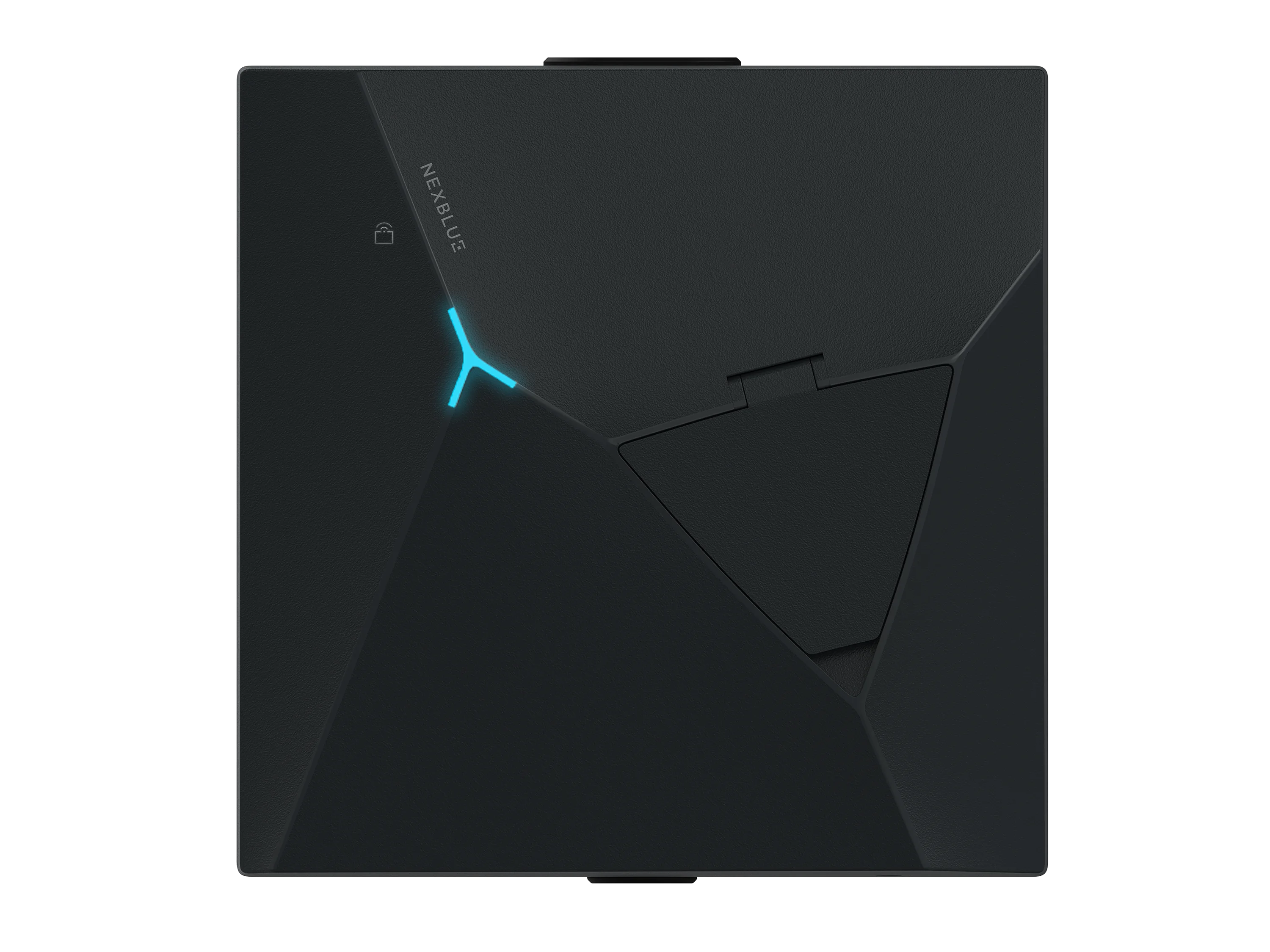
The Proven All-Rounder vs the Future-Proof Newcomer
Choosing a home EV charger in 2025 increasingly feels like choosing a smartphone — the hardware is only half the story. Smart tariff integration, solar diversion, and even vehicle-to-grid readiness are now part of the conversation. That is exactly why the Hypervolt Home 3 Pro and the NexBlue Point 2 make for such a fascinating head-to-head. One is a well-established, UK-manufactured charger with an enviable reputation and thousands of happy owners. The other is a relative newcomer that packs a startling amount of future-proof technology into one of the lightest units on the market — at a noticeably lower price.
If you are weighing these two up, you are probably someone who cares about more than just plugging in and walking away. You want smart features, you may have solar panels (or plan to), and you want to know your charger will still be relevant in five years. Let us dig in.
In a nutshell:
- Hypervolt Home 3 Pro (£690): A rock-solid, UK-built all-rounder with excellent build quality, solar integration out of the box, and proven customer support.
- NexBlue Point 2 (£530): A feature-packed, V2G-ready smart charger with lifetime 4G connectivity and the best future-proofing credentials at this price.
Spec Comparison
| Feature | Hypervolt Home 3 Pro | NexBlue Point 2 |
|---|---|---|
| Price (unit only) | £690 | £530–£600 |
| Max Power | 7.4kW (single-phase) | 7.4kW (single-phase) |
| Cable / Socket | Tethered Type 2 (5m / 7.5m / 10m) | Untethered Type 2 socket |
| Smart Tariff Support | Yes — smart tariff integration | Yes — EcoPilot tariff integration |
| Solar Diversion | Yes — CT clamp included | Yes — requires NexBlue Zen accessory |
| Connectivity | Wi-Fi, Bluetooth | Wi-Fi, Bluetooth, 4G eSIM (lifetime free) |
| V2G / ISO 15118 | No | Yes — V2G and Plug & Charge ready |
| OCPP Support | Not stated | OCPP 1.6-J and 2.0.1 |
| Warranty | 3 years (extendable to 5 for £100) | 5 years |
| IP / IK Rating | IP66 + IK10 | IP54 + IK10 |
| Weight | ~4.5 kg | 2.1 kg |
| Dimensions | 270 × 170 × 110 mm | 235 × 230 × 107 mm |
Smart Tariff Integration
Both chargers support smart tariff scheduling, which is arguably the single most important feature for keeping your running costs down. On a tariff like Octopus Intelligent Go (~7p/kWh off-peak) or Octopus Go (7.5p/kWh between 00:30 and 04:30), you could charge a 60kWh Tesla Model 3 from 20% to 80% for roughly £2.50–£2.70 — compared with £10+ at standard daytime rates. Over a year of average UK mileage (~7,400 miles), that difference adds up to hundreds of pounds.
The Hypervolt Home 3 Pro handles this through its own app, letting you set charging schedules that align with your tariff's cheap window. It is straightforward and reliable, though multiple reviewers note the app is "functional but not best-in-class" (topcharger.co.uk).
The NexBlue Point 2 takes a slightly different approach with its EcoPilot system, which automatically identifies and charges during the cheapest rate periods. Crucially, the NexBlue has a built-in 4G eSIM with a lifetime free data subscription, so even if your Wi-Fi drops out overnight, your tariff schedule keeps running. The Ohme Home Pro is the other charger famous for this kind of cellular backup, so it is genuinely useful to see it here at a lower price point. As viablepower.co.uk notes, reliable connectivity is "a game changer" when you are relying on time-of-use tariffs.
Solar Diversion
If you have rooftop solar panels, both chargers can divert surplus generation into your EV rather than exporting it to the grid for a few pence per kWh. The Hypervolt Home 3 Pro includes a CT clamp in the box and offers three solar modes — Boost, Eco, and Super Eco — to let you choose how aggressively you prioritise free solar energy over grid power (heatable.co.uk). It is a genuinely useful, well-implemented feature that works without any extra hardware purchases.
The NexBlue Point 2 also supports solar surplus charging, but here is the catch: you need the optional NexBlue Zen accessory to enable it. That is an additional cost and an extra step in the installation process. If solar integration is a primary reason for your purchase, the Hypervolt's all-in-one approach is simpler and potentially cheaper overall.
Neither charger matches the myenergi Zappi's dedicated Eco+ mode, which can trickle charge from as little as 1.4kW of surplus — but for most solar-equipped homes, both the Hypervolt and NexBlue will do a solid job of maximising self-consumption.
Build Quality, Design, and Installation
The Hypervolt Home 3 Pro is built at the company's factory in Rainham, Essex, and goes through three quality-control stages before dispatch (topcharger.co.uk). It carries an IP66 rating (fully dust-tight and protected against powerful water jets) plus IK10 impact resistance — the highest available. If your charger is on an exposed driveway or a busy car park, this is the toughest unit you can buy. Add in interchangeable colour covers (Ultra White, Space Grey, Ultra Black) and cable length options of 5m, 7.5m, or 10m, and the Hypervolt is impressively flexible (electriccarguide.co.uk).
The NexBlue Point 2 counters with sheer compactness. At just 2.1 kg it is one of the lightest home chargers on the market — roughly half the weight of the Hypervolt. Its IP54 rating is perfectly adequate for a sheltered wall but offers less protection against heavy rain or direct hose-downs than the Hypervolt's IP66. Both share the same IK10 impact resistance, so neither will crack if clipped by a wing mirror.
One important practical difference: the Hypervolt is tethered, meaning the cable is permanently attached and ready to grab. The NexBlue is untethered (socket only), so you will need to carry your own Type 2 cable — the same one you likely keep in your boot for public charging. Some drivers prefer the tidiness of an untethered socket; others find a tethered cable far more convenient on a dark, rainy evening.
Future-Proofing and Connectivity
This is where the NexBlue Point 2 genuinely stands apart. It is ISO 15118 compliant, V2G (vehicle-to-grid) ready, and supports Plug & Charge — meaning that when bi-directional energy flows become mainstream, you should not need to replace your hardware. It also supports OCPP 1.6-J and 2.0.1, making it compatible with third-party energy management platforms and potentially commercial back-office systems. For anyone thinking about home battery storage integration or selling energy back to the grid in the future, these are meaningful credentials.
The Hypervolt Home 3 Pro does not currently advertise V2G readiness or OCPP support. It is a superb charger for today's needs, but if the energy landscape shifts towards bi-directional charging over the next three to five years, the NexBlue is better positioned.
Price and Value
| Hypervolt Home 3 Pro | NexBlue Point 2 | |
|---|---|---|
| Unit price | £690 | £530–£600 |
| Typical installation | £400–£600 | £400–£600 |
| Total installed cost | £1,090–£1,290 | £930–£1,200 |
| After OZEV grant (if eligible) | £590–£790 | £430–£700 |
The NexBlue undercuts the Hypervolt by £90–£160 on unit price alone, and that gap carries through to the total installed cost. For that saving, you get a longer standard warranty (5 years vs 3), V2G readiness, and lifetime 4G connectivity. To match the NexBlue's warranty length, you would need to add £100 to the Hypervolt's price, widening the gap further.
That said, the Hypervolt includes solar integration hardware out of the box and offers a tethered cable — both of which could save you money and hassle compared with buying a Zen accessory and a separate Type 2 cable for the NexBlue. The real-world cost difference may be smaller than the headline figures suggest.
Who Should Buy Which?
Buy the Hypervolt Home 3 Pro if:
- You want a proven, well-reviewed charger from an established UK manufacturer
- You have solar panels and want solar diversion to work straight out of the box with no extra accessories
- You prefer a tethered cable for daily convenience
- Your charger will be exposed to the elements and you need IP66 weatherproofing
- You value responsive UK-based customer support (Hypervolt claims a 5-second average call response)
Buy the NexBlue Point 2 if:
- You want the best future-proofing available — V2G, ISO 15118, and OCPP 2.0.1
- Budget matters and you want strong smart features for under £600
- You value always-on connectivity via built-in 4G eSIM at no ongoing cost
- You prefer a clean, untethered socket and already carry a Type 2 cable
- A 5-year warranty as standard gives you peace of mind with a newer brand
Our recommendation: For most UK homeowners buying a charger today, the Hypervolt Home 3 Pro remains the safer, more complete choice. Its build quality is outstanding, solar works without extras, the tethered cable is genuinely convenient, and the brand has a solid track record backed by excellent support. However, if you are comfortable being an early adopter and the idea of V2G readiness, OCPP compliance, and lifetime 4G appeals to you, the NexBlue Point 2 offers remarkable value and could prove to be the smarter long-term investment. Just go in with your eyes open — NexBlue is still building its reputation, and long-term reliability data is limited.
For the full specs-level breakdown, see our Hypervolt Home 3 Pro vs NexBlue Point 2 comparison page.
Read our full Hypervolt Home 3 Pro review or NexBlue Point 2 review.
If you have solar panels, see our best EV charger for solar panels guide.
We’ll handle the installation
We’ll match you with vetted UK electricians — up to 3 free quotes, no obligation.