Hypervolt Home 3 Pro vs Indra Smart LUX: The All-Rounder vs the Slim Specialist
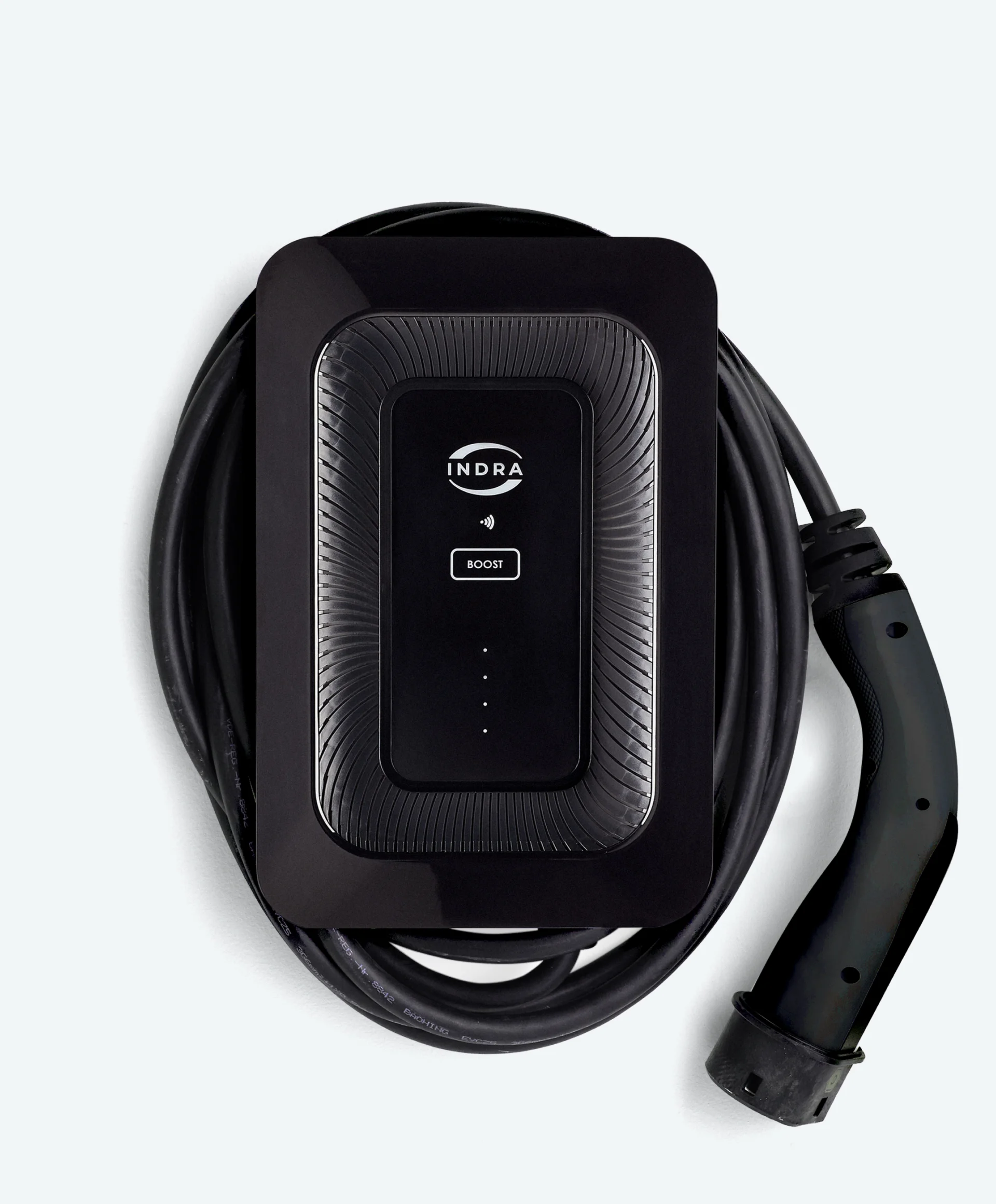
The All-Rounder vs the Slim Specialist
Choosing between two UK-manufactured, 7.4kW smart chargers with solar integration, smart tariff support, and tough-as-nails build ratings might sound like splitting hairs — but the Hypervolt Home 3 Pro and Indra Smart LUX cater to subtly different priorities. Both are designed and built on British soil, both tick the major smart-charging boxes, and both carry OZEV approval. Yet they diverge in form factor, connectivity philosophy, tariff depth, and where they ask you to spend extra.
If you have solar panels (or plan to), want smart tariff scheduling, and need a charger that can handle whatever the British weather throws at it, both belong on your shortlist. The question is which set of trade-offs suits your home — and your wallet — better.
In a nutshell:
- Hypervolt Home 3 Pro (£690): The dependable all-rounder — strong across smart tariffs, solar, build quality, and customer support, with the widest cable-length options on the market.
- Indra Smart LUX (£615): The ultra-slim specialist — at just 78mm deep it practically disappears against your wall, with IP67 submersible protection and integration with over 1,000 UK energy tariffs.
Spec Comparison
| Feature | Hypervolt Home 3 Pro | Indra Smart LUX |
|---|---|---|
| Price (unit only) | £690 | £615 (10m cable) |
| Max Power | 7.4kW (single-phase) | 7.4kW (single-phase) |
| Cable Length | 5m / 7.5m / 10m | 6m / 10m |
| Smart Tariff Support | Yes | Yes (1,000+ tariffs) |
| Solar Diversion | Yes (CT clamp included) | Yes (CT clamp included) |
| Connectivity | Wi-Fi, Bluetooth | Wi-Fi (4G optional +£250) |
| Warranty | 3 years (5 years for +£100) | 3 years (5 years for +£100) |
| IP Rating | IP66 + IK10 | IP67 + IK10 |
| Weight | ~4.5 kg | 3.6 kg (6m cable) |
| Dimensions | 270 × 170 × 110mm | 201 × 306 × 78mm |
| Type | Tethered (Type 2) | Tethered (Type 2) |
| OZEV Approved | Yes | Yes |
Smart Tariff Integration
Both chargers let you schedule charging around off-peak electricity windows — essential if you're on Octopus Go (7.5p/kWh between 00:30 and 04:30), Octopus Intelligent Go, or Octopus Agile. At typical off-peak rates, charging a 60kWh Tesla Model 3 battery from empty costs roughly £4.20–£4.50 rather than the £18+ you'd pay at peak daytime rates. Over 7,400 miles of average UK driving, that difference adds up to hundreds of pounds a year.
Where the Indra Smart LUX pulls ahead is sheer breadth: Indra claims compatibility with over 1,000 UK energy tariffs, including dynamic half-hourly pricing on Octopus Agile. If you're the sort of driver who wants to squeeze every fraction of a penny from variable pricing slots, the LUX's deeper tariff library is a genuine advantage. The Hypervolt Home 3 Pro supports the major smart tariffs and handles scheduling well through its app, but it doesn't advertise the same breadth of integration. For most drivers on a standard off-peak tariff like Octopus Go or OVO Smart Charge, both will do the job admirably — but tariff obsessives should lean towards Indra.
Solar Diversion
Both chargers include a CT clamp for monitoring your solar generation and diverting surplus energy into your EV rather than exporting it to the grid. With the Smart Export Guarantee paying as little as 3–5p/kWh for exported solar, using that energy to charge your car at an effective cost of zero makes far more sense.
The Hypervolt Home 3 Pro is well-reviewed for its solar integration, though multiple sources note it isn't quite as sophisticated as the Zappi's dedicated Eco/Eco+ modes (topcharger.co.uk). That said, its three solar charging modes — Boost, Eco, and Super Eco — give you reasonable granularity over how aggressively the charger prioritises solar surplus versus grid top-up (heatable.co.uk). The Indra Smart LUX also offers solar PV surplus diversion with the CT clamp included as standard, and its dynamic load balancing ensures your home circuits aren't overloaded when the sun dips and grid power kicks in. Neither charger is the outright solar champion in the UK market — that crown still belongs to the myenergi Zappi — but both are more than capable for homes with a typical 3–4kW rooftop array.
Build Quality and Design
This is where the two chargers diverge most visibly. The Hypervolt Home 3 Pro is the more conventional unit at 110mm deep, available in three colour options — Ultra White, Space Grey, and Ultra Black — with interchangeable covers so you can swap the look without replacing the charger. It's rated IP66 (protected against powerful water jets) and IK10 (impact-resistant), which multiple reviewers call "the toughest charger on the market" (electriccarguide.co.uk).
The Indra Smart LUX, however, goes one better on weather protection with an IP67 rating — meaning it can survive temporary submersion in water, not just jets. At just 78mm deep and 3.6 kg, it's the slimmest tethered smart charger you can buy in the UK. If your charger sits on a narrow wall beside a driveway, or you simply prefer a unit that doesn't protrude, the LUX's profile is a genuine differentiator. Its turbine LED status light is a nice design touch too, giving you an at-a-glance charging status without reaching for your phone.
App and Connectivity
The Hypervolt app handles scheduling, energy monitoring, and Alexa integration, and it connects via both Wi-Fi and Bluetooth. Reviewers describe it as "functional but not best-in-class" — it does everything you need without dazzling you (wepoweryourcar.com). Hypervolt's customer support, however, is widely praised, with a reported five-second average call response time — a rarity in the EV charging world.
The Indra app covers similar ground — scheduling, real-time energy monitoring, and remote locking — and adds OCPP 1.6 support and RFID/QR code authorisation, which are unusual features for a home charger and could prove useful if you ever want to share access or integrate with a wider energy management system. The catch is connectivity: the LUX relies on Wi-Fi as standard. If your charger is far from your router, you'll need to pay an additional £250 for optional 4G — a significant premium. The Hypervolt's Bluetooth fallback is a simpler, free alternative for initial setup and nearby control.
Price and Value
| Cost Element | Hypervolt Home 3 Pro | Indra Smart LUX |
|---|---|---|
| Unit price | £690 | £615 (10m) / from £670 (6m installed packages) |
| Typical installation | £400–£600 | £300–£500 |
| Total installed estimate | £1,090–£1,290 | £915–£1,115 |
| After OZEV grant (if eligible) | £590–£790 | £415–£615 |
| 5-year warranty upgrade | +£100 | +£100 |
The Indra Smart LUX comes in meaningfully cheaper on both unit price and installation, partly because its built-in SPD and PEN fault detection simplify the electrical work required. If you're eligible for the OZEV grant (renters and flat owners), the LUX could land under £600 fully installed — exceptional value for a charger with IP67 protection and deep tariff integration. The Hypervolt is pricier, but you're paying for broader cable-length choices (including a 10m option from the outset), interchangeable covers, Bluetooth connectivity, and what many reviewers consider the best customer support in the business (viablepower.co.uk).
Who Should Buy Which?
Buy the Hypervolt Home 3 Pro if:
- You want a proven all-rounder that does smart tariffs, solar, and scheduling without any weak spots
- Customer support matters to you — Hypervolt's five-second call response is industry-leading
- You need a longer cable (7.5m or 10m) without paying extra for an upgrade tier
- You like the idea of swapping colour covers to match a future house repaint
- You prefer Bluetooth as a backup connection method alongside Wi-Fi
Buy the Indra Smart LUX if:
- A slim, unobtrusive profile is a priority — at 78mm deep it's almost flush to the wall
- You're on a dynamic tariff like Octopus Agile and want integration with 1,000+ UK tariffs
- Maximum weather resistance matters — IP67 beats IP66 for exposed or flood-prone locations
- You want built-in SPD and PEN fault detection to keep installation costs down
- Budget is a key factor — the LUX is cheaper to buy and typically cheaper to install
Our recommendation: For most UK Tesla and EV owners, the Hypervolt Home 3 Pro remains the safer all-round pick. It's thoroughly proven, universally well-reviewed, and backed by customer support that genuinely picks up the phone. But the Indra Smart LUX is the smarter buy if you prioritise a slim aesthetic, need the deepest possible tariff integration, or want to minimise your total installed cost. The LUX's IP67 rating also gives it a genuine edge if your charger will be exposed to the elements in an unprotected location. Neither is a bad choice — it comes down to whether you value breadth and support (Hypervolt) or slim design and value (Indra).
For the full specs-level breakdown, see our Hypervolt Home 3 Pro vs Indra Smart LUX comparison page.
Read our full Hypervolt Home 3 Pro review or Indra Smart LUX review.
If you have solar panels, see our best EV charger for solar panels guide.
We’ll handle the installation
We’ll match you with vetted UK electricians — up to 3 free quotes, no obligation.