EO Mini Pro 3 vs VCHRGD Seven Pro: Compact Premium vs Budget Champion
The Smallest on the Block vs the Best Value in Town
These two chargers sit at opposite ends of the UK smart charger value spectrum, yet they're both targeting the same buyer: a homeowner who wants reliable 7kW charging with solar support and smart tariff integration. The EO Mini Pro 3 is the charger you buy when space is at an absolute premium — it's genuinely the size of an A5 notepad and practically disappears on your wall. The VCHRGD Seven Pro is the charger you buy when you want every feature going without paying through the nose for it.
So why might you be torn between them? Perhaps you've seen the EO Mini Pro 3 bundled through Hive and British Gas, with its tempting Power+ cashback offer, and you're wondering whether it's worth the £267 premium over the VCHRGD. Or perhaps you're drawn to the VCHRGD's remarkable spec sheet but nervous about a newer brand. Let's dig in.
In a nutshell:
- EO Mini Pro 3 (£550): The smallest home charger on the UK market, with Hive/British Gas ecosystem integration and a 25% charging cost cashback through Power+.
- VCHRGD Seven Pro (£432): Arguably the most feature-rich charger per pound in the UK, packing solar modes, RFID, dynamic load balancing, and OCPP compliance into a sub-£450 package.
Spec Comparison
| Feature | EO Mini Pro 3 | VCHRGD Seven Pro |
|---|---|---|
| Price (tethered) | £550 | £432 |
| Max Power | 7.2kW | 7.4kW |
| Cable Length | 5 metres | 7.5 metres |
| Smart Tariffs | Octopus Go, EDF Go Electric, others | Octopus Intelligent Go |
| Solar Support | CT clamp included, solar diversion | CT clamp included, Solar Export + Solar Only modes |
| Connectivity | Wi-Fi, Bluetooth, Ethernet (optional 4G) | Wi-Fi, Bluetooth (optional 4G) |
| RFID | Yes | Yes (2 cards included) |
| OCPP | Yes (1.6J) | Yes (1.6J) |
| Warranty | 3 years | 3 years |
| IP Rating | IP54 | IP54 + IK10 |
| Dimensions | 215mm × 140mm × 100mm | 300mm × 180mm × 90mm |
| Weight | ~2.5 kg | ~4 kg |
| Type | Tethered or untethered | Tethered or untethered |
Smart Tariff Integration and App Experience
Both chargers support scheduled charging and smart tariff integration, but they take different approaches. The EO Mini Pro 3 connects through the EO app and, if you're a British Gas customer, through the Hive ecosystem. This unlocks the Power+ feature, which hivehome.com describes as saving up to 25% on charging costs. The EO app also includes smart tariff presets for Octopus Go, EDF Go Electric, and others, making it straightforward to schedule charging during off-peak windows. On Octopus Go at 7.5p/kWh off-peak, you'd pay roughly £3.21 to add 100 miles of range to a Tesla Model 3 — the EO handles this scheduling neatly.
The VCHRGD Seven Pro uses the Powerverse app, which includes an AI assistant called Raya. It integrates with Octopus Intelligent Go, which is arguably the most powerful EV tariff in the UK — Octopus can move your charging sessions to the cheapest slots automatically, typically around 7p/kWh. The VCHRGD also supports OCPP 1.6J, meaning it can connect to third-party energy management platforms. This is a genuine advantage for anyone who wants flexibility beyond a single app ecosystem. The EO is also OCPP 1.6J compliant according to electriccarguide.co.uk, so both chargers offer this future-proofing.
The trade-off? The EO's Hive integration is backed by British Gas, one of the UK's largest energy companies. The VCHRGD's reliance on the third-party Powerverse platform introduces a degree of uncertainty about long-term support.
Solar Diversion
This is where the VCHRGD Seven Pro pulls ahead on paper. It offers two distinct solar charging modes: Solar Export, which uses excess solar generation to charge your car while supplementing from the grid if needed, and Solar Only, which charges exclusively from solar panels. Both chargers include CT clamps as standard — no extra hardware cost — but the VCHRGD's dual-mode approach gives you more granular control over how much grid electricity you're willing to use.
The EO Mini Pro 3 also supports solar diversion with its included CT clamp. As eocharging.com notes, on cloudy days the charger will supplement with green grid energy. It's a solid implementation, but it lacks the explicit Solar Only mode that the VCHRGD offers. If you have a decent solar array (say 4kW+) and want to maximise self-consumption, the VCHRGD's additional mode is genuinely useful. That said, electrifying.com notes that the EO's solar diversion, while functional, isn't as sophisticated as what you'd find on a myenergi Zappi — and the same caveat applies to the VCHRGD.
Build Quality and Design
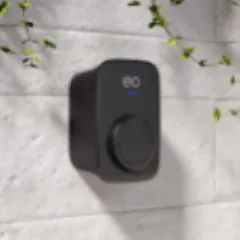
The EO Mini Pro 3's party trick is its size. At 215mm × 140mm × 100mm and just 2.5 kg, it is remarkably compact. electrifying.com describes it as "the same size as an A5 notepad," and if you've got a narrow wall beside a garage door or a visible front-of-house location where aesthetics matter, this is a genuine differentiator. The satin black finish with a single LED indicator is discreet and won't upset the neighbours.
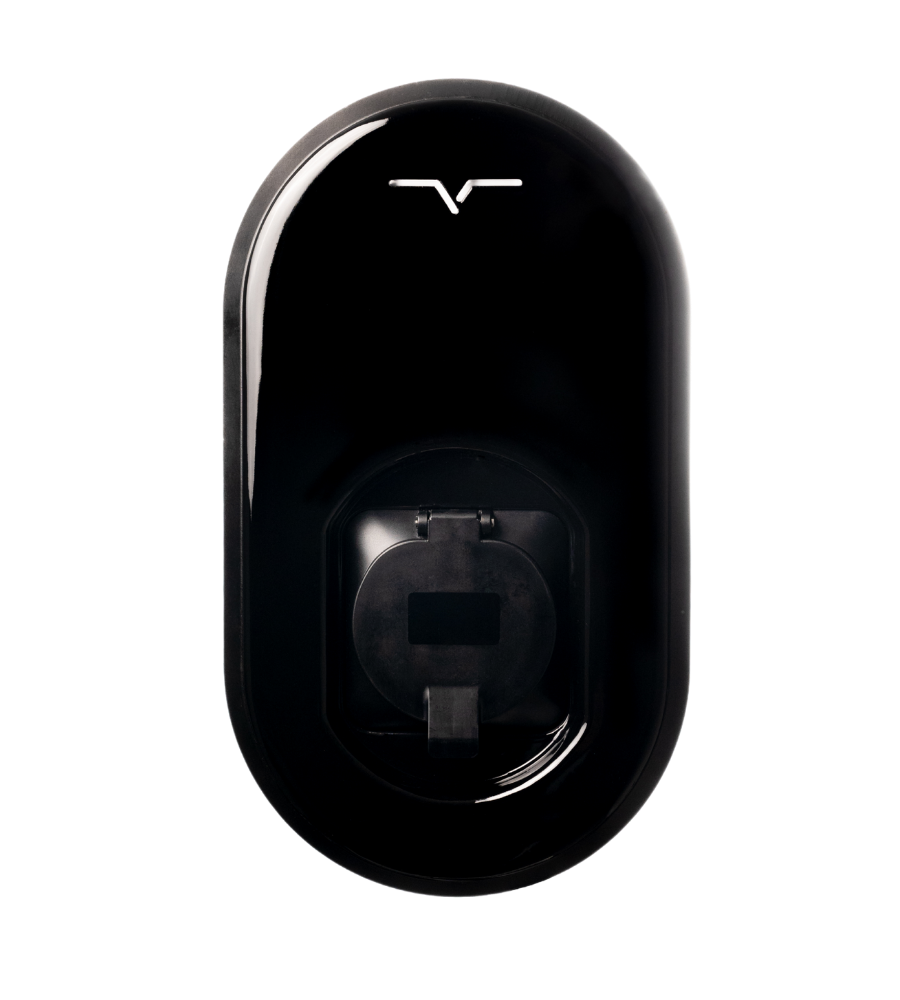
The VCHRGD Seven Pro is larger at 300mm × 180mm × 90mm, but it's still compact by charger standards and actually slimmer in depth. Crucially, it boasts an IK10 impact resistance rating — the highest on the standard scale — meaning it can withstand significant knocks. If your charger is installed near a driveway where it might get clipped by a wing mirror or battered by footballs, that IK10 rating is worth having. Both units share IP54 weatherproofing, which is perfectly adequate for UK conditions.
One practical advantage the VCHRGD holds: its 7.5-metre tethered cable versus the EO's 5 metres. That extra 2.5 metres can be the difference between comfortably reaching your charge port and having to reverse into a specific position every evening. The VCHRGD also includes a cable lock as standard — a small but welcome security feature.
Price and Value
| Cost Element | EO Mini Pro 3 | VCHRGD Seven Pro |
|---|---|---|
| Unit price (tethered) | £550 | £432 |
| Typical installation | £400–£600 | £400–£600 |
| Total installed cost | £950–£1,150 | £832–£1,032 |
| After OZEV grant (if eligible) | £450–£650 | £332–£532 |
The VCHRGD Seven Pro is £118 cheaper and delivers more features — a longer cable, RFID cards, dual solar modes, dynamic load balancing, and IK10 impact resistance — for less money. The EO Mini Pro 3's value proposition rests on two pillars: its uniquely compact size and the British Gas/Hive Power+ cashback, which credits back 25% of charging costs. For a driver covering the UK average of 7,400 miles per year in a Tesla Model 3, annual charging costs on Octopus Go would be roughly £158. A 25% cashback would save around £40 per year — meaning it would take about three years to recoup the price difference versus the VCHRGD.
The EO also benefits from Hive's installation ecosystem. hivehome.com lists a fully installed price from £1,209 including standard installation, survey, and commissioning — which is competitive and convenient if you want a one-stop-shop experience through British Gas.
Who Should Buy Which?
Buy the EO Mini Pro 3 if:
- You have a genuinely tight installation space where the A5-sized form factor is essential
- You're already in the British Gas/Hive ecosystem and want seamless smart home integration
- The Power+ 25% charging cashback aligns with your energy setup
- You value Ethernet connectivity for the most reliable smart charger connection
- You prefer buying through an established brand with British Gas installation support
Buy the VCHRGD Seven Pro if:
- You want the most features for the least money — it's hard to beat at £432
- You need a longer cable (7.5m vs 5m) to reach your charge port comfortably
- You have solar panels and want granular control with Solar Export and Solar Only modes
- You share a driveway or parking space and need RFID access control with included cards
- You want IK10 impact resistance for an exposed installation location
Our recommendation: For the majority of UK homeowners, the VCHRGD Seven Pro is the smarter buy. It costs £267 less, charges marginally faster at 7.4kW versus 7.2kW, comes with a longer cable, includes RFID cards, offers more sophisticated solar modes, and is tougher to boot. The EO Mini Pro 3 earns its place if you genuinely need the smallest possible charger or you're committed to the Hive ecosystem — but for everyone else, the VCHRGD's combination of features and value is exceptionally compelling.
For the full specs-level breakdown, see our EO Mini Pro 3 vs VCHRGD Seven Pro comparison page.
Read our full EO Mini Pro 3 review or VCHRGD Seven Pro review.
If you have solar panels, see our best EV charger for solar panels guide.
For total installed cost rankings, see our cheapest EV charger guide.
We’ll handle the installation
We’ll match you with vetted UK electricians — up to 3 free quotes, no obligation.