EO Mini Pro 3 vs Cord Zero: Tiny Footprint or Better Value?
The Compact Charmer vs the Connected All-Rounder
If you're shopping for a smart home EV charger in 2025, you've probably noticed just how crowded the market has become. Two chargers that keep appearing on shortlists — often against each other — are the EO Mini Pro 3 and the Cord Zero. On paper they look similar: both are single-phase smart chargers with solar compatibility, smart tariff support, and three-year warranties. But dig a little deeper and they serve quite different buyers.
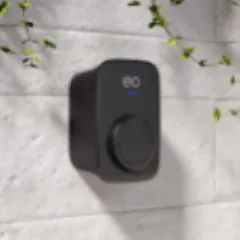
The EO Mini Pro 3, now sold exclusively through British Gas's Hive platform, has carved out a niche as the smallest home charger on the market — literally the size of an A5 notepad. It's the charger you pick when space is tight or aesthetics matter more than anything else. The Cord Zero, meanwhile, pitches itself as the most reliably connected charger you can buy, with dual Wi-Fi and 4G built in as standard, plus a comprehensive safety suite that can trim installation costs. It's also £144 cheaper.
In a nutshell:
- EO Mini Pro 3 (£550): The smallest charger on the market with CT clamp solar diversion included and Hive/British Gas ecosystem integration.
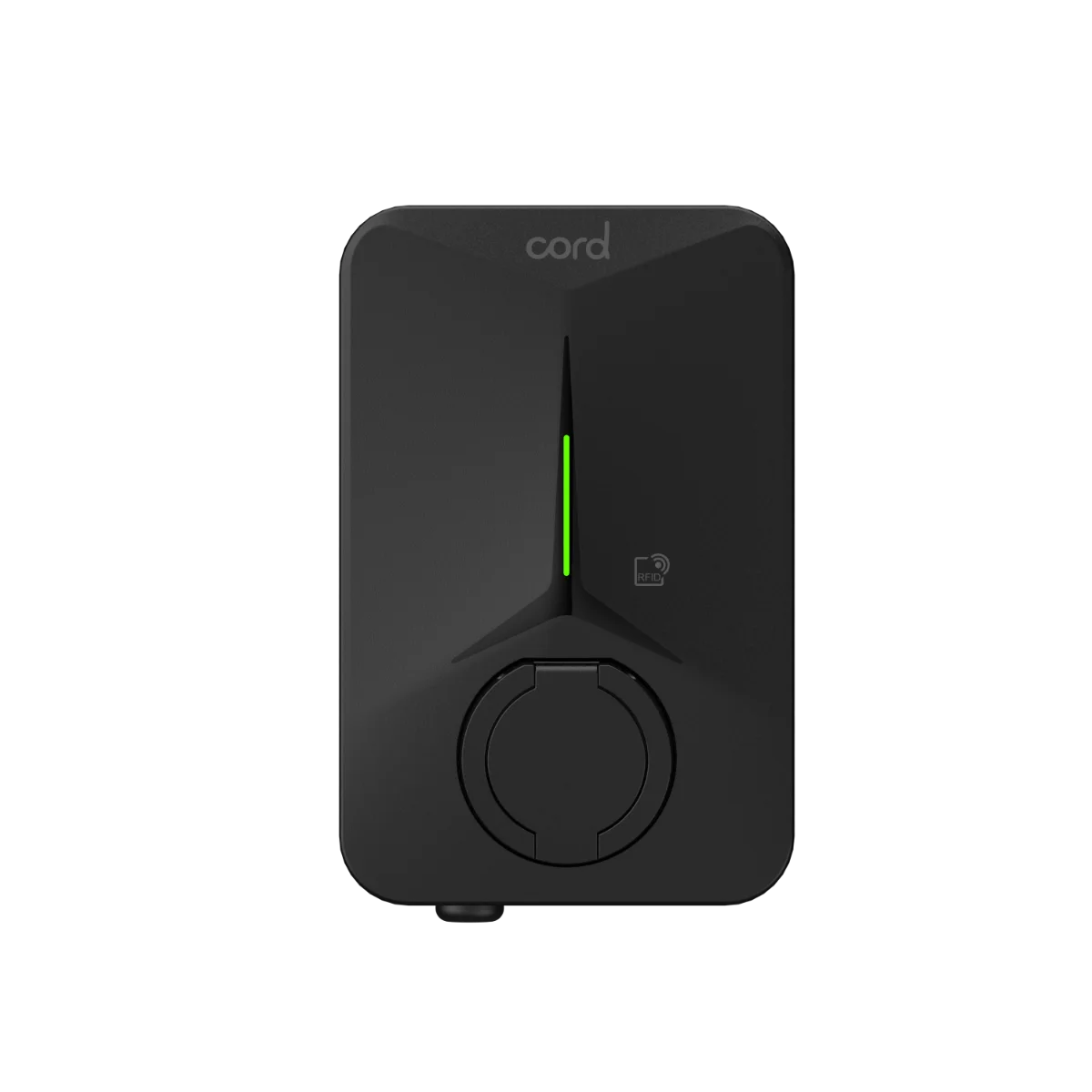
- Cord Zero (£555): A feature-rich, competitively priced charger with built-in dual connectivity (Wi-Fi + 4G) and comprehensive integrated safety protection.
Spec Comparison
| Feature | EO Mini Pro 3 | Cord Zero |
|---|---|---|
| Price | £550 | £555 (5m tethered) |
| Power | 7.2kW | 7.4kW |
| Cable | 5m (tethered or untethered) | 5m (8m version £625; untethered £475) |
| Smart tariffs | Octopus Go, EDF Go Electric, others | Octopus Go, OVO, British Gas, EDF, others |
| Solar | CT clamp included as standard | Solar compatible |
| Connectivity | Wi-Fi, Bluetooth, Ethernet (4G optional) | Wi-Fi 2.4GHz + 4G built-in |
| Warranty | 3 years | 3 years (currently free upgrade to 5 years) |
| IP rating | IP54 | IP54 + IK08 impact resistance |
| Dimensions | 215 × 140 × 100mm (~2.5kg) | 320 × 210 × 132mm (~5kg) |
| Type | Tethered or untethered | Tethered (untethered available) |
Smart Tariff Integration
Both chargers support scheduled charging and integration with popular UK EV tariffs, but the Cord Zero casts a wider net. It works with Octopus Go, OVO, British Gas, and EDF tariffs, giving you flexibility if you ever switch supplier. The EO Mini Pro 3 supports Octopus Go and EDF Go Electric among others, but its real party trick is the Hive Power+ feature — if you're a British Gas customer, Hive credits back 25% of your charging costs. On a typical annual mileage of 7,400 miles in a Tesla Model 3 (roughly 2,114 kWh per year), charging on Octopus Go at 7.5p/kWh would cost you about £159 per year. A 25% Power+ credit would save you around £40 annually — not life-changing, but it adds up over the charger's lifetime.
The Cord Zero takes a different approach with its Cord AI app, which handles EV tariff scheduling and energy monitoring. It's functional and gets the job done, though users report it's less polished than the apps from Ohme or Tesla. If you're the sort of person who likes to tinker with granular charging schedules, the EO's Hive app — backed by one of the UK's largest energy companies — may feel more mature, according to electrifying.com.
App and Connectivity
This is where the Cord Zero really flexes. It ships with both Wi-Fi and 4G connectivity built in, with automatic failover between the two. If your Wi-Fi drops — and let's be honest, garage Wi-Fi is notoriously flaky — the Cord Zero switches to its built-in multi-network SIM without missing a beat. That's a genuine advantage for anyone whose charger sits at the far end of a driveway or in a detached garage.
The EO Mini Pro 3 counters with the widest range of connection options in its class: Wi-Fi, Bluetooth, and Ethernet as standard, with an optional 4G add-on. The Ethernet option is worth highlighting — a wired connection is inherently more reliable than Wi-Fi, and the EO is one of very few home chargers to offer it. However, running an Ethernet cable to your charger location isn't always practical, and the 4G module costs extra rather than being included. As eocharging.com notes, the charger also connects via Bluetooth directly to your phone, which is handy for initial setup.
Solar Diversion and Build Quality
The EO Mini Pro 3 includes a CT clamp as standard for solar diversion — a genuine cost saving, since CT clamps typically add £50–100 to other chargers. On sunny days, it will prioritise your surplus solar generation to charge your EV; on cloudy days, it supplements with grid energy. It's a solid implementation, though it's worth noting it isn't as sophisticated as dedicated solar chargers like the Zappi, which offer multiple diversion modes.
The Cord Zero is listed as solar compatible, but the data suggests its solar integration is more limited compared to dedicated solar charging systems. If you already have solar panels and want to maximise self-consumption, the EO's included CT clamp gives it a clear edge here.
On build quality, both chargers carry IP54 weatherproofing — perfectly adequate for UK conditions. The Cord Zero adds IK08 impact resistance, meaning it can withstand knocks from car doors, footballs, or wayward shopping bags. It's also noticeably larger and heavier (320 × 210 × 132mm, ~5kg) compared to the remarkably tiny EO (215 × 140 × 100mm, ~2.5kg). If your charger needs to survive on a busy driveway, the Cord Zero's tougher build inspires more confidence. If you need it to disappear on a narrow wall beside a front door, nothing beats the EO's A5-sized footprint, as highlighted by hivehome.com.
Power and Charging Speed
A small but real difference: the Cord Zero charges at 7.4kW versus the EO's 7.2kW. In practice, this means the Cord Zero will fully charge a 60kWh Tesla Model 3 Long Range in approximately 8.1 hours, while the EO takes around 8.3 hours. That 12-minute difference is unlikely to matter for overnight charging, but it's worth noting that 7.4kW is the standard maximum for UK single-phase supplies, and the EO leaves a fraction of available power on the table. Both chargers are single-phase only, so neither is suitable for the rare UK home with three-phase power.
Price and Value
| Cost element | EO Mini Pro 3 | Cord Zero |
|---|---|---|
| Unit price | £550 | £555 |
| Installation estimate | £400–600 | £400–500 |
| Total installed | £950–£1,150 | £955–£1,055 |
| After OZEV grant (if eligible) | £450–£650 | £455–£555 |
At virtually identical prices (£550 vs £555), the unit cost is essentially a dead heat. The EO Mini Pro 3 includes a CT clamp for solar diversion and the Hive Power+ 25% cashback (worth roughly £40/year on a typical smart tariff), which tips the value equation in the EO's favour for solar and British Gas customers.
The Cord Zero currently offers a free upgrade from its standard 3-year warranty to 5 years, which adds meaningful peace of mind. Its built-in dual connectivity (Wi-Fi + 4G) and potentially lower installation costs thanks to comprehensive built-in safety features mean the Cord could still edge the EO on total installed price.
Who Should Buy Which?
Buy the EO Mini Pro 3 if:
- Space is genuinely constrained — nothing else this small exists on the market
- You're already in the British Gas/Hive ecosystem and want Power+ cashback
- You have solar panels and want CT clamp solar diversion included at no extra cost
- You prefer Ethernet connectivity for rock-solid reliability
- Aesthetics matter — you want a charger that's barely visible on your wall
Buy the Cord Zero if:
- You want the best value fully-installed smart charger with broad tariff support
- Reliable connectivity is essential — built-in 4G with automatic failover is unmatched
- You want comprehensive built-in safety features (RCD, PEN, surge protection) that may reduce installation costs
- You'd like the security of a 5-year warranty (while the current promotion lasts)
- You need a longer cable option — the 8m version is available for £625
Our recommendation: For most UK homeowners, the Cord Zero is the smarter buy. It's cheaper, charges marginally faster at 7.4kW, comes with built-in 4G as standard, and its comprehensive safety suite can keep installation costs down. The current 5-year warranty promotion is the cherry on top. The EO Mini Pro 3 remains the right choice for a specific buyer: someone with limited wall space, existing Hive smart home kit, or solar panels they want to integrate without buying additional hardware. But at £144 more for a charger that's actually 0.2kW slower, the EO needs those niche advantages to justify its premium.
For the full specs-level breakdown, see our EO Mini Pro 3 vs Cord Zero comparison page.
Read our full EO Mini Pro 3 review or Cord Zero review.
If you have solar panels, see our best EV charger for solar panels guide.
We’ll handle the installation
We’ll match you with vetted UK electricians — up to 3 free quotes, no obligation.