Easee One vs Rolec EVO: Lightweight Simplicity Meets UK-Built Brains
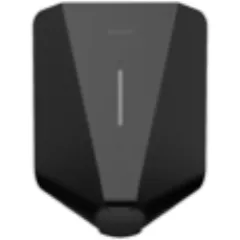
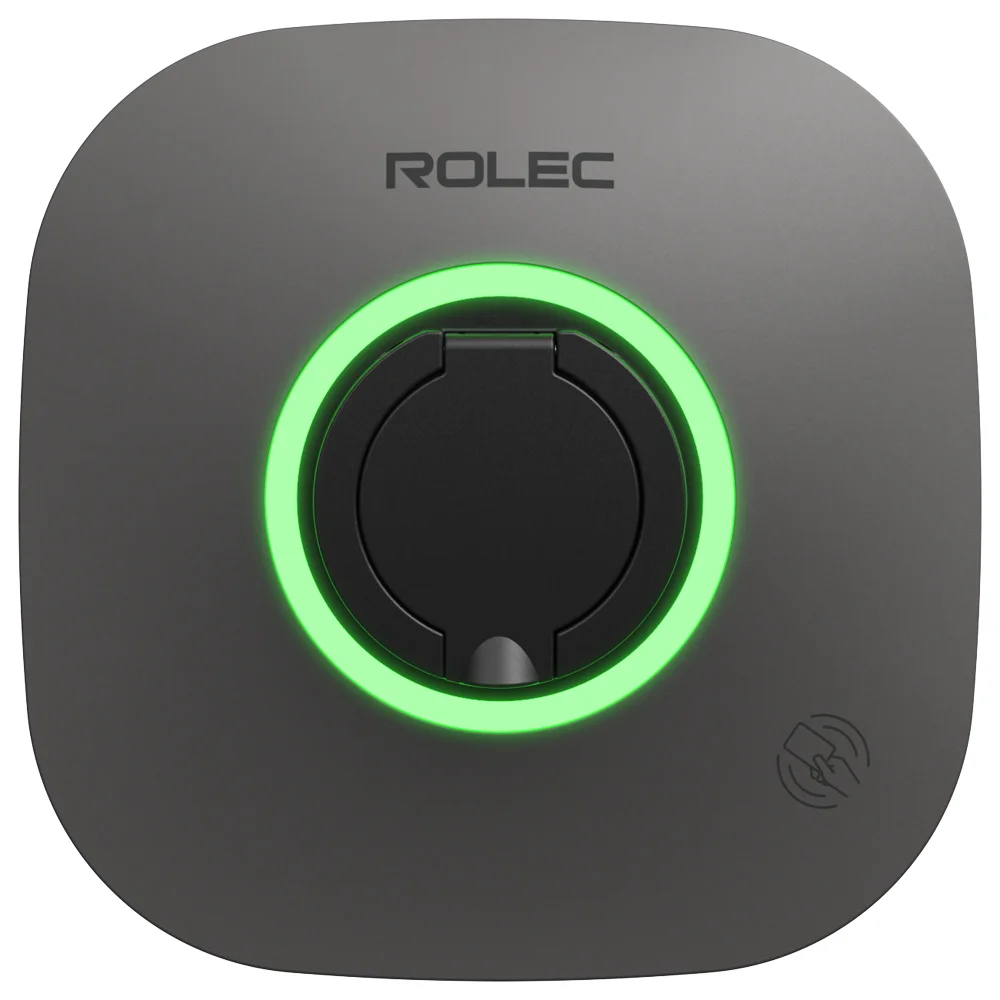
The Minimalist vs the Feature-Packed Newcomer
If you're shopping for a home EV charger under £500, the Easee One and Rolec EVO are two of the most compelling options on the market right now. Both are untethered, both charge at 7.4kW on a standard UK single-phase supply, and both come in well under the price of flashier rivals like the Myenergi Zappi or Andersen A2. But dig beneath the surface and these two chargers take genuinely different approaches to the same problem.
The Easee One has built a loyal following thanks to its astonishingly compact, lightweight design and built-in lifetime 4G connectivity — a feature that's almost unheard of at this price point. The Rolec EVO, meanwhile, is a newer entrant from an established UK manufacturer that packs in solar integration, RFID access, OCPP support, and a five-year warranty — a feature list that reads more like a £600+ charger. So which one deserves a spot on your wall? Let's find out.
In a nutshell:
- Easee One (£405): The lightest, simplest smart charger on the market with lifetime 4G connectivity built in — outstanding value for straightforward single-car setups.
- Rolec EVO (£449): A feature-rich, UK-built charger with solar diversion modes, RFID, OCPP, and an industry-leading five-year warranty — remarkable for the price.
Spec Comparison
| Feature | Easee One | Rolec EVO |
|---|---|---|
| Price | £405 | £449 |
| Power | 7.4kW (single-phase) | 7.4kW (single-phase) |
| Cable | Untethered (Type 2 socket) | Untethered (Type 2 socket) |
| Smart tariff integration | No direct integration | No direct integration |
| Solar diversion | No | Yes (Eco + Eco+ modes, CT clamp included) |
| Connectivity | Wi-Fi + 4G (lifetime eSIM) | Wi-Fi 6 + Bluetooth 5.0 + Ethernet |
| RFID | No | Yes (2 cards included) |
| OCPP | No | Yes (OCPP 1.6J) |
| Warranty | 3 years | 5 years |
| IP / IK Rating | IP54 | IP54 + IK10 |
| Weight | 1.5 kg | 3 kg |
| Built-in protection | RCD Type-B + open PEN | Type A RCD + 6mA DC + PME/PEN detection |
Solar Diversion: The Rolec EVO's Party Piece
If you have solar panels — or you're planning to install them — this is where the comparison gets interesting fast. The Rolec EVO comes with built-in solar integration featuring two distinct modes: Eco mode, which blends solar and grid power to keep your car charging, and Eco+ mode, which uses only surplus solar generation. Crucially, the CT clamp needed to monitor your home's energy usage is included in the box, not sold as a pricey add-on.
The Easee One, by contrast, has no solar diversion capability. It's a straightforward grid-powered smart charger. If you don't have solar panels and have no plans to get them, this is a non-issue. But if you do, the Rolec EVO's solar modes could save you a meaningful amount over the charger's lifetime. Even a modest 4kW solar array can generate enough surplus on a sunny day to add 20–30 miles of range for free.
For solar households, the EVO's inclusion of this feature at £449 is genuinely impressive — you'd normally need to step up to a Myenergi Zappi at £585+ for comparable solar integration, as noted in comparisons on sustainable-electrical.com.
App and Connectivity
Here's where the Easee One plays its trump card. That built-in eSIM with a lifetime 4G subscription means your charger stays connected even if your home Wi-Fi drops out or your router is at the other end of the house. There are no ongoing costs — the 4G is included forever. For anyone whose garage or driveway is a long way from their router, this is a genuinely practical advantage. Wi-Fi is also available as a backup, giving you belt-and-braces connectivity.
The Rolec EVO takes a different approach with Wi-Fi 6, Bluetooth 5.0, and a wired Ethernet port. Wi-Fi 6 is the latest standard and offers better range and reliability than older Wi-Fi versions, and the Ethernet option is rock-solid if you can run a cable. However, there's no 4G cellular fallback — if your Wi-Fi goes down and you don't have Ethernet connected, the charger loses its smart features until connectivity returns.
On the app front, the Easee app is well-established and user-friendly, offering remote control, consumption tracking, and scheduled charging. The Rolec EVO app is newer and, by the manufacturer's own admission, still being refined. Early adopters may encounter the occasional rough edge. That said, the EVO's OCPP 1.6J support is a genuine differentiator — it means the charger can theoretically work with third-party energy management platforms, future-proofing it in ways the Easee One can't match.
Neither charger offers the deep smart tariff integration you get with an Ohme, which can automatically schedule charging around Octopus Intelligent Go or Agile pricing slots mcnallyev.uk. Both the Easee and Rolec support scheduled charging, so you can manually set them to charge during off-peak windows (say, 00:30–04:30 on Octopus Go at 7.5p/kWh), but you'll need to set that schedule yourself rather than having the charger do it dynamically.
Build Quality, Design, and Installation
The Easee One is, quite simply, the lightest home EV charger you can buy. At just 1.5 kg and measuring 256mm × 193mm × 106mm, it's barely larger than a hardback book. Installers love it because it's quick to mount, and its integrated RCD Type-B and open PEN protection mean fewer additional components in the consumer unit — potentially saving £100–200 on installation extras.
The Rolec EVO is heavier at 3 kg and slightly squarer at 260mm × 260mm × 112mm, but it's still a compact unit. Where it stands out is toughness: it carries an IK10 impact resistance rating — the highest available — on top of its IP54 weatherproofing. If your charger is in an exposed location, near a busy driveway, or anywhere it might take a knock, that IK10 rating provides genuine peace of mind. The EVO also includes built-in PME/PEN fault detection, which, like the Easee, eliminates the need for a separate PEN device or earth rod — another potential saving of £100–200 at installation.
Both chargers are OZEV-approved, and both are untethered only. That means you'll need to use your own Type 2 cable each time you charge. Most Teslas come with a Type 2 cable, so this isn't a dealbreaker, but it does mean plugging and unplugging rather than just grabbing a tethered cable off the wall. As rolecserv.com notes, tethered chargers are generally more convenient for home use — but the trade-off is a cleaner, tidier wall mount with untethered units.
The Rolec EVO also includes two RFID cards, which is handy if you want to restrict who can use the charger — useful for front-of-house installations or shared driveways.
Price and Value
| Cost | Easee One | Rolec EVO |
|---|---|---|
| Unit price | £405 | £449 |
| Typical installation | £400–£600 | £400–£600 |
| Total installed cost | £805–£1,005 | £849–£1,049 |
| After OZEV grant (£500) | £305–£505 | £349–£549 |
The price difference between these two is just £44 — barely a rounding error in the context of a full installation. Both chargers include built-in electrical protection that can save £100–200 on installation extras, so the real-world cost difference is minimal.
The Easee One edges it on pure price, and its lifetime 4G connectivity adds ongoing value you won't find elsewhere at this price. The Rolec EVO counters with solar integration, RFID, OCPP support, and a five-year warranty versus the Easee's three. If you're thinking long-term, that extra two years of warranty coverage on the EVO is worth something — especially from an established UK manufacturer based in Boston, Lincolnshire.
Who Should Buy Which?
Buy the Easee One if:
- You want the absolute lowest upfront cost for a smart charger
- Your garage or charging point is far from your Wi-Fi router and you need rock-solid 4G connectivity
- You value ultra-compact, lightweight design and the simplest possible installation
- You run a multi-car household and may want to expand to up to three chargers with dynamic load balancing
- You don't have solar panels and don't plan to install them
Buy the Rolec EVO if:
- You have solar panels (or plan to get them) and want built-in Eco/Eco+ solar diversion
- You want the longest warranty available — five years from a UK manufacturer
- Your charger is in an exposed or high-traffic location where IK10 impact resistance matters
- You want RFID access control for a shared driveway or front-of-house installation
- You value OCPP support for future compatibility with third-party energy platforms
Our recommendation: For most buyers without solar panels, the Easee One is the smarter pick. It's £44 cheaper, astonishingly light, and that lifetime 4G eSIM is a genuinely unique feature that solves real-world connectivity headaches. But if you have solar panels — or plan to install them — the Rolec EVO is the better investment. Its built-in solar diversion, longer warranty, and superior impact resistance make it exceptional value at £449. The £44 premium pays for itself many times over in features you'd otherwise need to spend hundreds more to get elsewhere.
For the full specs-level breakdown, see our Easee One vs Rolec EVO comparison page.
Read our full Easee One review or Rolec EVO review.
For total installed cost rankings, see our cheapest EV charger guide.
We’ll handle the installation
We’ll match you with vetted UK electricians — up to 3 free quotes, no obligation.