Easee One vs Indra Smart LUX: Budget Hero vs Premium Slim-Line
Budget Brilliance vs Premium Precision: Which 7.4kW Charger Deserves Your Wall?
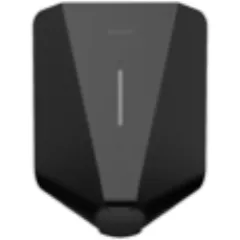
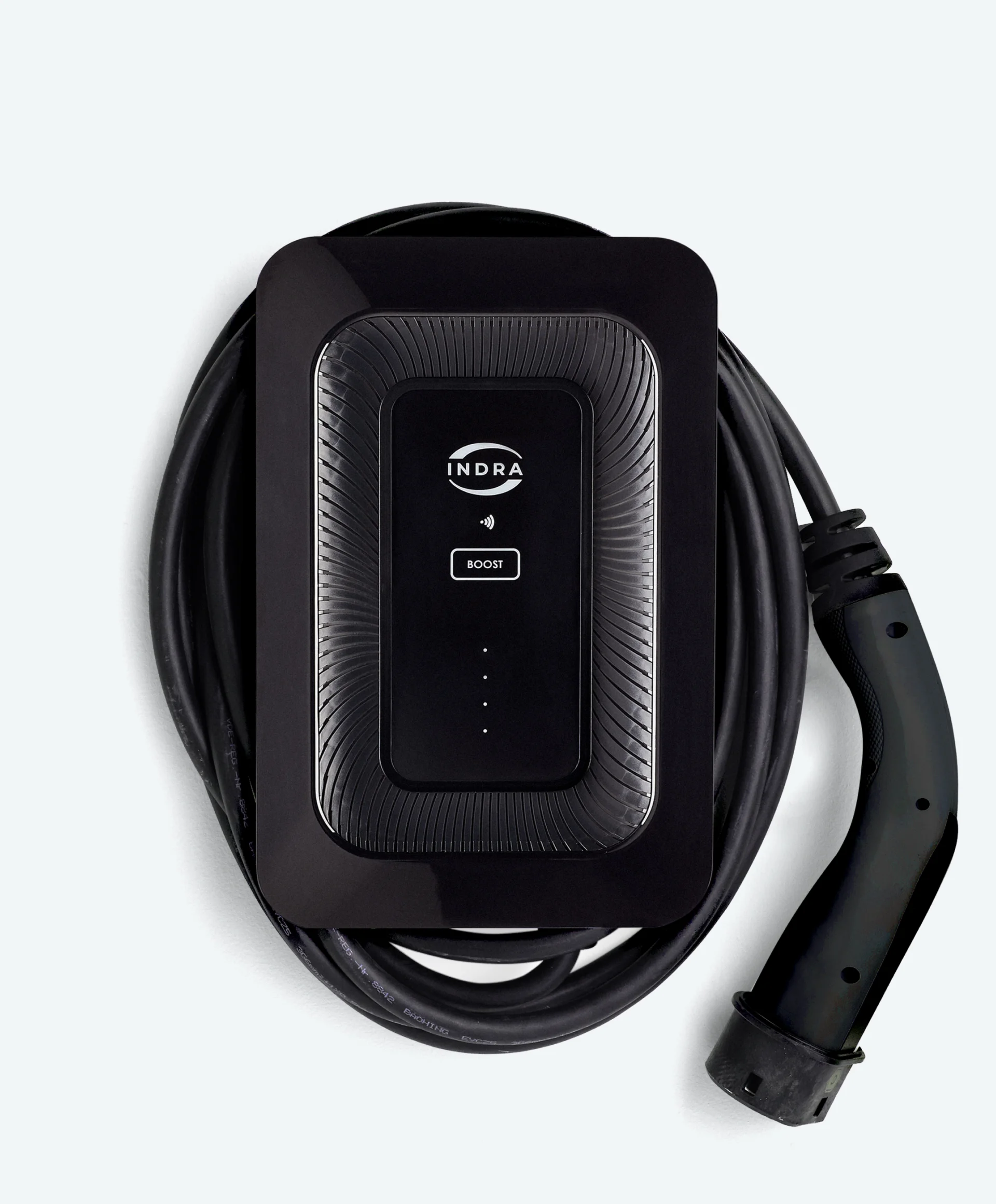
These two chargers sit at opposite ends of the UK smart charger spectrum, yet they share the same 7.4kW single-phase output that suits the vast majority of British homes. The Easee One has become something of a phenomenon — at just £405, it is comfortably the cheapest dedicated smart charger you can buy, and it weighs a barely-believable 1.5 kg. The Indra Smart LUX, meanwhile, is a proudly British-made unit from Worcestershire that justifies its higher price tag with solar PV diversion, integration with over 1,000 energy tariffs, and the best weather and impact protection ratings of any home charger we have tested.
If you are simply after the most affordable way to get reliable smart charging on your driveway, the Easee One is hard to argue with. But if you have solar panels, want deep tariff optimisation, or need a charger that can genuinely shrug off the worst British weather, the Indra Smart LUX makes a compelling case for spending more. Let us dig into the details.
In a nutshell:
- Easee One (£405): The lightest, cheapest smart charger on the UK market with lifetime 4G connectivity built in — outstanding no-frills value.
- Indra Smart LUX (£615): A razor-thin, IP67-rated charger with solar diversion and integration with 1,000+ smart tariffs — the feature-rich choice for energy-savvy homeowners.
Spec Comparison
| Feature | Easee One | Indra Smart LUX |
|---|---|---|
| Price (unit only) | £405 | £615 (10m cable) |
| Max Power | 7.4kW (single-phase) | 7.4kW (single-phase) |
| Cable | Untethered (Type 2 socket) | Tethered, 6m or 10m Type 2 |
| Smart Tariff Integration | No direct integration | Yes — 1,000+ tariffs inc. Octopus Agile |
| Solar PV Diversion | No | Yes (CT clamp included) |
| Connectivity | Wi-Fi + 4G eSIM (lifetime, free) | Wi-Fi (4G optional, +£250) |
| Warranty | 3 years | 3 years (5 years for +£100) |
| IP / IK Rating | IP54 | IP67 + IK10 |
| Type | Untethered | Tethered |
| Weight | 1.5 kg | 3.6 kg (with 6m cable) |
| Dimensions | 256 × 193 × 106 mm | 201 × 306 × 78 mm |
Smart Tariff Integration
This is where the gap between the two chargers is most significant. The Indra Smart LUX integrates directly with over 1,000 UK energy tariffs, including variable-rate tariffs like Octopus Agile where electricity prices change every 30 minutes. The charger can automatically shift your charging sessions to the cheapest slots without you lifting a finger. If you are on Octopus Intelligent Go at roughly 7p/kWh off-peak, or Octopus Agile where rates occasionally drop to zero (or even go negative), this kind of integration can save you hundreds of pounds a year. For a typical UK driver covering 7,400 miles annually in a Tesla Model 3, the difference between charging at a standard 24p/kWh rate and a 7p/kWh off-peak rate works out at roughly £360 per year — so tariff optimisation pays for itself quickly.
The Easee One, by contrast, relies on its app-based scheduled charging. You can absolutely set it to charge between 00:30 and 04:30 to catch an Octopus Go window, but you are doing the thinking yourself. There is no automatic tariff-aware scheduling. For drivers on simple off-peak tariffs with fixed cheap windows, this is perfectly adequate. But if you want the charger to chase the cheapest half-hour slots on Agile pricing, the Indra has a clear advantage. As mcnallyev.uk notes in their comparison of leading UK chargers, direct tariff integration is increasingly becoming the feature that separates good chargers from great ones.
Solar Diversion and Energy Management
If you have solar panels — or plan to install them — the Indra Smart LUX is the obvious choice here. It includes a CT clamp as standard and can divert surplus solar generation directly into your car rather than exporting it to the grid. On a sunny day, you could be charging your Tesla for effectively nothing. The Easee One does not offer solar PV diversion, so any surplus energy management would need to be handled by a separate system.
Both chargers feature dynamic load balancing, which prevents your home's supply from being overloaded when the kettle, oven, and car charger are all running simultaneously. The Easee One can balance across up to three chargers on a single fuse — useful for households with multiple EVs — though Easee notes that additional hardware is required for multi-charger load balancing. The Indra handles load balancing for a single charger out of the box with its built-in CT clamp.
Build Quality and Design
The Indra Smart LUX boasts the most impressive protection ratings of any home charger we have come across: IP67 means it is rated for temporary submersion in water (not just rain), while IK10 is the highest impact resistance rating available, meaning it can withstand 20 joules of impact — roughly equivalent to a 5 kg weight dropped from 40 cm. If your charger is on an exposed driveway, near a busy path, or anywhere it might take a knock, this is genuinely reassuring. At just 78 mm deep, it is also the slimmest tethered smart charger on the UK market, sitting almost flush against the wall.
The Easee One takes a different approach. At 1.5 kg, it is extraordinarily light — ecolectrix.co.uk highlights its neat, compact Scandinavian design. Its IP54 rating is perfectly adequate for a sheltered wall mounting, but it will not match the Indra in truly exposed or high-risk locations. Being untethered, the Easee One presents a clean, minimal look on the wall with no cable dangling — though it does mean you need to fetch your own Type 2 cable each time you charge. Most Tesla owners already have one in the boot, so this is rarely a dealbreaker.
App and Connectivity
Connectivity is one area where the Easee One punches well above its price. It includes a built-in eSIM with a lifetime 4G subscription at no extra cost, backed up by Wi-Fi. This means the charger stays connected even if your home broadband goes down — a genuine advantage for reliability. The Indra Smart LUX connects via Wi-Fi as standard, with Ethernet available as an option. If you want 4G on the Indra, it costs an additional £250, which significantly narrows the price gap between the two units.
The Indra app offers more depth, with real-time energy monitoring, RFID and QR code authorisation for access control, OCPP 1.6 support, and OTA firmware updates. The Easee app is simpler but covers the essentials: remote control, consumption tracking, scheduled charging, and access sharing. As tinyeco.com notes in their roundup of the best UK home chargers, smart scheduling and app control are now table-stakes features — but the depth of energy monitoring varies significantly between brands.
Price and Value
| Cost Element | Easee One | Indra Smart LUX |
|---|---|---|
| Unit price | £405 | £615 (10m) / £670 (6m) |
| Typical installation | £400–£600 | £300–£500 |
| Total installed cost | £805–£1,005 | £915–£1,175 |
| After OZEV grant (if eligible) | £305–£505 | £415–£675 |
The Easee One is £210 cheaper at the unit level, and that gap largely holds through to total installed cost. However, if you add 4G connectivity to the Indra (£250), the unit price jumps to £865 — more than double the Easee One. On the other hand, if you value solar diversion and smart tariff integration, the Indra could save you enough on energy bills within the first year to justify the premium. A homeowner with a 4kWp solar array could realistically divert 1,500–2,000 kWh of surplus generation into their car annually, worth £360–£480 at current grid rates.
Both chargers carry a 3-year warranty. The Indra offers a 5-year extension for £100, which is worth considering for peace of mind on a higher-value unit. Both are OZEV-approved, so eligible renters and flat owners can claim up to £500 off installation costs.
Who Should Buy Which?
Buy the Easee One if:
- You want the absolute lowest upfront cost for a genuine smart charger
- Reliable 4G connectivity matters to you and you do not want to pay extra for it
- You prefer a clean, untethered wall mount and already own a Type 2 cable
- You are on a simple off-peak tariff like Octopus Go with a fixed cheap window
- You might add a second or third charger in future and want multi-charger load balancing
Buy the Indra Smart LUX if:
- You have solar panels and want to charge your car from surplus generation
- You are on a variable tariff like Octopus Agile and want automatic cost optimisation
- Your charger will be in an exposed or high-traffic location where IP67/IK10 protection matters
- You value a slim, flush-mounted design and prefer a tethered cable for convenience
- You want a UK-designed and manufactured product with deep energy monitoring
Our recommendation: For most UK homeowners on a straightforward off-peak tariff, the Easee One at £405 with lifetime 4G is exceptional value and genuinely hard to beat. It does everything a typical single-car household needs. However, if you have solar panels or are on a variable-rate tariff like Octopus Agile, the Indra Smart LUX earns its premium — the combination of solar diversion and 1,000+ tariff integration could save you more than the price difference within a year. Its IP67/IK10 ratings also make it the clear choice for exposed installations where durability is non-negotiable.
For the full specs-level breakdown, see our Easee One vs Indra Smart LUX comparison page.
Read our full Easee One review or Indra Smart LUX review.
For total installed cost rankings, see our cheapest EV charger guide.
We’ll handle the installation
We’ll match you with vetted UK electricians — up to 3 free quotes, no obligation.