Easee One vs Cord Zero: Lightweight Value vs Feature-Packed Smart Charger
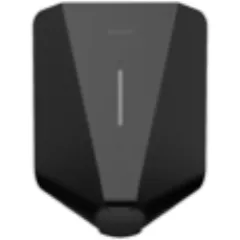
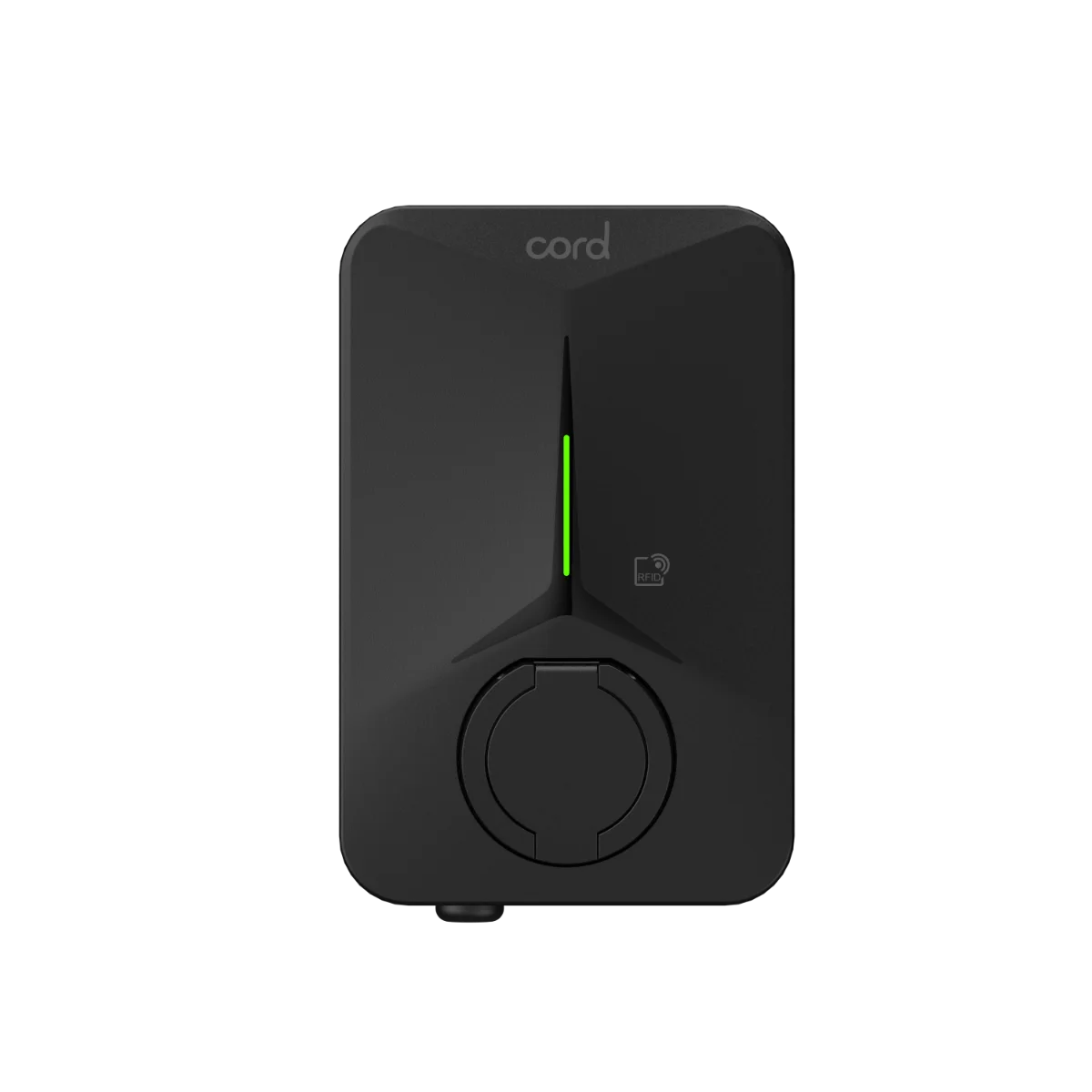
The Featherweight vs the Feature-Rich: Two Budget Smart Chargers Go Head-to-Head
If you're shopping for a home EV charger in the £400–£600 range, the Easee One and Cord Zero are two of the most compelling options on the UK market right now. Both deliver 7.4kW single-phase charging — the sweet spot for the vast majority of UK homes — and both come packed with smart features that punch well above their price points. But they take noticeably different approaches to getting electrons into your car.
The Easee One has built a reputation as the lightest, simplest charger you can bolt to a wall. At just 1.5 kg and £405, it's the kind of product that makes you wonder what everyone else is charging extra for. The Cord Zero, meanwhile, arrives at £555 (tethered, 5m cable) with a longer feature list that includes EV tariff integration, solar compatibility, and one of the most robust connectivity setups in the business. The question is whether those extras are worth the £150 premium — or whether the Easee One's stripped-back brilliance is all you actually need.
In a nutshell:
- Easee One (£405): The lightest, cheapest smart charger on the market with lifetime 4G connectivity and rock-solid basics.
- Cord Zero (£555): A feature-dense smart charger with built-in EV tariff integration, solar compatibility, and dual Wi-Fi + 4G failover connectivity.
Spec Comparison
| Feature | Easee One | Cord Zero |
|---|---|---|
| Price | £405 | £555 (5m tethered) / £475 (untethered) / £625 (8m tethered) |
| Power | 7.4kW (single-phase) | 7.4kW (single-phase) |
| Cable | Untethered (Type 2 socket) | 5m tethered Type 2 (8m option available) |
| Smart tariff integration | No direct integration | Yes — Octopus Go, OVO, British Gas, EDF and more |
| Solar compatible | No | Yes |
| Connectivity | Wi-Fi + 4G (built-in eSIM, lifetime) | Wi-Fi 2.4GHz + 4G (built-in multi-network SIM) |
| Dynamic load balancing | Yes (up to 3 chargers) | Yes |
| Warranty | 3 years | 3 years (currently free upgrade to 5 years) |
| IP rating | IP54 | IP54 + IK08 impact resistance |
| Weight | 1.5 kg | ~5 kg (8m tethered) |
| Dimensions | 256 × 193 × 106 mm | 320 × 210 × 132 mm |
| OZEV approved | Yes | Yes |
Smart Tariff Integration: The Cord Zero's Killer Advantage
This is where the Cord Zero pulls decisively ahead. Its Cord AI app offers direct integration with a broad range of UK energy tariffs, including Octopus Go (7.5p/kWh off-peak), OVO, British Gas Electric Driver, and EDF. That means the charger can automatically schedule your charging sessions to coincide with the cheapest electricity rates — no manual timer-setting required.
To put that in real money: charging a Tesla Model 3's 60kWh battery on Octopus Go's off-peak rate of 7.5p/kWh costs roughly £4.50. On a standard variable tariff at around 24p/kWh, the same charge costs £14.40. Over a year of typical UK mileage (~7,400 miles), that difference adds up to hundreds of pounds. The Cord Zero helps you capture those savings automatically.
The Easee One, by contrast, offers scheduled charging through its app but lacks direct smart tariff integration. You can still set it to charge during off-peak hours manually, but you won't get the seamless, set-and-forget tariff optimisation that the Cord Zero provides. If you're on a simple time-of-use tariff like Octopus Go with a fixed off-peak window (00:30–04:30), manual scheduling works fine. But if you ever move to a variable tariff like Octopus Agile, the Cord Zero's automated approach becomes significantly more valuable.
App and Connectivity
Both chargers feature dual Wi-Fi and 4G connectivity — a genuine luxury at this price point that many chargers costing considerably more don't offer. The Easee One includes a built-in eSIM with a lifetime 4G subscription, meaning you'll never pay a penny for mobile connectivity. The Cord Zero matches this with a built-in multi-network SIM and automatic failover between Wi-Fi and 4G, which topcharger.co.uk notes is increasingly important for chargers mounted in garages or areas with patchy Wi-Fi.
Where they differ is in app polish. The Easee app is widely regarded as user-friendly and straightforward — it handles remote control, consumption tracking, and access sharing without fuss. The Cord AI app covers more ground with energy monitoring, RFID access control, and OCPP 1.6J support, but reviewers note it feels more basic and less refined than apps from established players like Ohme or Tesla. If you value a slick user experience, the Easee app has the edge; if you want more features under one roof, the Cord Zero delivers more functionality even if the interface isn't quite as polished.
The Cord Zero also includes RFID access control as standard, which is handy if your charger is accessible to the public or you want to restrict usage. The Easee One supports this too, as noted in our Easee One review, giving both chargers a useful security layer.
Build Quality, Design, and Installation
The Easee One is, quite simply, the lightest home EV charger on the UK market at 1.5 kg. That's not just a bragging point — it makes installation genuinely easier and faster, particularly on lightweight walls or in awkward mounting positions. Its compact Scandinavian design (256 × 193 × 106 mm) is clean and minimal, and as mcnallyev.uk notes, its modular design means the hardware can be upgraded without replacing the entire unit.
The Cord Zero is heavier at around 5 kg and physically larger (320 × 210 × 132 mm), but it compensates with IK08 impact resistance on top of its IP54 weatherproofing — a practical advantage if your charger is mounted somewhere it might get knocked by a car door or stray football. The tethered design means your cable is always ready to go, which is genuinely convenient on cold, wet UK evenings when fumbling in the boot for a cable loses its charm fast.
Both chargers integrate RCD Type-B and PEN fault detection, which can save £100–£200 on installation by eliminating the need for separate protective devices in your consumer unit. The Cord Zero adds surge and overvoltage protection to the package, and its installation turnaround is reportedly fast — typically within two weeks of ordering.
Price and Value
| Cost element | Easee One | Cord Zero (5m tethered) |
|---|---|---|
| Unit price | £405 | £555 |
| Installation estimate | £400–£600 | £400–£500 |
| Total installed cost | £805–£1,005 | £955–£1,055 |
| After OZEV grant (£500) | £305–£505 | £455–£555 |
The Easee One is comfortably the cheaper option, potentially saving you £150 on the unit alone. With installation, you could be fully set up for as little as £805 — or £455 if you qualify for the OZEV grant (available to eligible renters and flat owners). That's extraordinary value for a smart charger with lifetime 4G connectivity.
The Cord Zero justifies its higher price with smart tariff integration, solar compatibility, and that promotional 5-year warranty upgrade. If the tariff integration saves you even £50–£100 per year compared to imperfect manual scheduling, the Cord Zero pays back its premium within a couple of years. The untethered version at £475 narrows the gap to just £70 more than the Easee One, which makes the Cord Zero's extra features look like a genuine bargain.
Who Should Buy Which?
Buy the Easee One if:
- You want the absolute lowest upfront cost for a genuinely smart charger
- You prefer a clean, untethered wall-mount aesthetic
- You're comfortable setting a manual charging schedule for your off-peak tariff
- You have multiple EVs and want to expand to up to three chargers on one supply
- You value the lightest possible unit for easy installation on any wall type
Buy the Cord Zero if:
- You want automatic smart tariff integration with Octopus Go, OVO, British Gas, or EDF
- You have or plan to install solar panels and want basic solar-compatible charging
- You prefer a tethered cable for grab-and-go convenience
- You value the current free 5-year warranty upgrade over the standard 3-year cover
- You want OCPP 1.6J support for potential future energy management integrations
Our recommendation: For most UK EV owners, the Cord Zero edges ahead as the smarter long-term investment. Its direct tariff integration takes the guesswork out of off-peak charging and can realistically save enough each year to recoup the price difference. The promotional 5-year warranty is a welcome bonus, and solar compatibility future-proofs you nicely. However, if budget is your primary concern or you're after the simplest possible installation — particularly for a multi-charger household — the Easee One at £405 is phenomenal value and a charger you won't regret buying. Neither is a bad choice; the Cord Zero simply does more for the money.
For the full specs-level breakdown, see our Easee One vs Cord Zero comparison page.
Read our full Easee One review or Cord Zero review.
For total installed cost rankings, see our cheapest EV charger guide.
We’ll handle the installation
We’ll match you with vetted UK electricians — up to 3 free quotes, no obligation.