Cord Zero vs VCHRGD Seven Pro: Connectivity vs Value
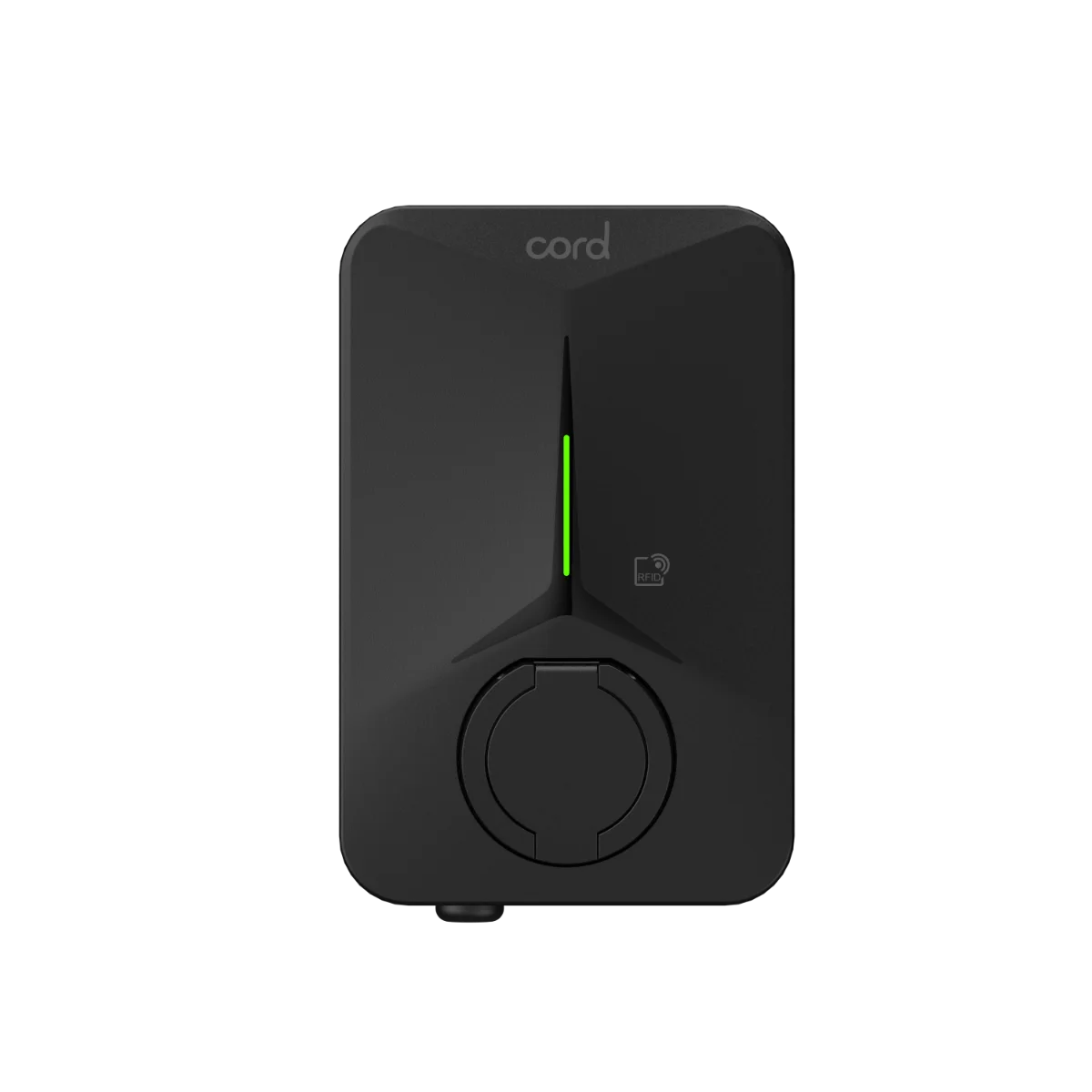
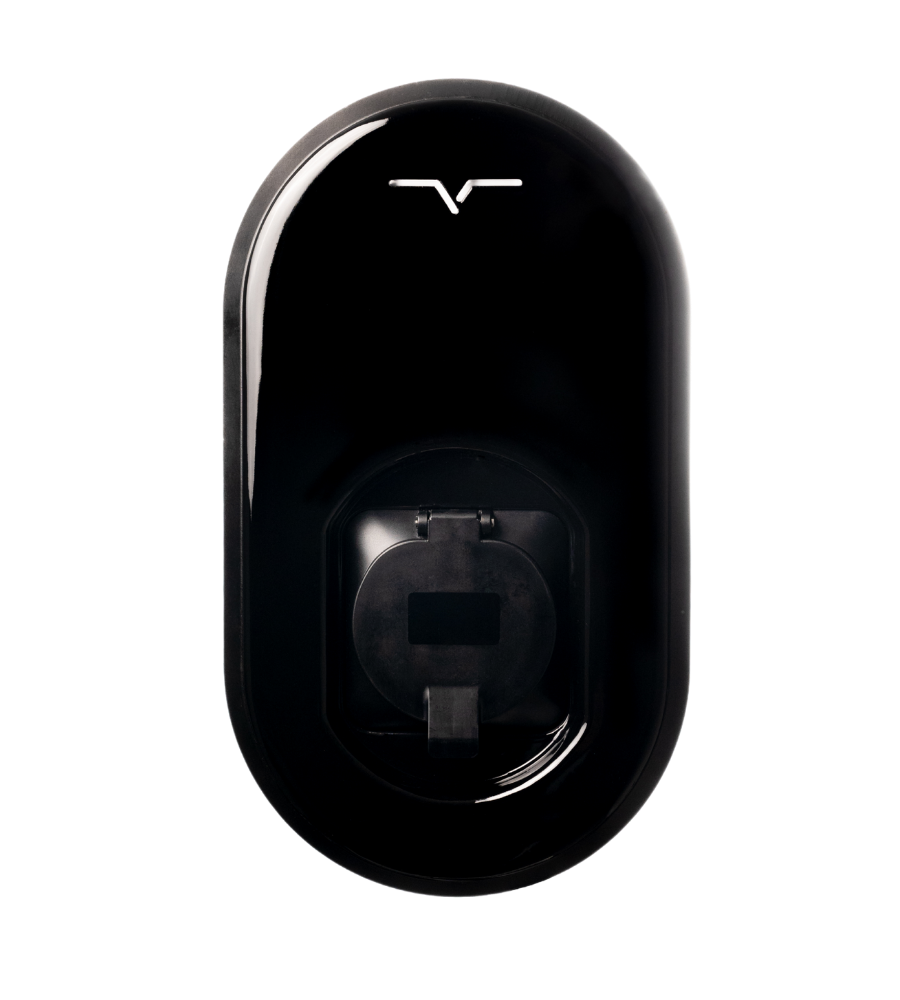
Rock-Solid Connectivity vs Feature-Packed Value: Which Budget Charger Wins?
If you're shopping for a smart home EV charger in the UK without spending north of £600, the Cord Zero and VCHRGD Seven Pro are two of the most compelling options on the market right now. Both deliver 7.4kW charging — the maximum most UK single-phase homes can handle — and both pack in an impressive array of smart features that would have cost twice as much just a couple of years ago.
But they take distinctly different approaches. The Cord Zero bets big on connectivity reliability, offering dual Wi-Fi and 4G with automatic failover so your charger never loses its link to the cloud. The VCHRGD Seven Pro, meanwhile, crams in more features per pound than almost anything else available, including proper solar integration with two dedicated modes and a CT clamp in the box. Choosing between them comes down to what matters most to you: bulletproof connectivity or maximum functionality at the lowest possible price.
In a nutshell:
- Cord Zero (£555): The most reliably connected budget charger, with dual Wi-Fi + 4G failover and a comprehensive built-in safety suite that can reduce installation costs.
- VCHRGD Seven Pro (£432): Arguably the best feature-to-price ratio on the UK market, with dedicated solar modes, included CT clamp, and a longer 7.5m cable.
Spec Comparison
| Feature | Cord Zero | VCHRGD Seven Pro |
|---|---|---|
| Price (tethered) | £555 (5m) / £625 (8m) | £432 (7.5m) |
| Price (untethered) | £475 | From £395 |
| Max Power | 7.4kW (single-phase) | 7.4kW (single-phase) |
| Cable Length | 5m (8m available) | 7.5m |
| Smart Tariff Support | Octopus Go, OVO, British Gas, EDF & more | Octopus Intelligent Go |
| Solar Integration | Compatible (basic) | Solar Export + Solar Only modes |
| Connectivity | Wi-Fi 2.4GHz + 4G (built-in SIM) | Wi-Fi + Bluetooth (4G optional) |
| Dynamic Load Balancing | Yes | Yes (CT clamp included) |
| RFID | Yes | Yes (2 cards included) |
| OCPP | 1.6J | 1.6J |
| Warranty | 3 years (currently free upgrade to 5 years) | 3 years |
| IP / IK Rating | IP54 / IK08 | IP54 / IK10 |
| Dimensions | 320 × 210 × 132mm | 300 × 180 × 90mm |
| Weight | ~5 kg | ~4 kg |
App and Connectivity
This is where the two chargers diverge most sharply. The Cord Zero features dual Wi-Fi and 4G connectivity with a built-in multi-network SIM card and automatic failover. In practical terms, this means if your home Wi-Fi drops out — and let's be honest, garage Wi-Fi can be patchy at the best of times — the charger seamlessly switches to 4G to maintain its smart functions. For scheduled charging on off-peak tariffs like Octopus Go (7.5p/kWh between 00:30 and 04:30), that reliability is genuinely important. A missed schedule because of a Wi-Fi dropout means charging at the standard rate, which could be four or five times more expensive.
The VCHRGD Seven Pro relies on Wi-Fi and Bluetooth as standard, with 4G available only as an optional extra. If your charger is mounted close to your router or you have a strong mesh network, this won't be an issue. But for installations at the far end of a driveway or in a detached garage, the Cord Zero's built-in 4G is a meaningful advantage you don't have to pay extra for.
On the app side, the VCHRGD uses the third-party Powerverse platform, which includes a Raya AI assistant and supports OTA firmware updates. The Cord AI app is functional but generally considered more basic in comparison. That said, the Powerverse dependency does introduce a question mark about long-term continuity — if that partnership changes, it could affect the charger's smart capabilities cord-ev.com.
Smart Tariff Integration
Both chargers support scheduled charging to take advantage of cheaper off-peak electricity, but the breadth of integration differs. The Cord Zero boasts compatibility with a wide range of UK EV tariffs including Octopus Go, OVO Smart Charge, British Gas Electric Driver, and EDF. This broader compatibility gives you more flexibility if you switch energy suppliers down the line.
The VCHRGD Seven Pro specifically highlights integration with Octopus Intelligent Go, which is arguably the best EV tariff on the market right now at roughly 7p/kWh during off-peak hours. Intelligent Go is particularly clever because it can automatically shift your charging to the cheapest slots, even outside the standard off-peak window. However, the narrower tariff integration could be limiting if you're not with Octopus or decide to switch.
To put the savings in context, a typical Tesla Model 3 owner covering the UK average of 7,400 miles annually uses roughly 2,114 kWh. At Octopus Go's off-peak rate of 7.5p/kWh, that's about £159 per year — compared to around £580 at a typical standard rate of 27.5p/kWh. Both chargers can unlock those savings, but the Cord Zero gives you more tariff options to get there tinyeco.com.
Solar Integration
If you have solar panels — or plan to install them — this section matters a great deal. The VCHRGD Seven Pro is the clear winner here, offering two dedicated solar charging modes: Solar Export, which uses your excess solar generation to charge your car rather than exporting it to the grid, and Solar Only, which charges exclusively from solar power. The CT clamp needed for this functionality comes included in the box, saving you an additional £50–80 that some competitors charge as an extra.
The Cord Zero is listed as solar compatible, but its integration is more basic and doesn't offer the same dedicated multi-mode system. If maximising your solar self-consumption is a priority, the VCHRGD has a genuine edge here — though it's worth noting that neither charger matches the three-mode system offered by dedicated solar chargers like the Zappi GLO bestchargers.co.uk.
Build Quality and Design
Both chargers carry IP54 weatherproofing, making them suitable for outdoor installation in typical British conditions. The VCHRGD Seven Pro edges ahead on impact resistance with an IK10 rating versus the Cord Zero's IK08 — IK10 is the highest standard on the scale, offering protection against 20-joule impacts. It's also noticeably more compact at 300 × 180 × 90mm and lighter at around 4 kg, making it one of the smallest chargers on the market.
The VCHRGD's 7.5-metre tethered cable is a practical advantage over the Cord Zero's standard 5-metre cable. Five metres can be tight if your charging port isn't on the nearside of the car or your parking spot is a few metres from the wall. You can upgrade the Cord Zero to an 8-metre cable, but that bumps the price to £625. The VCHRGD is only available in black, while the Cord Zero also comes in a single colourway — neither offers the customisation of premium brands like Andersen evcompared.co.uk.
Price and Value
| Cost Element | Cord Zero (5m) | Cord Zero (8m) | VCHRGD Seven Pro |
|---|---|---|---|
| Unit price | £555 | £625 | £432 |
| Installation estimate | £400–500 | £400–500 | £400–600 |
| Total installed | £955–1,055 | £1,025–1,125 | £832–1,032 |
| After OZEV grant (if eligible) | £455–555 | £525–625 | £332–532 |
The VCHRGD Seven Pro is £123 cheaper than the Cord Zero at list price, and that gap widens to £193 if you need a longer cable (comparing the VCHRGD's standard 7.5m against the Cord Zero's 8m option). For that saving, you get a longer cable, included CT clamp, two RFID cards, and better solar integration. That's remarkable value.
The Cord Zero fights back with its included 4G connectivity — adding optional 4G to the VCHRGD would narrow the price gap — and its currently promoted free upgrade from a 3-year to 5-year warranty. That warranty extension is a genuine differentiator, though it is promotional and may not last. The Cord Zero's comprehensive built-in safety suite (RCD, PEN fault detection, surge and overvoltage protection) can also reduce installation costs if your consumer unit would otherwise need additional protective devices.
Who Should Buy Which?
Buy the Cord Zero if:
- Your charger will be installed far from your Wi-Fi router and you need guaranteed 4G fallback
- You want broad smart tariff compatibility across multiple energy suppliers
- Your consumer unit lacks RCD or PEN fault protection (the built-in safety suite could save on installation)
- You value the security of a 5-year warranty (while the free upgrade promotion lasts)
- You prioritise rock-solid connectivity over additional features
Buy the VCHRGD Seven Pro if:
- You have solar panels and want dedicated solar charging modes out of the box
- You want the longest cable possible without paying extra (7.5m standard)
- Budget is your primary concern and you want maximum features per pound
- You need RFID access control and don't want to buy cards separately
- You're on Octopus Intelligent Go and want direct integration with the UK's best EV tariff
Our recommendation: For most buyers, the VCHRGD Seven Pro offers the better overall package. The combination of a longer cable, included CT clamp, proper solar integration, and a price that's over £120 cheaper is simply hard to argue with. It's one of the best-value smart chargers available in the UK today. However, if you live in an area with poor Wi-Fi coverage at your charging point — or you simply don't want to worry about connectivity issues ever — the Cord Zero's dual Wi-Fi + 4G failover is a genuinely unique selling point that no other charger in this price range can match. And if you can grab that free 5-year warranty upgrade before the promotion ends, it becomes an even more compelling proposition.
For the full specs-level breakdown, see our Cord Zero vs VCHRGD Seven Pro comparison page.
Read our full Cord Zero review or VCHRGD Seven Pro review.
For total installed cost rankings, see our cheapest EV charger guide.
We’ll handle the installation
We’ll match you with vetted UK electricians — up to 3 free quotes, no obligation.