Andersen A3 vs Indra Smart LUX: Design Icon or Smart Powerhouse?
Design Icon vs Smart Powerhouse: Two UK-Made Chargers Go Head to Head
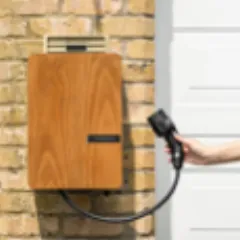
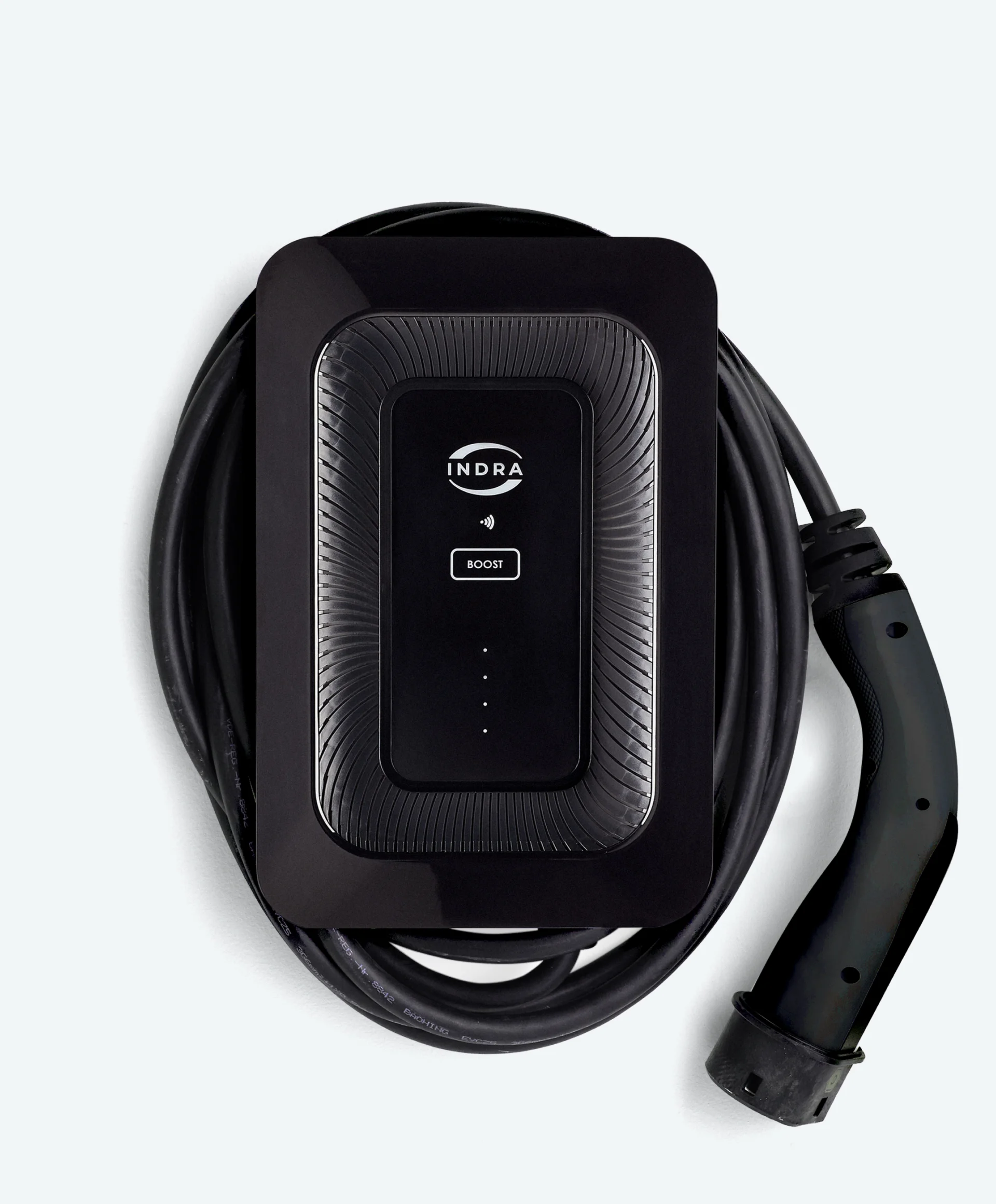
If you've narrowed your shortlist down to the Andersen A3 and the Indra Smart LUX, you clearly have good taste. These are both premium, British-designed 7.4kW tethered chargers that go well beyond the basics — but they achieve "premium" in fundamentally different ways. The Andersen A3 is, quite simply, the best-looking EV charger money can buy: 247 colour and finish combinations, a hidden cable system, and anodised aluminium construction that wouldn't look out of place in a design museum. The Indra Smart LUX, meanwhile, is an engineering-first charger — the slimmest tethered smart charger in the UK at just 78mm deep, with IP67 waterproofing, IK10 impact resistance, and integration with over 1,000 energy tariffs.
Both are made in the UK, both support solar integration, and both will charge your Tesla (or any other EV) at the same 7.4kW rate. The question is whether you're willing to pay nearly £400 more for the Andersen's extraordinary aesthetics, or whether the Indra's deeper smart features and tougher build represent better value.
In a nutshell:
- Andersen A3 (£995): The most beautifully designed home charger on the market, with a unique hidden cable system and a market-leading 7-year warranty.
- Indra Smart LUX (£615): The UK's slimmest smart charger with class-leading durability ratings and deep smart tariff integration across 1,000+ tariffs.
Spec Comparison
| Feature | Andersen A3 | Indra Smart LUX |
|---|---|---|
| Price (unit only) | £995 | £615 (10m cable) |
| Max Power | 7.4kW (single-phase) | 7.4kW (single-phase) |
| Cable Length | 5.5m (hidden) | 6m (10m available) |
| Connector | Type 2 (tethered) | Type 2 (tethered) |
| Smart Tariff Support | Yes (Octopus Intelligent Go, OVO Charge Anytime) | Yes (1,000+ tariffs inc. Octopus Agile) |
| Solar Integration | Yes (via app) | Yes (CT clamp included) |
| Connectivity | Wi-Fi | Wi-Fi (Ethernet and 4G optional) |
| Warranty | 7 years | 3 years (5 years for +£100) |
| IP Rating | IP54 | IP67 + IK10 |
| Weight | ~7.5 kg | 3.6 kg |
| Dimensions (D) | 122mm deep | 78mm deep |
| OZEV Approved | Yes | Yes |
Smart Tariff Integration
This is where the Indra Smart LUX pulls decisively ahead. While the Andersen A3 supports popular tariffs like Octopus Intelligent Go and OVO Charge Anytime — which, to be fair, are the two most popular smart EV tariffs in the UK — the Indra claims compatibility with over 1,000 UK energy tariffs. That includes Octopus Agile with its variable 30-minute pricing slots, which can deliver genuinely remarkable savings if you're willing to let the charger chase the cheapest half-hours overnight.
For most Tesla owners on a straightforward off-peak tariff like Octopus Go (7.5p/kWh between 00:30 and 04:30), both chargers will do the job perfectly well. But if you're on Agile pricing, or if you switch tariffs regularly, the Indra's broader compatibility is a meaningful advantage. The Indra also supports OCPP 1.6, an open protocol that future-proofs it for integration with third-party energy management platforms. The Andersen A3 doesn't list OCPP support, which could limit flexibility down the line.
As electriccarscheme.com notes, smart chargers with energy tariff integration can save up to £600 annually compared to standard tariffs — so this isn't a trivial differentiator.
Solar Diversion
Both chargers offer solar integration, but the implementations differ. The Indra Smart LUX includes a CT clamp as standard for solar PV surplus diversion — meaning it can automatically detect when your panels are generating more than your home needs and divert that excess into your car. This is a genuine, hardware-backed solar diversion feature similar to what you'd find on the Myenergi Zappi, albeit without the Zappi's dedicated ECO+ mode.
The Andersen A3 offers solar integration via its app, though the data provided doesn't specify whether a CT clamp is included or whether it requires additional hardware. If you have solar panels and want plug-and-play surplus charging, the Indra's included CT clamp is a clear advantage — one less thing to buy and one less thing to configure.
Build Quality and Design
Here the comparison becomes genuinely fascinating, because both chargers are "premium" but in completely different dimensions.
The Andersen A3 is a design object. With 247 colour and finish combinations — including metals, woods, and custom colours — plus its signature hidden cable system that stores the entire 5.5m cable inside the unit, it's the only charger that genuinely enhances the look of your home. Andersen's own customers consistently praise the aesthetics, with a 4.9/5 rating across 1,250 reviews. The anodised aluminium construction feels genuinely premium. If your charger is on the front of your house, visible from the street, the Andersen makes a statement no other charger can match.
The Indra Smart LUX takes a different approach: engineering excellence. At just 78mm deep, it's the slimmest tethered smart charger in the UK — practically flush against the wall. At 3.6 kg, it's less than half the weight of the Andersen. And its IP67 + IK10 rating is in a different league: IP67 means it can survive temporary submersion in water, while IK10 means it can withstand 20 joules of impact — roughly equivalent to a 5kg weight dropped from 40cm. The Andersen's IP54 rating is perfectly adequate for a sheltered wall, but if your charger is exposed to the elements or at risk of knocks, the Indra is substantially tougher.
Installation Considerations
Both chargers are OZEV-approved, so eligible renters and flat owners can claim up to £500 off installation costs. Standard installation for either should fall in the typical £300–600 range, depending on cable run length and consumer unit requirements.
The Indra Smart LUX has a practical edge here: it includes built-in SPD (surge protection device) and PEN fault detection as standard, which can simplify installation and potentially save on additional components your electrician might otherwise need to supply. The Andersen A3 doesn't highlight equivalent built-in protection in its specs, which could mean a slightly more involved install depending on your existing consumer unit setup.
The Indra's lighter weight (3.6 kg vs 7.5 kg) and slimmer profile also make it easier to mount in tighter spaces — useful if your charger needs to go in a narrow passage or on a wall with limited clearance.
Price and Value
| Cost Element | Andersen A3 | Indra Smart LUX |
|---|---|---|
| Unit price | £995 | £615 (10m cable) |
| Typical installation | £400–600 | £300–500 |
| Total installed cost | £1,395–1,595 | £915–1,115 |
| After OZEV grant (if eligible) | £895–1,095 | £415–615 |
The price gap is significant. At £380 less for the unit alone, the Indra Smart LUX delivers more smart features, better weather protection, and a longer cable — all for substantially less money. The Andersen A3's premium is almost entirely justified by its design and the industry-leading 7-year warranty, versus the Indra's standard 3-year coverage (extendable to 5 years for an additional £100).
That 7-year warranty is genuinely valuable — it's the longest on the UK market and shows real confidence from Andersen in their product's longevity. But even factoring in the £100 warranty extension on the Indra, the total cost difference remains around £280–380. You need to really value those aesthetics to justify the gap.
Who Should Buy Which?
Buy the Andersen A3 if:
- Your charger is prominently visible on the front of your house and kerb appeal matters to you
- You want to match your charger to your front door, window frames, or exterior finishes
- The hidden cable system appeals — no dangling cables when not charging
- You value a 7-year warranty and want long-term peace of mind without paying extra
- You see the charger as part of your home's design, not just a functional appliance
Buy the Indra Smart LUX if:
- You want the deepest smart tariff integration, especially for Octopus Agile or niche tariffs
- Your charger is in an exposed location where weather and impact resistance matter
- You have solar panels and want included CT clamp hardware for surplus diversion
- Space is tight and you need the slimmest possible profile against the wall
- You'd rather spend the £380 saving on other home improvements or energy upgrades
Our recommendation: For most Tesla owners, the Indra Smart LUX is the smarter buy. It offers more features, better protection, and deeper tariff integration for £380 less. The built-in SPD and PEN fault detection can also simplify installation. However, the Andersen A3 genuinely stands alone in the design department — if your charger is a prominent feature of your home's exterior and you want something that looks like it was designed by an architect rather than an engineer, the Andersen justifies its premium. Just go in knowing you're paying for beauty, not additional functionality.
For the full specs-level breakdown, see our Andersen A3 vs Indra Smart LUX comparison page.
Read our full Andersen A3 review or Indra Smart LUX review.
We’ll handle the installation
We’ll match you with vetted UK electricians — up to 3 free quotes, no obligation.